

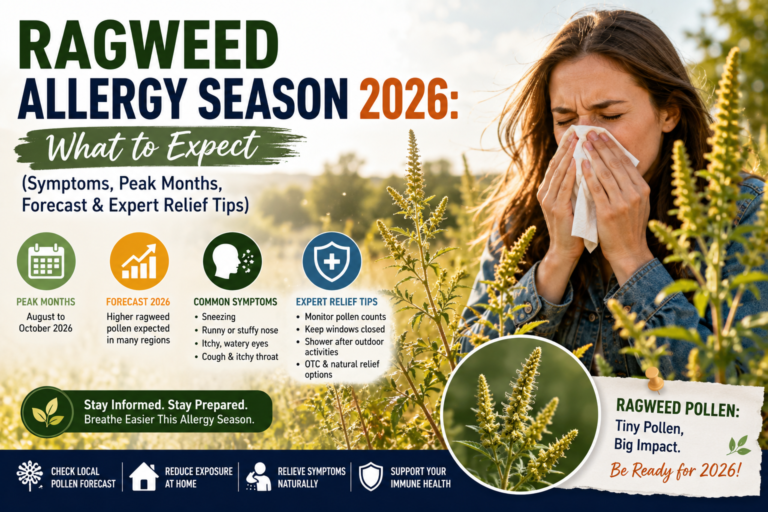
If your eyes start itching, your nose won’t stop running, and every walk outside leaves you sneezing, ragweed pollen may be the reason. For millions of people across North America, ragweed is one of the biggest triggers of seasonal allergies. Every fall, this tiny but powerful pollen affects daily life, making simple outdoor activities uncomfortable.
The 2026 ragweed allergy season is expected to bring familiar challenges, and in some areas, symptoms could last even longer than usual. Warmer temperatures, changing weather patterns, and higher carbon dioxide (CO₂) levels continue to extend pollen seasons, giving ragweed more time to release allergenic pollen into the air.
The good news is that understanding when ragweed season starts, recognizing symptoms early, and following proven prevention strategies can significantly reduce your discomfort. Whether you’ve struggled with hay fever for years or recently developed seasonal allergies, this guide explains everything you need to know about Ragweed Allergy Season 2026, including peak months, symptoms, treatments, and practical ways to stay protected.
Quick Answer: When Is Ragweed Allergy Season in 2026?
For most of the United States and Canada, ragweed pollen season begins in late July or early August, reaches its highest levels during September, and gradually ends after the first hard frost in October or November. Southern regions often experience a longer season because warm weather allows ragweed plants to continue producing pollen well into late autumn.
| Region | Expected Season | Peak Pollen |
| Northern U.S. | August–October | September |
| Midwest | August–October | Mid-September |
| Southern U.S. | Late July–November | September–October |
| Canada | August–September | Early September |
Checking your local pollen forecast before spending time outdoors can help you avoid the highest pollen days.
What Is Ragweed?
Ragweed is a flowering weed belonging to the Ambrosia genus. The two most common species are Common Ragweed (Ambrosia artemisiifolia) and Giant Ragweed (Ambrosia trifida). These plants thrive in fields, roadsides, vacant lots, gardens, and disturbed soil throughout North America.
Unlike colorful flowers that rely on insects for pollination, ragweed depends on the wind. As a result, each plant releases billions of microscopic pollen grains into the air every season. Because the pollen is lightweight, it can travel hundreds of miles, meaning people may experience allergy symptoms even when no ragweed plants are growing nearby.
This airborne pollen triggers an immune response in sensitive individuals. Instead o
f ignoring harmless pollen, the immune system treats it as a threat and releases histamine and other inflammatory chemicals, leading to the familiar symptoms of seasonal allergic rhinitis, also known as hay fever.
Why Could Ragweed Allergy Season Be Worse in 2026?
Several environmental factors suggest that some regions may experience a longer or more intense allergy season in 2026.
1. Warmer Temperatures
Longer summers allow ragweed plants to survive and produce pollen for more weeks than they did decades ago.
2. Higher Carbon Dioxide Levels
Research has shown that increased atmospheric CO₂ helps ragweed plants grow larger and produce more pollen, increasing exposure for allergy sufferers.
3. Changing Rainfall Patterns
Heavy rain encourages plant growth, while dry and windy days spread pollen over larger areas. Alternating wet and dry conditions often create ideal environments for ragweed.
4. Longer Frost-Free Seasons
Since ragweed stops producing pollen only after a hard frost, warmer autumns can delay the end of allergy season by several weeks.
5. Urban Air Pollution
Pollutants such as ozone and fine particulate matter may irritate the airways and make allergic reactions feel more severe, especially for people with asthma.
Understanding the Ragweed Season Timeline
Knowing when pollen levels rise helps you prepare before symptoms become severe.
Late July
The earliest ragweed plants begin releasing pollen in southern regions. Sensitive individuals may notice mild sneezing and itchy eyes.
August
Pollen levels increase rapidly across much of the United States. Daily pollen counts become consistently high, especially on warm, windy days.
September
September is usually the most difficult month for people with ragweed allergies. During this period, pollen concentrations often reach their annual peak, leading to persistent nasal congestion, watery eyes, and frequent sneezing.
October
Northern regions usually begin improving after the first frost. However, southern states may continue experiencing moderate to high pollen levels.
November
In most northern areas, ragweed season ends after repeated frosts. Some southern locations can still record measurable pollen until temperatures consistently cool.
Common Symptoms of Ragweed Allergy
Ragweed allergies can affect the nose, eyes, throat, lungs, and even energy levels. Symptoms vary from mild irritation to severe respiratory discomfort.
Mild Symptoms
- Frequent sneezing
- Runny nose
- Stuffy nose
- Itchy eyes
- Watery eyes
- Scratchy throat
- Mild cough
Moderate Symptoms
As pollen exposure increases, many people experience:
- Sinus pressure
- Headaches
- Ear congestion
- Fatigue
- Difficulty concentrating
- Poor sleep caused by nasal blockage
Severe Symptoms
People with asthma or severe allergies may develop:
- Wheezing
- Chest tightness
- Shortness of breath
- Persistent coughing
- Asthma flare-ups
Anyone experiencing breathing difficulties should seek prompt medical care rather than assuming the symptoms are only due to allergies.
Ragweed Allergy vs. Cold vs. COVID-19
Many seasonal illnesses share similar symptoms, making it difficult to tell them apart.
| Symptom | Ragweed Allergy | Common Cold | COVID-19 |
| Sneezing | Very common | Common | Sometimes |
| Itchy eyes | Very common | Rare | Rare |
| Fever | No | Sometimes | Common |
| Body aches | Rare | Mild | Common |
| Runny nose | Common | Common | Sometimes |
| Loss of smell | Rare | Sometimes | Common |
| Symptoms after outdoor exposure | Yes | No | No |
A key difference is that allergies usually cause itchy eyes and sneezing without fever, while viral infections often include fever, body aches, or chills.
Who Is Most at Risk?
Although anyone can develop seasonal allergies, some groups are more likely to experience severe symptoms.
These include:
- Children and teenagers
- Adults with a family history of allergies
- Individuals with asthma
- People with eczema
- Outdoor workers
- Farmers
- Gardeners
- Landscapers
- Pet owners who spend significant time outdoors
- People living in areas with high pollen counts
Researchers have also found that allergy symptoms can appear later in life, even if you’ve never had seasonal allergies before.
Foods That Can Cross-React with Ragweed (Oral Allergy Syndrome)
If you notice an itchy mouth or tingling lips after eating certain fresh fruits or vegetables during ragweed season, you may have Oral Allergy Syndrome (OAS), also known as Pollen Food Allergy Syndrome (PFAS).
This happens because some foods contain proteins that are similar to ragweed pollen. When your immune system mistakes these proteins for ragweed pollen, it triggers a mild allergic reaction.
Common Foods That May Cross-React
| Food | Possible Symptoms |
| Banana | Itchy mouth or throat |
| Watermelon | Tingling lips and tongue |
| Cantaloupe | Mild mouth irritation |
| Honeydew melon | Itchy throat |
| Cucumber | Oral itching |
| Zucchini | Mild swelling |
| Chamomile tea | Allergic reaction in sensitive people |
| Sunflower seeds | Rare allergic symptoms |
Most reactions are mild and disappear within a few minutes. However, if you experience difficulty breathing, swelling of the throat, or severe reactions, seek emergency medical care immediately.
How to Prevent Ragweed Allergy Symptoms
The best way to manage ragweed allergies is to reduce your exposure before symptoms become severe.
1. Check the Daily Pollen Forecast
Monitor local pollen counts each morning. On high-pollen days, consider limiting outdoor activities, especially during peak pollen hours.
2. Keep Windows Closed
Although fresh air feels nice, open windows allow pollen to enter your home and settle on furniture, carpets, and bedding. Use air conditioning whenever possible.
3. Use a HEPA Air Purifier
A High-Efficiency Particulate Air (HEPA) filter can capture tiny pollen particles and improve indoor air quality. Running an air purifier in your bedroom may help reduce nighttime symptoms.
4. Shower After Being Outdoors
Pollen sticks to your skin, hair, and clothing. Showering and changing into clean clothes after spending time outside helps prevent pollen from spreading through your home.
5. Wear Sunglasses and a Mask
Wraparound sunglasses help protect your eyes from airborne pollen. A well-fitting mask can also reduce the amount of pollen you inhale during outdoor activities such as gardening or mowing the lawn.
6. Avoid Peak Pollen Hours
Ragweed pollen levels are usually highest during the morning and early afternoon, especially on warm, dry, and windy days. Plan outdoor exercise for later in the day when pollen levels are often lower.
7. Keep Your Home Clean
Vacuum regularly using a vacuum with a HEPA filter, wash bedding weekly in hot water, and wipe down surfaces to remove pollen that enters your home.
Best Treatments for Ragweed Allergy
Although there is no permanent cure for ragweed allergy, several treatments can effectively control symptoms.
Over-the-Counter (OTC) Medications
Many people find relief with non-prescription medications, including:
- Antihistamines
- Steroid nasal sprays
- Allergy eye drops
- Saline nasal sprays
- Short-term decongestants (used only as directed)
Starting medication one to two weeks before ragweed season often works better than waiting until symptoms become severe.
Prescription Treatments
If OTC medications aren’t enough, an allergist may recommend:
- Stronger nasal corticosteroids
- Leukotriene receptor antagonists
- Prescription antihistamines
- Combination allergy medications
Allergy Immunotherapy
For people with persistent or severe allergies, allergy shots (subcutaneous immunotherapy) or sublingual immunotherapy (allergy tablets) may reduce sensitivity to ragweed pollen over time.
These treatments don’t provide immediate relief but can significantly decrease symptoms after several months or years of therapy.
Natural Ways to Ease Ragweed Allergy Symptoms
Some lifestyle habits may complement medical treatment:
- Stay well hydrated.
- Use a saline nasal rinse to flush out pollen.
- Drink warm fluids to soothe the throat.
- Use a humidifier if indoor air is very dry.
- Get enough sleep to support your immune system.
- Eat a balanced diet rich in fruits, vegetables, and omega-3 fatty acids.
While some people recommend local honey or herbal supplements, scientific evidence supporting their effectiveness for ragweed allergy remains limited. Always talk to a healthcare provider before trying new supplements.
How to Keep Ragweed Pollen Out of Your Home
Even if you spend only a short time outdoors, pollen can enter your home on shoes, clothing, pets, and open windows.
To reduce indoor pollen exposure:
- Remove shoes at the door.
- Wash your hands after coming inside.
- Change clothes after outdoor activities.
- Bathe pets that spend time outside.
- Keep car windows closed while driving.
- Replace HVAC and air purifier filters regularly.
- Dry clothes indoors instead of on an outdoor clothesline during peak pollen season.
Ragweed Allergy Across Different U.S. Regions
The timing and intensity of ragweed season vary depending on where you live.
Northeast
The season typically starts in August, peaks in September, and ends after the first frost in October.
Midwest
The Midwest often experiences some of the highest ragweed pollen counts because ragweed grows abundantly in open fields and agricultural areas.
Southern United States
Warmer temperatures can extend the ragweed season into November, causing symptoms to last much longer.
Western United States
Although ragweed is less widespread in some western regions, pollen levels can still become significant in certain valleys and urban areas.
Can Ragweed Allergy Trigger Asthma?
Yes. For many people, ragweed pollen doesn’t just affect the nose and eyes—it can also irritate the lungs.
Common signs of allergy-related asthma include:
- Wheezing
- Persistent coughing
- Chest tightness
- Shortness of breath
- Difficulty exercising outdoors
If you have asthma, work with your healthcare provider to update your asthma action plan before ragweed season begins.
When Should You See an Allergist?
You should consider seeing an allergy specialist if:
- Symptoms last for several weeks.
- Over-the-counter medications aren’t helping.
- You experience frequent sinus infections.
- Allergies interfere with work, school, or sleep.
- You have asthma symptoms.
- You’re unsure whether your symptoms are caused by allergies or another condition.
An allergist can perform skin or blood tests to confirm whether ragweed pollen is the cause of your symptoms and recommend a personalized treatment plan.
Frequently Asked Questions
Can you suddenly develop a ragweed allergy?
Yes. Seasonal allergies can develop at any age, even if you’ve never experienced them before.
Does rain help reduce ragweed pollen?
Light rain may temporarily wash pollen out of the air. However, pollen levels often rise again after the weather clears.
Is September the worst month for ragweed allergies?
In many regions of North America, September is typically the peak month for ragweed pollen.
Can ragweed allergies make you feel tired?
Yes. Constant inflammation, poor sleep, and nasal congestion can lead to fatigue and reduced concentration.
What is the best medicine for ragweed allergy?
The most effective treatment varies by individual, but antihistamines and intranasal corticosteroid sprays are commonly recommended. People with severe symptoms may benefit from allergy immunotherapy prescribed by an allergist.
Expert Tips for Surviving Ragweed Season
- Begin allergy medications before symptoms appear.
- Check pollen forecasts every day.
- Keep indoor air clean with HEPA filtration.
- Limit outdoor activities during peak pollen hours.
- Wear sunglasses and a mask when gardening.
- Shower and change clothes after spending time outside.
- Stay hydrated and use saline nasal rinses.
- Consult an allergist if symptoms become difficult to manage.
Conclusion
Ragweed Allergy Season 2026 is expected to challenge many allergy sufferers, particularly during the late summer and early fall months when pollen counts reach their peak. While environmental factors such as warmer temperatures and longer growing seasons may extend pollen exposure in some regions, you don’t have to let allergies control your daily life.
By understanding when ragweed season begins, recognizing symptoms early, monitoring local pollen forecasts, and following proven prevention strategies, you can significantly reduce your exposure and stay more comfortable throughout the season. Treatments ranging from over-the-counter antihistamines to allergy immunotherapy offer effective relief for many people, while simple habits—like using HEPA air filters, showering after outdoor activities, and keeping windows closed—can make a noticeable difference.
If your symptoms are severe, persist despite treatment, or trigger asthma, don’t hesitate to consult an allergist. A personalized management plan can help you breathe easier and enjoy the season with fewer interruptions. Preparing early is the key to staying ahead of Ragweed Allergy Season 2026 and protecting your health throughout the fall.
