

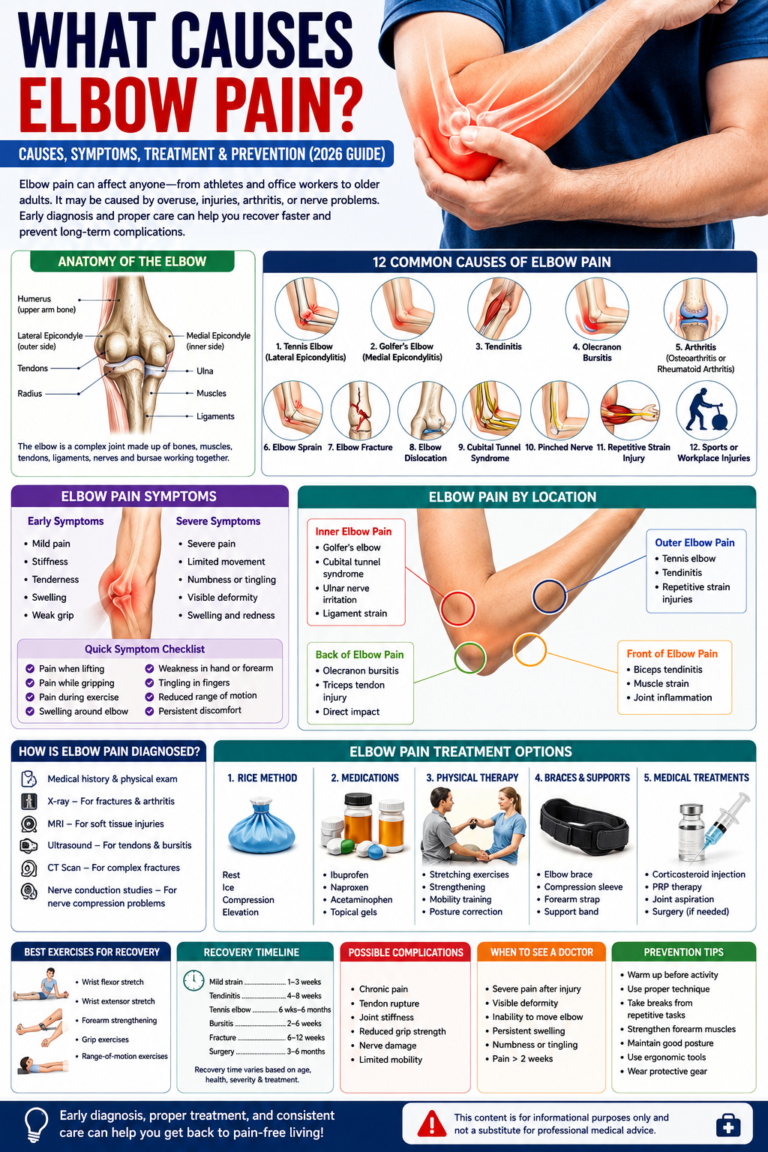
Elbow pain is a common problem that can affect people of all ages, from office workers and athletes to manual laborers and older adults. Whether it’s a dull ache after lifting groceries, sharp pain while playing tennis, or persistent discomfort when typing, elbow pain can make everyday tasks difficult and reduce your quality of life.
The elbow is one of the hardest-working joints in the body. Every time you lift, push, pull, throw, or grip an object, your elbow relies on a complex network of bones, muscles, tendons, ligaments, nerves, and cartilage to function smoothly. When any of these structures become injured or inflamed, pain can develop.
In many cases, elbow pain is caused by overuse injuries such as tennis elbow or golfer’s elbow, but it may also result from arthritis, bursitis, fractures, nerve compression, or sudden trauma. The good news is that most cases improve with early diagnosis, proper treatment, and simple lifestyle changes.
This guide explains the most common causes of elbow pain, associated symptoms, and how to recognize when it’s time to seek medical attention.
Quick Answer: What Causes Elbow Pain?
Elbow pain can develop for many reasons, including repetitive movements, sports injuries, tendon inflammation, arthritis, fractures, sprains, bursitis, and nerve compression. The most common causes include tennis elbow (lateral epicondylitis), golfer’s elbow (medial epicondylitis), olecranon bursitis, and cubital tunnel syndrome. Treatment depends on the underlying cause and may involve rest, ice, medication, physical therapy, or, in severe cases, surgery.
Understanding the Elbow Joint
To understand why elbow pain occurs, it’s helpful to know how the elbow works.
The elbow is a hinge joint formed by three bones:
- Humerus (upper arm bone)
- Radius (forearm bone on the thumb side)
- Ulna (forearm bone on the little finger side)
These bones are connected by strong ligaments, surrounded by cartilage, and moved by muscles through tendons. Small fluid-filled sacs called bursae reduce friction between tissues, while the ulnar nerve passes behind the elbow and controls sensation in part of the hand.
Because so many structures work together, pain can originate from bones, joints, muscles, tendons, ligaments, nerves, or surrounding soft tissues.
12 Common Causes of Elbow Pain
1. Tennis Elbow (Lateral Epicondylitis)
Despite its name, tennis elbow doesn’t only affect tennis players. It commonly develops from repetitive gripping, lifting, or twisting movements.
People at higher risk include:
- Painters
- Carpenters
- Plumbers
- Office workers
- Mechanics
- Racquet sports players
Symptoms include pain on the outside of the elbow, weaker grip strength, and discomfort when lifting or shaking hands.
2. Golfer’s Elbow (Medial Epicondylitis)
Golfer’s elbow affects the tendons attached to the inside of the elbow.
Common causes include:
- Golf swings
- Weightlifting
- Throwing sports
- Repetitive wrist movements
Pain usually develops along the inner elbow and may radiate toward the forearm.
3. Elbow Tendinitis
Tendinitis occurs when a tendon becomes irritated or inflamed due to overuse.
It often develops after repetitive activities such as:
- Painting
- Gardening
- Typing
- Lifting weights
- Using hand tools
Without adequate rest, tendinitis can become chronic and significantly affect arm function.
4. Olecranon Bursitis
The olecranon bursa sits over the point of the elbow and helps reduce friction.
When this fluid-filled sac becomes inflamed, it causes:
- Noticeable swelling
- Tenderness
- Warmth
- Pain when leaning on the elbow
Repeated pressure, infection, or direct trauma can all trigger bursitis.
5. Arthritis
Several forms of arthritis can affect the elbow joint.
Osteoarthritis
Often develops with aging or previous joint injuries, causing cartilage to wear down over time.
Rheumatoid Arthritis
An autoimmune disease that attacks the joint lining, leading to inflammation, pain, and stiffness in both elbows and other joints.
6. Elbow Sprain
A sprain occurs when the ligaments supporting the elbow are stretched or torn.
This usually happens after:
- Falls
- Sports injuries
- Twisting accidents
Symptoms include swelling, bruising, and pain during movement.
7. Elbow Fracture
A broken elbow often results from:
- Falling on an outstretched hand
- Motor vehicle accidents
- High-impact sports injuries
Fractures cause severe pain, swelling, bruising, and difficulty moving the arm. Immediate medical attention is essential.
8. Elbow Dislocation
An elbow dislocation occurs when the bones move out of their normal position.
Common symptoms include:
- Intense pain
- Visible deformity
- Swelling
- Limited movement
This injury requires emergency medical treatment.
9. Cubital Tunnel Syndrome
The ulnar nerve runs through a narrow passage behind the elbow called the cubital tunnel.
When this nerve becomes compressed, symptoms may include:
- Numbness in the ring and little fingers
- Tingling
- Weak grip
- Pain along the inner elbow
People who frequently bend their elbows or lean on hard surfaces are at greater risk.
10. Pinched Nerve
A pinched nerve in the neck, shoulder, or elbow may cause pain that radiates into the elbow and forearm.
Additional symptoms often include:
- Burning sensations
- Tingling
- Muscle weakness
- Numbness
11. Repetitive Strain Injury
Performing the same movement repeatedly can gradually overload muscles and tendons.
Examples include:
- Computer work
- Factory jobs
- Assembly line tasks
- Playing musical instruments
Without adequate rest, repetitive strain injuries may become chronic.
12. Sports and Workplace Injuries
Contact sports, heavy lifting, construction work, and physically demanding occupations place considerable stress on the elbow.
Acute injuries may involve:
- Muscle strains
- Ligament tears
- Tendon injuries
- Bone fractures
Using proper technique and protective equipment can significantly reduce injury risk.
Elbow Pain Symptoms
Symptoms vary depending on the underlying cause, but common warning signs include:
Early Symptoms
- Mild aching
- Tenderness
- Stiffness
- Pain during movement
- Weak grip strength
- Occasional swelling
These symptoms often begin gradually and worsen with repetitive activity.
Severe Symptoms
More serious conditions may cause:
- Severe swelling
- Limited range of motion
- Numbness or tingling
- Visible deformity
- Inability to straighten the elbow
- Sharp pain even at rest
These symptoms should not be ignored and warrant prompt medical evaluation.
Quick Symptom Checklist
You may have an elbow injury if you experience:
- ✔ Pain while lifting objects
- ✔ Pain during gripping
- ✔ Difficulty straightening your arm
- ✔ Swelling around the elbow
- ✔ Weakness in the hand or forearm
- ✔ Tingling in the fingers
- ✔ Reduced flexibility
- ✔ Persistent discomfort after activity
Elbow Pain by Location
The location of your pain often provides clues about the underlying condition.
Inner Elbow Pain
Common causes include:
- Golfer’s elbow
- Cubital tunnel syndrome
- Ulnar nerve irritation
- Ligament strain
Outer Elbow Pain
Pain on the outside of the elbow is most commonly associated with:
- Tennis elbow
- Tendinitis
- Repetitive strain injuries
Back of the Elbow Pain
Pain behind the elbow may result from:
- Olecranon bursitis
- Triceps tendon injury
- Direct impact to the elbow
Front of the Elbow Pain
Pain at the front of the elbow can occur due to:
- Biceps tendinitis
- Muscle strain
- Joint inflammation
Identifying where the pain occurs can help your healthcare provider narrow down the possible cause and recommend the most appropriate treatment.
What Causes Elbow Pain? Common Causes, Symptoms, Treatment & When to See a Doctor (2026 Guide) – Part 2
How Is Elbow Pain Diagnosed?
Finding the exact cause of elbow pain is the first step toward effective treatment. While some cases improve with rest, persistent or severe pain should be evaluated by a healthcare professional.
Your healthcare provider will begin by asking about:
- When the pain started
- Recent injuries or repetitive activities
- Your occupation or sports participation
- Medical conditions such as arthritis or diabetes
- Symptoms like numbness, swelling, or weakness
A physical examination helps assess tenderness, joint stability, range of motion, muscle strength, and nerve function.
Diagnostic Tests
Depending on your symptoms, one or more of the following tests may be recommended:
X-ray
- Detects fractures, arthritis, and bone abnormalities.
MRI (Magnetic Resonance Imaging)
- Provides detailed images of tendons, ligaments, cartilage, muscles, and nerves.
Ultrasound
- Useful for evaluating tendon injuries, bursitis, and fluid buildup.
CT Scan
- Recommended for complex fractures or detailed bone imaging.
Nerve Conduction Studies
- Help diagnose conditions such as Cubital Tunnel Syndrome or other nerve compression disorders.
Elbow Pain Treatment
Treatment depends on the underlying cause, severity of symptoms, and how long the pain has been present.
1. Home Treatment (RICE Method)
For mild elbow injuries, the RICE method is often the first line of treatment.
Rest
Avoid activities that worsen the pain, especially repetitive lifting, gripping, or throwing.
Ice
Apply an ice pack wrapped in a towel for 15–20 minutes every 2–3 hours during the first 48 hours to reduce inflammation and discomfort.
Compression
Use an elbow compression sleeve or brace to provide support and reduce swelling if recommended by your healthcare provider.
Elevation
Keep your elbow raised above heart level whenever possible to minimize swelling after an acute injury.
2. Medications
Over-the-counter medications may help relieve pain and inflammation.
Common options include:
- Ibuprofen
- Naproxen
- Acetaminophen
- Topical anti-inflammatory gels
Always use medications as directed and consult your healthcare provider if you have underlying medical conditions.
3. Physical Therapy
Physical therapy plays a key role in recovering from many elbow conditions.
A therapist may recommend:
- Gentle stretching exercises
- Strengthening exercises
- Grip training
- Joint mobility exercises
- Posture correction
- Activity modification
A personalized rehabilitation plan can improve flexibility, reduce pain, and lower the risk of future injuries.
4. Elbow Braces and Supports
Supportive devices may reduce stress on injured tendons and muscles.
Common options include:
- Tennis elbow strap
- Compression sleeve
- Hinged elbow brace
- Forearm support band
These devices are most effective when combined with exercise and activity modification rather than used alone.
5. Medical Treatments
If conservative treatment doesn’t improve symptoms, your healthcare provider may recommend additional therapies.
Possible treatments include:
- Corticosteroid injections for severe inflammation
- Platelet-Rich Plasma (PRP) therapy in selected tendon injuries
- Joint aspiration for infected or swollen bursae
- Surgery for tendon tears, fractures, severe arthritis, or persistent nerve compression
Fortunately, surgery is only necessary for a small percentage of patients.
Best Exercises for Elbow Pain Recovery
Exercise should only begin after the acute pain has improved or with guidance from a healthcare professional.
Helpful exercises include:
Wrist Flexor Stretch
Improves flexibility in the muscles attached to the inner elbow.
Wrist Extensor Stretch
Often recommended for people recovering from tennis elbow.
Forearm Strengthening
Light resistance exercises help rebuild muscle endurance.
Grip Strength Exercises
Using a soft therapy ball can improve hand and forearm strength.
Range-of-Motion Exercises
Gentle bending and straightening movements help restore elbow mobility and reduce stiffness.
Recovery Timeline
Recovery depends on the cause of elbow pain, your overall health, and how closely you follow your treatment plan.
| Condition | Average Recovery Time |
|---|---|
| Mild muscle strain | 1–3 weeks |
| Tennis elbow | 6 weeks–6 months |
| Golfer’s elbow | 6–12 weeks |
| Tendinitis | 4–8 weeks |
| Olecranon bursitis | 2–6 weeks |
| Elbow fracture | 6–12 weeks |
| Surgery | 3–6 months |
Factors That Affect Healing
Recovery may take longer if you:
- Continue repetitive activities too soon
- Smoke
- Have diabetes
- Have rheumatoid arthritis
- Skip physical therapy
- Don’t allow adequate rest between activities
Possible Complications
Ignoring persistent elbow pain can lead to long-term problems.
Potential complications include:
- Chronic pain
- Reduced grip strength
- Tendon rupture
- Permanent joint stiffness
- Loss of flexibility
- Nerve damage
- Difficulty performing daily activities
Early treatment greatly reduces the risk of these complications.
When Should You See a Doctor?
Seek medical care immediately if you experience:
- Severe pain after a fall or injury
- Visible elbow deformity
- Inability to move your arm
- Persistent swelling
- Redness with fever
- Numbness that doesn’t improve
- Weakness affecting your hand
- Pain lasting longer than two weeks despite home treatment
Prompt evaluation can help prevent permanent damage and improve recovery outcomes.
How to Prevent Elbow Pain
Although not every injury can be prevented, healthy habits can significantly lower your risk.
Prevention Tips
- Warm up before sports or exercise.
- Stretch your forearm muscles regularly.
- Improve workstation ergonomics.
- Avoid repetitive movements without breaks.
- Use proper lifting techniques.
- Strengthen your wrist and forearm muscles.
- Wear protective equipment during sports.
- Maintain good posture while working.
- Replace worn sports equipment when necessary.
Small changes in daily habits can make a significant difference in preventing overuse injuries.
Frequently Asked Questions
1. What is the most common cause of elbow pain?
The most common cause is tennis elbow (lateral epicondylitis), which results from repetitive strain on the tendons attached to the outside of the elbow.
2. Why does my elbow hurt without an injury?
Pain without a specific injury may result from repetitive overuse, arthritis, tendon inflammation, or nerve compression.
3. Is elbow pain a sign of arthritis?
Yes. Both osteoarthritis and rheumatoid arthritis can affect the elbow joint and cause pain, stiffness, and reduced mobility.
4. How can I tell if I have tennis elbow?
Pain on the outside of the elbow that worsens when gripping, lifting, or shaking hands is a common sign of tennis elbow.
5. Can elbow pain heal on its own?
Many mild cases improve with rest, activity modification, and home care. Persistent or worsening pain should be evaluated by a healthcare professional.
6. What exercises help elbow pain?
Gentle stretching, forearm strengthening, grip exercises, and range-of-motion movements are often recommended during recovery.
7. How long does elbow pain last?
Recovery ranges from a few weeks for mild strains to several months for chronic tendon injuries or after surgery.
8. Can sleeping position cause elbow pain?
Yes. Sleeping with the elbow bent for long periods may increase pressure on the ulnar nerve and contribute to numbness or pain.
9. Does typing cause elbow pain?
Prolonged typing with poor ergonomics can contribute to repetitive strain injuries affecting the elbow, wrist, and forearm.
10. When should I see a doctor for elbow pain?
You should seek medical advice if pain is severe, follows a significant injury, limits movement, or persists despite several days of self-care.
Conclusion
Elbow pain is a common condition with many possible causes, ranging from temporary muscle strain to chronic tendon disorders, arthritis, fractures, and nerve compression. Understanding where your pain is located, when it occurs, and what activities make it worse can provide valuable clues about the underlying problem.
Most mild cases improve with rest, the RICE method, physical therapy, and gradual strengthening exercises. However, severe pain, swelling, deformity, numbness, or ongoing symptoms should never be ignored. Early diagnosis and appropriate treatment can speed recovery, restore normal function, and reduce the risk of long-term complications.
By maintaining good posture, using proper lifting techniques, taking regular breaks from repetitive activities, and strengthening the muscles that support the elbow joint, you can protect your elbows and keep them healthy for years to come.
How Is Elbow Pain Diagnosed?
Finding the exact cause of elbow pain is the first step toward effective treatment. While some cases improve with rest, persistent or severe pain should be evaluated by a healthcare professional.
Your healthcare provider will begin by asking about:
- When the pain started
- Recent injuries or repetitive activities
- Your occupation or sports participation
- Medical conditions such as arthritis or diabetes
- Symptoms like numbness, swelling, or weakness
A physical examination helps assess tenderness, joint stability, range of motion, muscle strength, and nerve function.
Diagnostic Tests
Depending on your symptoms, one or more of the following tests may be recommended:
X-ray
- Detects fractures, arthritis, and bone abnormalities.
MRI (Magnetic Resonance Imaging)
- Provides detailed images of tendons, ligaments, cartilage, muscles, and nerves.
Ultrasound
- Useful for evaluating tendon injuries, bursitis, and fluid buildup.
CT Scan
- Recommended for complex fractures or detailed bone imaging.
Nerve Conduction Studies
- Help diagnose conditions such as Cubital Tunnel Syndrome or other nerve compression disorders.
Elbow Pain Treatment
Treatment depends on the underlying cause, severity of symptoms, and how long the pain has been present.
1. Home Treatment (RICE Method)
For mild elbow injuries, the RICE method is often the first line of treatment.
Rest
Avoid activities that worsen the pain, especially repetitive lifting, gripping, or throwing.
Ice
Apply an ice pack wrapped in a towel for 15–20 minutes every 2–3 hours during the first 48 hours to reduce inflammation and discomfort.
Compression
Use an elbow compression sleeve or brace to provide support and reduce swelling if recommended by your healthcare provider.
Elevation
Keep your elbow raised above heart level whenever possible to minimize swelling after an acute injury.
2. Medications
Over-the-counter medications may help relieve pain and inflammation.
Common options include:
- Ibuprofen
- Naproxen
- Acetaminophen
- Topical anti-inflammatory gels
Always use medications as directed and consult your healthcare provider if you have underlying medical conditions.
3. Physical Therapy
Physical therapy plays a key role in recovering from many elbow conditions.
A therapist may recommend:
- Gentle stretching exercises
- Strengthening exercises
- Grip training
- Joint mobility exercises
- Posture correction
- Activity modification
A personalized rehabilitation plan can improve flexibility, reduce pain, and lower the risk of future injuries.
4. Elbow Braces and Supports
Supportive devices may reduce stress on injured tendons and muscles.
Common options include:
- Tennis elbow strap
- Compression sleeve
- Hinged elbow brace
- Forearm support band
These devices are most effective when combined with exercise and activity modification rather than used alone.
5. Medical Treatments
If conservative treatment doesn’t improve symptoms, your healthcare provider may recommend additional therapies.
Possible treatments include:
- Corticosteroid injections for severe inflammation
- Platelet-Rich Plasma (PRP) therapy in selected tendon injuries
- Joint aspiration for infected or swollen bursae
- Surgery for tendon tears, fractures, severe arthritis, or persistent nerve compression
Fortunately, surgery is only necessary for a small percentage of patients.
Best Exercises for Elbow Pain Recovery
Exercise should only begin after the acute pain has improved or with guidance from a healthcare professional.
Helpful exercises include:
Wrist Flexor Stretch
Improves flexibility in the muscles attached to the inner elbow.
Wrist Extensor Stretch
Often recommended for people recovering from tennis elbow.
Forearm Strengthening
Light resistance exercises help rebuild muscle endurance.
Grip Strength Exercises
Using a soft therapy ball can improve hand and forearm strength.
Range-of-Motion Exercises
Gentle bending and straightening movements help restore elbow mobility and reduce stiffness.
Recovery Timeline
Recovery depends on the cause of elbow pain, your overall health, and how closely you follow your treatment plan.
| Condition | Average Recovery Time |
|---|---|
| Mild muscle strain | 1–3 weeks |
| Tennis elbow | 6 weeks–6 months |
| Golfer’s elbow | 6–12 weeks |
| Tendinitis | 4–8 weeks |
| Olecranon bursitis | 2–6 weeks |
| Elbow fracture | 6–12 weeks |
| Surgery | 3–6 months |
Factors That Affect Healing
Recovery may take longer if you:
- Continue repetitive activities too soon
- Smoke
- Have diabetes
- Have rheumatoid arthritis
- Skip physical therapy
- Don’t allow adequate rest between activities
Possible Complications
Ignoring persistent elbow pain can lead to long-term problems.
Potential complications include:
- Chronic pain
- Reduced grip strength
- Tendon rupture
- Permanent joint stiffness
- Loss of flexibility
- Nerve damage
- Difficulty performing daily activities
Early treatment greatly reduces the risk of these complications.
When Should You See a Doctor?
Seek medical care immediately if you experience:
- Severe pain after a fall or injury
- Visible elbow deformity
- Inability to move your arm
- Persistent swelling
- Redness with fever
- Numbness that doesn’t improve
- Weakness affecting your hand
- Pain lasting longer than two weeks despite home treatment
Prompt evaluation can help prevent permanent damage and improve recovery outcomes.
How to Prevent Elbow Pain
Although not every injury can be prevented, healthy habits can significantly lower your risk.
Prevention Tips
- Warm up before sports or exercise.
- Stretch your forearm muscles regularly.
- Improve workstation ergonomics.
- Avoid repetitive movements without breaks.
- Use proper lifting techniques.
- Strengthen your wrist and forearm muscles.
- Wear protective equipment during sports.
- Maintain good posture while working.
- Replace worn sports equipment when necessary.
Small changes in daily habits can make a significant difference in preventing overuse injuries.
Frequently Asked Questions
1. What is the most common cause of elbow pain?
The most common cause is tennis elbow (lateral epicondylitis), which results from repetitive strain on the tendons attached to the outside of the elbow.
2. Why does my elbow hurt without an injury?
Pain without a specific injury may result from repetitive overuse, arthritis, tendon inflammation, or nerve compression.
3. Is elbow pain a sign of arthritis?
Yes. Both osteoarthritis and rheumatoid arthritis can affect the elbow joint and cause pain, stiffness, and reduced mobility.
4. How can I tell if I have tennis elbow?
Pain on the outside of the elbow that worsens when gripping, lifting, or shaking hands is a common sign of tennis elbow.
5. Can elbow pain heal on its own?
Many mild cases improve with rest, activity modification, and home care. Persistent or worsening pain should be evaluated by a healthcare professional.
6. What exercises help elbow pain?
Gentle stretching, forearm strengthening, grip exercises, and range-of-motion movements are often recommended during recovery.
7. How long does elbow pain last?
Recovery ranges from a few weeks for mild strains to several months for chronic tendon injuries or after surgery.
8. Can sleeping position cause elbow pain?
Yes. Sleeping with the elbow bent for long periods may increase pressure on the ulnar nerve and contribute to numbness or pain.
9. Does typing cause elbow pain?
Prolonged typing with poor ergonomics can contribute to repetitive strain injuries affecting the elbow, wrist, and forearm.
10. When should I see a doctor for elbow pain?
You should seek medical advice if pain is severe, follows a significant injury, limits movement, or persists despite several days of self-care.
Conclusion
Elbow pain is a common condition with many possible causes, ranging from temporary muscle strain to chronic tendon disorders, arthritis, fractures, and nerve compression. Understanding where your pain is located, when it occurs, and what activities make it worse can provide valuable clues about the underlying problem.
Most mild cases improve with rest, the RICE method, physical therapy, and gradual strengthening exercises. However, severe pain, swelling, deformity, numbness, or ongoing symptoms should never be ignored. Early diagnosis and appropriate treatment can speed recovery, restore normal function, and reduce the risk of long-term complications.
By maintaining good posture, using proper lifting techniques, taking regular breaks from repetitive activities, and strengthening the muscles that support the elbow joint, you can protect your elbows and keep them healthy for years to come.
