

What Causes Elbow Pain?
Elbow pain can make even the simplest daily tasks—lifting a grocery bag, typing on a keyboard, shaking hands, or pouring a cup of coffee—unexpectedly difficult. While many people associate elbow pain with sports injuries like tennis elbow, the discomfort can affect anyone, including office workers, manual laborers, parents, and older adults.
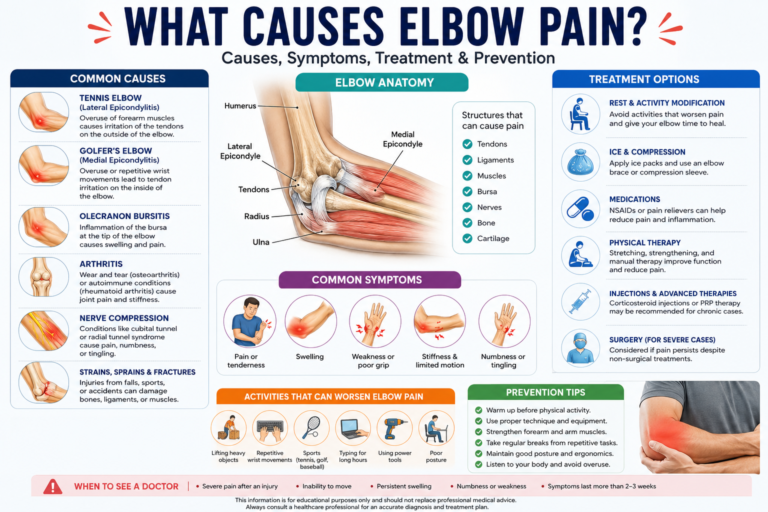
The elbow is a complex joint made up of bones, tendons, ligaments, muscles, cartilage, and nerves. Because so many structures work together, pain can develop from overuse, injury, inflammation, arthritis, or nerve compression. Sometimes the discomfort appears suddenly after trauma, while other times it develops gradually due to repetitive movements. In this guide, you’ll learn what causes elbow pain, how to identify the symptoms, the difference between common elbow conditions, available treatment options, and practical ways to prevent future injuries.
Understanding the Elbow Joint
To understand why elbow pain occurs, it helps to know how the joint works.
The elbow connects three bones:
- Humerus (upper arm bone)
- Radius (thumb-side forearm bone)
- Ulna (little finger-side forearm bone)
These bones are held together by strong ligaments, while tendons connect muscles to the bones, allowing you to bend, straighten, lift, push, pull, and rotate your forearm.
Several important nerves also travel through the elbow, including:
- Ulnar nerve
- Radial nerve
- Median nerve
If any of these structures become irritated, inflamed, compressed, or injured, elbow pain can develop.
Common Causes of Elbow Pain
1. Tennis Elbow (Lateral Epicondylitis)
Despite its name, tennis elbow affects far more than athletes. It’s one of the most common causes of elbow pain and develops when the tendons attached to the outside of the elbow become irritated from repetitive wrist and arm movements.
Common Causes
- Typing for long hours
- Painting
- Plumbing
- Carpentry
- Gardening
- Racquet sports
- Weightlifting
Symptoms
- Pain on the outer elbow
- Weak grip strength
- Pain when lifting objects
- Difficulty shaking hands
- Discomfort while opening jars
2. Golfer’s Elbow (Medial Epicondylitis)
Golfer’s elbow affects the tendons on the inside of the elbow.
Although golfers can develop this condition, it’s also common among mechanics, construction workers, climbers, and anyone who repeatedly bends their wrist.
Symptoms
- Pain inside the elbow
- Wrist weakness
- Tingling into the ring and little fingers
- Pain when gripping objects
3. Tendinitis
Elbow tendinitis occurs when tendons become inflamed after repetitive use.
Unlike a sudden injury, tendinitis usually develops gradually.
Risk factors include:
- Repetitive lifting
- Heavy gym workouts
- Throwing sports
- Manual labor
Pain often worsens during activity and improves with rest.
4. Olecranon Bursitis
The olecranon bursa is a small fluid-filled sac located behind the elbow.
Its job is to reduce friction between the skin and bone.
If irritated, it can become swollen and painful
Common causes include:
- Leaning on the elbows
- Infection
- Trauma
- Repetitive pressure
Symptoms include noticeable swelling behind the elbow, tenderness, warmth, and reduced movement.
5. Arthritis
Several forms of arthritis can affect the elbow.
Osteoarthritis
Usually develops with age as cartilage gradually wears away.
Symptoms include:
- Stiffness
- Grinding sensation
- Pain during movement
- Reduced flexibility
Rheumatoid Arthritis
An autoimmune disease where the immune system attacks healthy joints.
Symptoms often include:
- Pain in both elbows
- Morning stiffness
- Swelling
- Fatigue
6. Elbow Sprain
A sprain occurs when ligaments are stretched or torn.
Common causes include:
- Falls
- Sports injuries
- Car accidents
Symptoms include swelling, bruising, pain, and joint instability.
7. Elbow Fracture
Breaking one of the elbow bones is a medical emergency.
Fractures usually happen after:
- Falling onto an outstretched hand
- Direct impact
- Sports collisions
Signs include:
- Severe pain
- Immediate swelling
- Visible deformity
- Inability to move the arm
8. Nerve Compression
Sometimes the pain isn’t coming from muscles or tendons at all.
Instead, a compressed nerve causes discomfort.
Cubital Tunnel Syndrome
Occurs when the ulnar nerve becomes compressed behind the elbow.
Symptoms include:
- Numbness
- Tingling
- Burning sensation
- Weak grip
- Finger weakness
Radial Tunnel Syndrome
This condition develops when the radial nerve becomes compressed.
Symptoms include:
- Aching outer elbow pain
- Forearm discomfort
- Pain when extending the wrist
9. Overuse Injuries
Many people experience elbow pain simply because they perform the same movement repeatedly.
Common activities include:
- Weightlifting
- Baseball
- Tennis
- Typing
- Using power tools
- Assembly-line work
- Gardening
Tiny tears gradually develop in the tendons, eventually leading to chronic pain.
Elbow Pain by Location
The location of the pain often provides valuable clues about the underlying cause.
Pain on the Outside of the Elbow
Most commonly caused by:
- Tennis elbow
- Radial tunnel syndrome
- Tendinitis
Pain usually worsens while lifting, gripping, or twisting.
Pain on the Inside of the Elbow
Often linked to:
- Golfer’s elbow
- Ulnar nerve compression
- Ligament injuries
This pain may travel into the forearm or fingers.
Pain Behind the Elbow
Frequently associated with:
- Olecranon bursitis
- Direct trauma
- Triceps tendon injuries
Swelling is often easy to see.
Front Elbow Pain
Possible causes include:
- Muscle strain
- Distal biceps tendon injury
- Joint inflammation
Left or Right Elbow Pain
Pain can occur in either arm.
Usually, the dominant arm is more commonly affected because it’s used more often during work, sports, and daily activities.
Elbow Pain During Different Activities
Understanding when pain occurs helps narrow down the diagnosis.
Pain While Lifting
May indicate:
- Tennis elbow
- Tendinitis
- Muscle strain
Pain While Typing
Often caused by:
- Poor ergonomics
- Repetitive strain
- Nerve compression
Pain During Exercise
Could result from:
- Overtraining
- Incorrect technique
- Heavy lifting
- Inadequate warm-up
Pain While Gripping
Common with:
- Tennis elbow
- Golfer’s elbow
- Tendon injuries
Weak grip strength is a frequent symptom.
Pain at Night
Night pain may be linked to:
- Arthritis
- Nerve compression
- Inflammation
Sleeping with the elbow bent for long periods can worsen cubital tunnel syndrome.
Symptoms That May Accompany Elbow Pain
Elbow pain rarely occurs alone.
Other symptoms help doctors identify the underlying condition.
| Symptom | Possible Cause |
|---|---|
| Swelling | Bursitis, fracture |
| Bruising | Sprain, fracture |
| Weak grip | Tennis elbow |
| Tingling | Ulnar nerve compression |
| Numbness | Cubital tunnel syndrome |
| Stiffness | Arthritis |
| Redness | Infection |
| Warmth | Inflammation |
| Limited movement | Sprain or fracture |
| Clicking | Cartilage injury |
How Doctors Diagnose Elbow Pain
A healthcare provider usually begins with a physical examination.
They’ll ask questions such as:
- When did the pain start?
- Did you suffer an injury?
- Which movements make it worse?
- Do you have numbness or tingling?
The examination may include testing your range of motion, grip strength, and tenderness around the joint.
If needed, imaging tests may be recommended:
- X-ray to detect fractures or arthritis
- MRI to evaluate tendons, ligaments, and cartilage
- Ultrasound to assess soft tissue injuries
- CT scan for complex fractures
- Blood tests if rheumatoid arthritis, gout, or infection is suspected
Early diagnosis helps prevent minor problems from becoming long-term conditions.
How Is Elbow Pain Treated?
The best treatment for elbow pain depends on its underlying cause. While mild overuse injuries often improve with self-care, more serious conditions such as fractures, severe tendon tears, or advanced arthritis may require specialized medical treatment.
Fortunately, most people recover without surgery when treatment begins early.
Home Remedies for Elbow Pain
If your pain is mild or caused by repetitive activity, these home remedies are often the first line of treatment.
1. Rest the Joint
Avoid activities that trigger pain, especially repetitive gripping, lifting, or twisting. Giving the tendons and muscles time to heal is essential.
However, complete immobilization for long periods isn’t recommended because it may lead to stiffness.
2. Apply Ice
Ice helps reduce inflammation and relieve pain.
- Apply an ice pack for 15–20 minutes
- Repeat every 3–4 hours during the first 48 hours
- Always wrap the ice pack in a towel to protect your skin
3. Compression
Using an elbow brace or compression sleeve can:
- Reduce swelling
- Support injured tendons
- Improve comfort during daily activities
Many people with tennis elbow benefit from a counterforce brace that reduces stress on the affected tendon.
4. Elevation
If swelling is present, keep your elbow elevated above heart level whenever possible.
This helps reduce fluid buildup and inflammation.
5. Activity Modification
Instead of stopping all movement, modify activities that worsen symptoms.
Examples include:
- Using ergonomic tools
- Taking frequent breaks while typing
- Switching hands when possible
- Reducing repetitive lifting
Small changes often make a significant difference.
Medications for Elbow Pain
Your healthcare provider may recommend medication depending on the cause of your pain.
Common options include:
- NSAIDs (ibuprofen or naproxen) to reduce inflammation
- Acetaminophen for pain relief
- Topical anti-inflammatory gels
- Prescription medications for inflammatory arthritis
Always follow your healthcare provider’s instructions and avoid prolonged use of pain medications without medical advice.
Physical Therapy
Physical therapy is one of the most effective treatments for chronic elbow pain.
A licensed physical therapist can create a personalized rehabilitation program focused on restoring strength, flexibility, and joint function.
Treatment may include:
- Stretching exercises
- Forearm strengthening
- Grip training
- Manual therapy
- Posture correction
- Ergonomic education
Research shows that exercise-based rehabilitation can significantly improve recovery from tennis elbow and golfer’s elbow.
Medical Treatments
If conservative treatment doesn’t relieve symptoms, your doctor may recommend additional therapies.
Corticosteroid Injections
Steroid injections can temporarily reduce inflammation and pain.
However, repeated injections aren’t usually recommended because they may weaken tendons over time.
Platelet-Rich Plasma (PRP)
PRP therapy uses your own blood platelets to promote tendon healing.
Although research is ongoing, some patients with chronic tendon injuries experience improvement.
Surgery
Surgery is considered only when symptoms persist despite several months of non-surgical treatment.
Surgical options may involve:
- Removing damaged tendon tissue
- Repairing torn ligaments
- Releasing compressed nerves
- Fixing fractures with plates or screws
Most people never require surgery.
Best Exercises for Elbow Pain Relief
Exercise should never increase severe pain. If symptoms worsen, stop and consult a healthcare professional.
Wrist Extensor Stretch
This stretch helps reduce tension associated with tennis elbow.
How to perform:
- Extend one arm straight.
- Bend your wrist downward.
- Use your opposite hand to gently increase the stretch.
- Hold for 20–30 seconds.
- Repeat three times.
Wrist Flexor Stretch
Helpful for golfer’s elbow.
- Extend your arm.
- Turn the palm upward.
- Pull the fingers downward gently.
- Hold for 30 seconds.
Grip Strengthening
Use a soft stress ball.
- Squeeze gently.
- Hold for five seconds.
- Repeat 10–15 times.
Avoid squeezing if it increases pain significantly.
Forearm Strengthening
Light dumbbells or resistance bands can strengthen the forearm muscles that support the elbow.
Examples include:
- Wrist curls
- Reverse wrist curls
- Pronation and supination exercises
Begin with light resistance and gradually increase as pain improves.
Range-of-Motion Exercises
Gentle bending and straightening exercises help prevent stiffness after injury.
Move only within a comfortable range.
Can Elbow Pain Go Away on Its Own?
Yes, many mild cases improve with time.
Minor muscle strains and overuse injuries often begin feeling better within a few weeks when treated with rest, ice, and activity modification.
Recovery depends on:
- The underlying cause
- Age
- Overall health
- Activity level
- How early treatment begins
Chronic tendon injuries may require several months of rehabilitation before full recovery.
When Should You See a Doctor?
While occasional elbow discomfort isn’t usually an emergency, certain symptoms require prompt medical evaluation.
Seek medical care if you experience:
- Severe pain after a fall or accident
- Visible deformity
- Inability to move the elbow
- Significant swelling
- Fever with redness or warmth
- Persistent numbness or tingling
- Loss of grip strength
- Symptoms lasting longer than two to three weeks
- Pain that interferes with work or sleep
Early treatment often prevents long-term complications.
How to Prevent Elbow Pain
Preventing elbow pain is often easier than treating it.
Here are practical strategies that can reduce your risk.
Warm Up Before Activity
Prepare your muscles and tendons before sports or heavy lifting.
Even five minutes of stretching can reduce injury risk.
Improve Your Technique
Whether you’re playing tennis, golfing, or lifting weights, proper form reduces unnecessary stress on the elbow.
Working with a coach or trainer may help correct movement patterns.
Strengthen Your Forearm Muscles
Strong forearm muscles better support the elbow joint and absorb repetitive forces.
A balanced strengthening routine can reduce overuse injuries.
Take Frequent Breaks
If your work involves typing, using tools, or repetitive movements, take short breaks every 30–60 minutes.
Stretching during these breaks helps reduce muscle fatigue.
Improve Workplace Ergonomics
Adjust:
- Chair height
- Keyboard position
- Mouse placement
- Arm support
Proper ergonomics reduce repetitive strain on the elbow and wrist.
Listen to Your Body
Pain is often an early warning sign.
Ignoring discomfort may allow a minor problem to become a chronic injury.
Frequently Asked Questions
What is the most common cause of elbow pain?
The most common cause is tennis elbow (lateral epicondylitis), especially among people who perform repetitive gripping or wrist movements.
Why does my elbow hurt without an injury?
Pain without trauma is often caused by overuse, tendon irritation, arthritis, bursitis, or nerve compression.
Can elbow pain be a sign of arthritis?
Yes. Both osteoarthritis and rheumatoid arthritis can affect the elbow, causing pain, stiffness, and reduced mobility.
Why does my elbow hurt when lifting something?
Pain during lifting is commonly associated with tennis elbow, golfer’s elbow, muscle strain, or tendon injuries.
How long does elbow pain take to heal?
Mild cases may improve within two to six weeks, while chronic tendon injuries can take several months to heal completely.
What exercises help elbow pain?
Gentle stretching, grip strengthening, wrist curls, and forearm exercises are commonly recommended once acute pain begins to improve.
Is elbow pain ever an emergency?
Yes. Severe pain after trauma, deformity, inability to move the arm, or symptoms of infection require immediate medical attention.
Key Takeaways
- Elbow pain can result from tendon injuries, arthritis, bursitis, fractures, nerve compression, or repetitive strain.
- The location and timing of your pain provide important clues about the underlying cause.
- Most mild cases respond well to rest, ice, activity modification, and physical therapy.
- Early diagnosis and appropriate treatment improve recovery and reduce the risk of chronic pain.
- Persistent, severe, or worsening symptoms should always be evaluated by a healthcare professional.
Conclusion
Elbow pain is a common problem, but it doesn’t have to become a long-term limitation. Whether your discomfort is caused by repetitive strain, tennis elbow, golfer’s elbow, arthritis, or nerve compression, identifying the underlying cause is the first step toward effective treatment.
Most people recover successfully with conservative care, including rest, targeted exercises, ergonomic adjustments, and physical therapy. Paying attention to early symptoms and avoiding repetitive stress can help protect your elbow joint and prevent future injuries.
If your pain is severe, lasts more than a few weeks, or is accompanied by swelling, numbness, weakness, or limited movement, don’t ignore it. A timely evaluation by a healthcare professional can lead to an accurate diagnosis and a treatment plan that gets you back to your normal activities safely and confidently.
