

Introduction
If you’ve recently received a positive Ureaplasma test result, you’re probably wondering what it means for your health. Is it a sexually transmitted infection (STI)? Should you be worried? Do you need antibiotics, or can it resolve on its own?
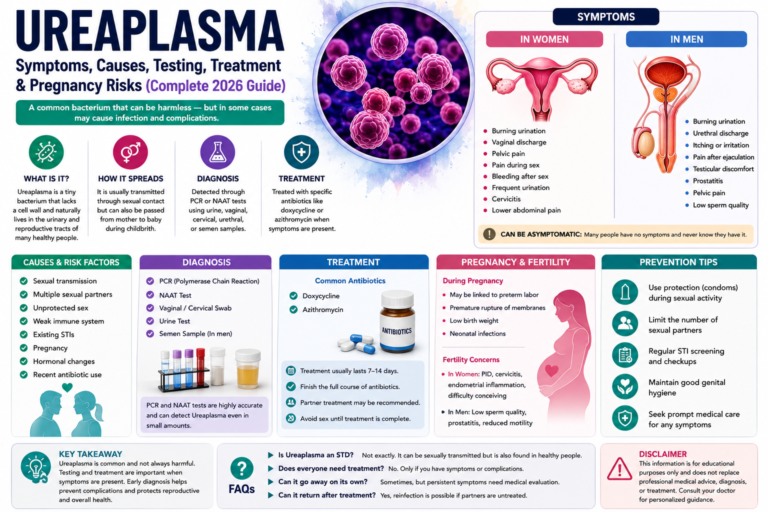
The answer isn’t always straightforward. Ureaplasma is a type of bacteria that naturally lives in the urinary and reproductive tracts of many healthy adults. In fact, many people carry it without ever developing symptoms. However, under certain conditions, it can multiply and contribute to urinary, genital, or reproductive health problems, particularly in people with weakened immune systems, persistent symptoms, or during pregnancy.
Because Ureaplasma infections often mimic conditions such as urinary tract infections (UTIs), bacterial vaginosis (BV), yeast infections, or even Chlamydia, they can be difficult to diagnose without specialized laboratory testing. Advances in Polymerase Chain Reaction (PCR) and Nucleic Acid Amplification Tests (NAATs) have made detection more accurate than ever, helping healthcare providers identify when treatment is truly necessary.
This comprehensive guide explains everything you need to know about Ureaplasma—from symptoms and causes to diagnosis, treatment options, pregnancy risks, fertility concerns, and prevention strategies—so you can make informed decisions about your reproductive health
What Is Ureaplasma?
Ureaplasma is a group of tiny bacteria belonging to the Mycoplasmataceae family. The two species most commonly found in humans are Ureaplasma urealyticum and Ureaplasma parvum. Unlike most bacteria, Ureaplasma lacks a cell wall, which means certain antibiotics—such as penicillins—are ineffective against it.
Although Ureaplasma can be transmitted through sexual contact, it is not always considered a traditional sexually transmitted infection (STI) because many healthy people naturally carry it without experiencing illness. Treatment is generally recommended only when it causes symptoms, contributes to complications, or is detected in specific clinical situations, such as infertility evaluations or pregnancy-related concerns.
What Is Ureaplasma?
Ureaplasma is part of the body’s normal genital microbiome, the community of microorganisms that naturally inhabit the reproductive and urinary tracts. In healthy individuals, these bacteria often coexist without causing disease.
Problems arise when the balance of the microbiome changes. Hormonal fluctuations, weakened immunity, other infections, pregnancy, or certain medical conditions can allow Ureaplasma to multiply beyond normal levels, leading to inflammation and infection.
The two most common human species include:
- Ureaplasma urealyticum
- Ureaplasma parvum
While both species are closely related, research suggests that Ureaplasma urealyticum may be more frequently associated with symptomatic infections. However, either species can be present without causing illness.
Because these bacteria are extremely small and lack a protective cell wall, they require specialized molecular tests for accurate identification.
Ureaplasma urealyticum vs. Ureaplasma parvum
Although both belong to the same bacterial family, they differ slightly in how often they’re linked to disease.
| Feature | Ureaplasma urealyticum | Ureaplasma parvum |
|---|---|---|
| Commonly found in healthy adults | Yes | Yes |
| May cause urinary symptoms | More frequently | Less frequently |
| Associated with reproductive complications | Yes | Possible |
| Requires treatment if symptomatic | Yes | Yes |
Regardless of the species identified, healthcare providers focus on your symptoms, medical history, and test results before deciding whether treatment is necessary.
Is Ureaplasma an STI?
One of the most common questions people ask is whether Ureaplasma is a sexually transmitted infection.
The answer is not exactly.
Ureaplasma can be passed between sexual partners through vaginal, oral, or anal sex. However, unlike infections such as Chlamydia trachomatis or Neisseria gonorrhoeae, it is also commonly found in healthy individuals who have no symptoms.
For this reason, many medical experts describe Ureaplasma as an opportunistic bacterium rather than a classic STI. It usually becomes problematic only when it overgrows or contributes to inflammation.
How Common Is Ureaplasma?
Ureaplasma is surprisingly common worldwide. Studies have shown that a significant percentage of sexually active adults carry the bacteria without knowing it.
General estimates suggest:
- Around 40–80% of sexually active women may carry Ureaplasma as part of their normal vaginal flora.
- Many men also carry the bacteria without symptoms.
- Colonization rates tend to increase after becoming sexually active.
- Most carriers never develop an active infection.
This is why a positive test result doesn’t automatically mean you have a disease. Doctors consider your symptoms, examination findings, and medical history before recommending treatment.
Where Does Ureaplasma Live in the Body?
Ureaplasma primarily colonizes the lower genital and urinary tract.
In women, it may be found in the:
- Vagina
- Cervix
- Urethra
- Endometrium
In men, it commonly resides in the:
- Urethra
- Prostate
- Semen
- Reproductive tract
Although less common, Ureaplasma can sometimes spread beyond these areas, especially in people with weakened immune systems or in newborns exposed during childbirth.
What Causes Ureaplasma to Become a Problem?
Simply carrying Ureaplasma doesn’t necessarily mean you’ll become ill. Most healthy people never experience symptoms.
However, certain factors can disrupt the natural balance of the genital microbiome and allow the bacteria to multiply, increasing the risk of infection.
Common risk factors include:
- Having multiple sexual partners
- Unprotected sexual activity
- A weakened immune system
- Pregnancy
- Existing sexually transmitted infections
- Recurrent urinary tract infections
- Bacterial vaginosis
- Hormonal changes
- Recent antibiotic use that alters the normal microbiome
When these factors are present, Ureaplasma may trigger inflammation in the urinary or reproductive tract, leading to symptoms that require medical evaluation.
Ureaplasma Symptoms, Diagnosis, and Related Conditions
While many people carry Ureaplasma without ever realizing it, others develop symptoms when the bacteria multiply and irritate the urinary or reproductive tract. One of the biggest challenges is that Ureaplasma symptoms often resemble those of a urinary tract infection (UTI), bacterial vaginosis (BV), yeast infection, or other sexually transmitted infections (STIs). Because of this overlap, proper testing is essential for an accurate diagnosis.
Ureaplasma Symptoms
Symptoms can vary depending on a person’s sex, overall health, and whether the infection affects the urinary or reproductive system. In some cases, symptoms are mild and disappear on their own, while in others they become persistent and require medical treatment.
Ureaplasma Symptoms in Women
Women are more likely than men to experience symptoms, especially if the bacteria cause inflammation in the cervix or reproductive tract.
Common symptoms include:
- Burning or pain during urination
- Frequent urge to urinate
- Abnormal vaginal discharge
- Pelvic or lower abdominal pain
- Pain during sexual intercourse (dyspareunia)
- Light bleeding after sex
- Vaginal irritation or discomfort
- Unexplained infertility in some cases
- Recurrent urinary tract symptoms despite negative urine cultures
If left untreated in symptomatic women, Ureaplasma may contribute to conditions such as cervicitis (inflammation of the cervix), pelvic inflammatory disease (PID), or pregnancy-related complications.
Ureaplasma Symptoms in Men
Although many men never develop symptoms, Ureaplasma can affect the urinary tract and reproductive organs.
Possible symptoms include:
- Burning sensation while urinating
- Mild urethral discharge
- Itching or irritation inside the urethra
- Pain after ejaculation
- Testicular discomfort
- Pelvic pain
- Prostate inflammation (prostatitis)
- Reduced sperm quality or motility in some men
Persistent symptoms should always be evaluated by a healthcare provider, especially if standard treatments for UTIs or other infections have not been effective.
Can Ureaplasma Be Asymptomatic?
Yes. In fact, most people with Ureaplasma have no symptoms at all.
The bacteria can remain part of the normal genital microbiome for years without causing any health problems. Many individuals only discover they carry Ureaplasma during fertility evaluations, pregnancy screenings, or investigations for persistent urinary or reproductive symptoms.
Because asymptomatic colonization is so common, healthcare providers generally do not recommend routine testing or treatment unless there are symptoms, pregnancy-related concerns, or specific medical indications.
When Should You Suspect Ureaplasma?
You should consider discussing Ureaplasma testing with your healthcare provider if you have:
- Recurrent urinary symptoms with negative urine cultures
- Persistent pelvic pain
- Ongoing vaginal or urethral discharge
- Burning during urination that doesn’t improve with standard treatment
- Repeated unexplained genital inflammation
- Difficulty conceiving without another identifiable cause
- Recurrent pregnancy loss or certain pregnancy complications, as advised by your doctor
These symptoms do not automatically mean you have Ureaplasma, but they may warrant further evaluation.
Ureaplasma vs. Other Common Infections
Because the symptoms overlap with many other conditions, it’s important to understand the differences.
| Condition | Common Symptoms | How It’s Diagnosed | Typical Treatment |
|---|---|---|---|
| Ureaplasma | Burning urination, pelvic pain, discharge, urethritis | PCR or NAAT test | Targeted antibiotics when indicated |
| Urinary Tract Infection (UTI) | Burning urination, urgency, frequent urination | Urine culture | Antibiotics based on urine culture |
| Bacterial Vaginosis (BV) | Thin gray discharge, fishy odor | Vaginal examination and laboratory testing | Antibiotics such as metronidazole or clindamycin |
| Yeast Infection | Thick white discharge, itching, redness | Clinical exam or laboratory testing | Antifungal medication |
| Chlamydia | Often silent, discharge, painful urination | NAAT | Antibiotics |
| Gonorrhea | Yellow or green discharge, pelvic pain | NAAT | Recommended antibiotic therapy |
Although these conditions may appear similar, they have different causes and require different treatments. Self-diagnosing based on symptoms alone can delay proper care.
How Is Ureaplasma Diagnosed?
Diagnosing Ureaplasma begins with a detailed medical history and physical examination. Your healthcare provider will ask about your symptoms, sexual history, previous infections, pregnancy status, and any recent antibiotic use.
Since Ureaplasma cannot be detected through a routine urine culture, specialized laboratory tests are needed.
PCR (Polymerase Chain Reaction) Test
The PCR test is considered one of the most accurate methods for detecting Ureaplasma. It identifies the bacteria’s genetic material, even when only a small number of organisms are present.
PCR testing is highly sensitive, provides faster results than traditional cultures, and can distinguish between Ureaplasma urealyticum and Ureaplasma parvum.
Nucleic Acid Amplification Test (NAAT)
Another highly reliable option is the Nucleic Acid Amplification Test (NAAT). Like PCR, it detects bacterial DNA and is commonly used for diagnosing sexually transmitted infections.
Because of its high accuracy, NAAT has become a preferred testing method in many laboratories.
Samples Used for Testing
Depending on your symptoms, your healthcare provider may collect one or more of the following:
For Women
- Vaginal swab
- Cervical swab
- Urine sample
For Men
- First-catch urine sample
- Urethral swab
- Semen sample (in fertility evaluations)
The type of sample depends on where the infection is suspected and the reason for testing.
Is a Routine Urine Test Enough?
No. A standard urine test or urine culture often cannot detect Ureaplasma because the bacteria require specialized laboratory techniques.
If you continue to experience urinary symptoms despite normal urine culture results, your healthcare provider may recommend PCR or NAAT testing to investigate less common causes such as Ureaplasma.
Who Should Consider Testing?
Testing is not recommended for everyone. However, your healthcare provider may suggest it if you have:
- Persistent urinary or genital symptoms with no clear cause
- Recurrent urethritis or cervicitis
- Unexplained infertility
- Certain pregnancy complications
- Persistent symptoms after treatment for other infections
- Recurrent pelvic pain without another diagnosis
Testing should always be interpreted alongside your symptoms and medical history rather than relying on the laboratory result alone.
How Is Ureaplasma Treated?
Not everyone who tests positive for Ureaplasma needs treatment. Because these bacteria are often part of the normal genital microbiome, healthcare providers usually prescribe antibiotics only when Ureaplasma is causing symptoms or is linked to a specific medical condition, such as persistent urethritis, cervicitis, infertility evaluation, or certain pregnancy complications.
The treatment plan depends on your symptoms, medical history, pregnancy status, and, in some cases, antibiotic resistance patterns.
Common Antibiotics Used for Ureaplasma
Since Ureaplasma lacks a cell wall, antibiotics such as penicillin or cephalosporins are ineffective. Instead, healthcare providers may prescribe medications like:
- Doxycycline – Often the first-choice treatment for non-pregnant adults.
- Azithromycin – Commonly used as an alternative and may be preferred in some situations.
- Moxifloxacin – Reserved for persistent or resistant infections when appropriate.
Important: Never start antibiotics without medical advice. Taking the wrong medication or stopping treatment early can contribute to antibiotic resistance and may not eliminate the infection.
How Long Does Treatment Take?
Most antibiotic courses last 7 to 14 days, depending on:
- The medication prescribed
- The severity of symptoms
- Whether the infection has recurred
- Individual health factors
Many people begin feeling better within a few days, but it’s essential to finish the full course even if symptoms improve earlier.
Should Your Partner Be Treated?
If Ureaplasma is believed to be causing symptoms and is sexually transmitted between partners, your healthcare provider may recommend evaluating or treating your sexual partner as well.
Treating both partners, when appropriate, can help reduce the risk of reinfection. During treatment, many healthcare professionals recommend avoiding sexual activity or using barrier protection until treatment is completed and symptoms have resolved.
Can Ureaplasma Come Back?
Yes. Reinfection or recurrence is possible.
You may develop another infection if:
- A partner remains untreated when treatment is indicated.
- Antibiotics are not taken as prescribed.
- The bacteria become resistant to treatment.
- Another underlying condition affects the balance of the genital microbiome.
If symptoms return after treatment, follow up with your healthcare provider rather than taking leftover antibiotics.
Ureaplasma During Pregnancy
Pregnancy changes the immune system and vaginal microbiome, which may increase the significance of certain infections.
Although many pregnant women who carry Ureaplasma have healthy pregnancies, some studies suggest an association between Ureaplasma and complications such as:
- Preterm labor
- Premature rupture of membranes (PROM)
- Chorioamnionitis (infection of the fetal membranes)
- Low birth weight
- Neonatal respiratory infections in premature infants
It’s important to remember that a positive Ureaplasma test does not automatically mean these complications will occur. Many other factors influence pregnancy outcomes.
If you’re pregnant and experiencing symptoms or have a history of pregnancy complications, consult your obstetrician before considering testing or treatment.
Can Ureaplasma Affect Fertility?
Researchers continue to study the relationship between Ureaplasma and fertility. While a direct cause-and-effect relationship has not been established in every case, chronic inflammation associated with symptomatic infection may contribute to reproductive problems in some individuals.
In Women
Persistent infection may be associated with:
- Cervicitis
- Pelvic inflammatory disease (PID)
- Endometrial inflammation
- Difficulty conceiving in some cases
In Men
Some research suggests symptomatic Ureaplasma infection may be linked to:
- Reduced sperm motility
- Lower sperm quality
- Prostatitis
- Inflammation affecting male reproductive health
If you and your partner have been trying to conceive without success, your fertility specialist may decide whether testing for Ureaplasma is appropriate as part of a broader evaluation.
Possible Complications of Untreated Symptomatic Ureaplasma
When Ureaplasma causes ongoing infection and isn’t appropriately managed, complications may include:
- Chronic urethritis
- Cervicitis
- Pelvic inflammatory disease
- Recurrent urinary symptoms
- Chronic pelvic pain
- Pregnancy-related complications
- Fertility concerns in selected cases
These complications are more likely in symptomatic individuals than in healthy people who simply carry the bacteria without illness.
How to Reduce Your Risk
Although Ureaplasma cannot always be prevented, healthy habits may lower your risk of symptomatic infection.
Prevention Tips
- Practice safer sex by using condoms consistently.
- Limit the number of sexual partners.
- Seek prompt medical care for persistent urinary or genital symptoms.
- Avoid taking antibiotics unless prescribed.
- Maintain good genital hygiene without excessive douching, which can disrupt the vaginal microbiome.
- Attend regular sexual health checkups if you’re at increased risk for STIs.
- Follow your healthcare provider’s advice during pregnancy.
When Should You See a Doctor?
Schedule a medical evaluation if you experience:
- Burning or pain during urination that persists
- Unusual vaginal or urethral discharge
- Pelvic pain or pain during sex
- Recurrent urinary symptoms with negative urine cultures
- Difficulty becoming pregnant
- Symptoms during pregnancy
- Fever, severe abdominal pain, or worsening symptoms
Early diagnosis helps identify the true cause of your symptoms and ensures you receive the most appropriate treatment.
Frequently Asked Questions
Is Ureaplasma an STD?
Not in the traditional sense. It can be transmitted through sexual contact, but it is also commonly found in healthy people without causing disease.
Can Ureaplasma go away on its own?
Some people naturally carry Ureaplasma without symptoms. However, symptomatic infections should be evaluated by a healthcare provider rather than left untreated.
Does everyone with Ureaplasma need antibiotics?
No. Treatment is usually recommended only when Ureaplasma is causing symptoms or is linked to specific medical concerns.
Can men get Ureaplasma?
Yes. Men can carry Ureaplasma with or without symptoms. When symptoms occur, they may include urethritis, burning during urination, or pelvic discomfort.
Can Ureaplasma affect pregnancy?
Some studies have linked it to pregnancy complications, but many women with Ureaplasma have completely healthy pregnancies. Individual risk depends on multiple factors.
Can Ureaplasma return after treatment?
Yes. Reinfection or recurrence can occur, especially if a sexual partner also requires evaluation or treatment.
Key Takeaways
- Ureaplasma is a common bacterium that naturally lives in the urinary and reproductive tract of many healthy adults.
- A positive test does not automatically mean you have an infection or need antibiotics.
- Symptoms can resemble UTIs, bacterial vaginosis, yeast infections, or other STIs.
- PCR and NAAT tests provide the most accurate diagnosis.
- Treatment is recommended primarily for symptomatic infections or specific medical situations.
- Pregnancy and fertility concerns should always be discussed with a qualified healthcare provider.
- Safe sexual practices and timely medical evaluation can reduce the risk of complications.
