

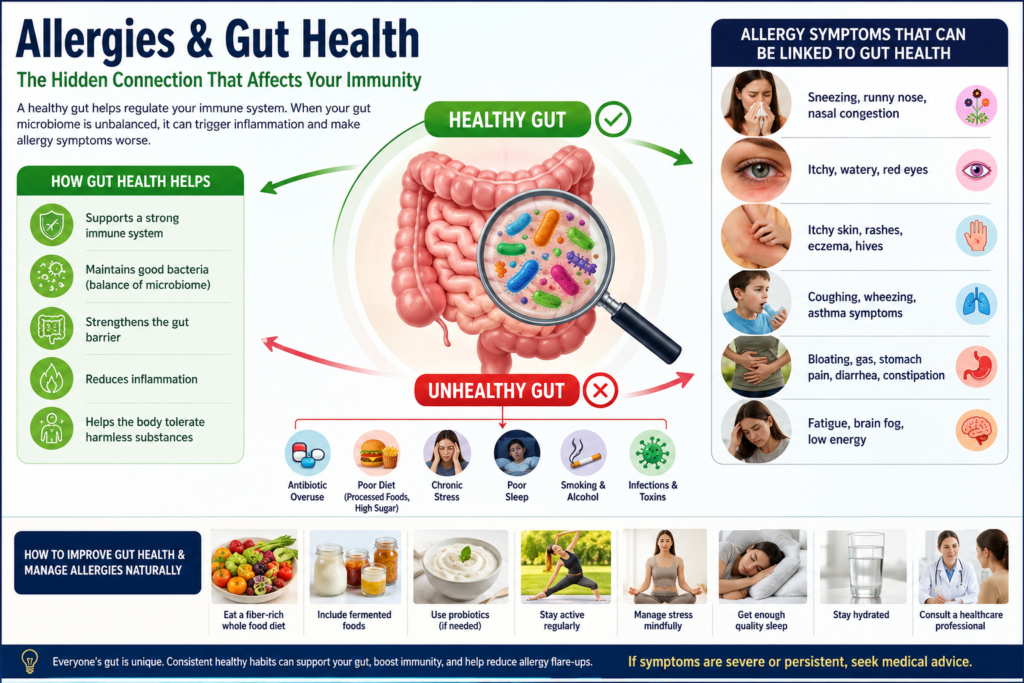
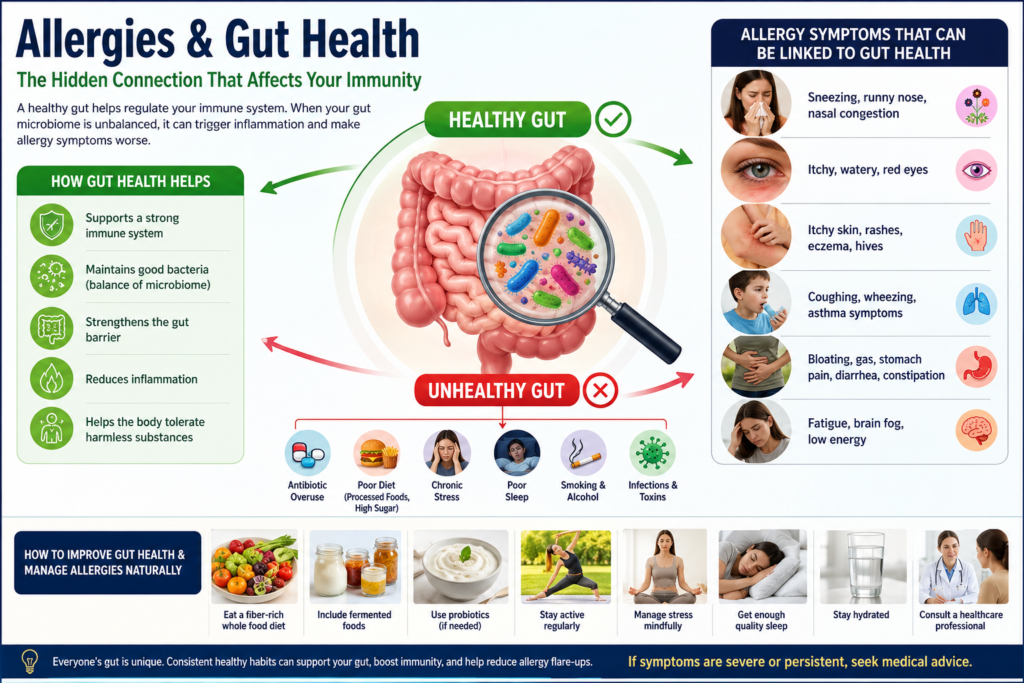
Your gut isn’t just responsible for digesting food. It’s home to trillions of microorganisms, including beneficial bacteria, fungi, and viruses, that help regulate digestion, support nutrient absorption, and communicate directly with your immune system. In fact, scientists estimate that around 70% of your immune cells are located in and around the gut, making gut health an important factor in immune balance.
If you’ve ever struggled with seasonal allergies, recurring skin rashes, or food sensitivities, your gut may be playing a much bigger role than you realize. While allergies are often blamed on pollen, dust mites, pet dander, or certain foods, research increasingly shows that the health of your digestive system—especially your gut microbiome—can influence how your immune system reacts to these triggers.
When the gut microbiome becomes unbalanced—a condition known as gut dysbiosis—the immune system may overreact to substances that are normally harmless. This can contribute to food allergies, eczema, asthma, allergic rhinitis (hay fever), and other allergic conditions. Although gut health is not the only cause of allergies, maintaining a healthy digestive system may help support normal immune function and reduce inflammation.
In this guide, you’ll learn:
- What gut health really means
- How the gut microbiome influences allergies
- Whether poor gut health can contribute to allergic reactions
- Common symptoms to watch for
- Evidence-based ways to improve gut health
- When to seek medical advice
Whether you’re managing seasonal allergies or trying to understand recurring digestive symptoms, understanding the connection between allergies and gut health can help you make informed decisions about your overall well-being.
What Is Gut Health?
Gut health refers to how well your digestive system functions and how balanced the microorganisms living inside your intestines are. A healthy gut digests food efficiently, absorbs nutrients properly, protects against harmful microbes, and supports a balanced immune response.
The digestive tract contains trillions of microbes collectively known as the gut microbiome. These microorganisms perform many important tasks that your body cannot do on its own, including producing certain vitamins, breaking down dietary fiber, and creating compounds that help reduce inflammation.
A healthy gut generally has:
- A diverse population of beneficial bacteria
- A strong intestinal barrier
- Efficient digestion and nutrient absorption
- Balanced immune activity
- Low levels of chronic inflammation
On the other hand, an unhealthy gut may develop microbial imbalance, increased intestinal permeability, or chronic inflammation, all of which may influence immune function.
Signs of Good Gut Health
Although everyone’s digestive system is different, healthy gut function often includes:
- Regular bowel movements
- Minimal bloating or gas
- Good digestion after meals
- Healthy energy levels
- Strong immune function
- Healthy skin
- Better nutrient absorption
What Is the Gut Microbiome?
The gut microbiome is the community of microorganisms living primarily in your large intestine. It includes trillions of bacteria from thousands of different species, many of which provide important health benefits.
Some of the most well-known beneficial bacteria include:
- Lactobacillus
- Bifidobacterium
- Faecalibacterium prausnitzii
- Akkermansia muciniphila
These microbes help:
- Digest complex carbohydrates
- Produce short-chain fatty acids (SCFAs)
- Maintain the intestinal barrier
- Support immune cell development
- Prevent harmful bacteria from overgrowing
- Reduce intestinal inflammation
One of the most important compounds produced by healthy gut bacteria is butyrate, a short-chain fatty acid that nourishes the cells lining the colon and helps maintain the integrity of the intestinal barrier.
When beneficial bacteria decrease and harmful microbes become more abundant, this imbalance is known as gut dysbiosis.
Why Microbial Diversity Matters
A diverse gut microbiome is generally associated with better digestive and immune health.
Several factors can reduce microbial diversity, including:
- Frequent antibiotic use
- Diets high in ultra-processed foods
- Low fiber intake
- Chronic stress
- Poor sleep
- Excessive alcohol consumption
- Certain medical conditions
Reduced diversity has been linked in research to conditions such as:
- Food allergies
- Asthma
- Eczema
- Irritable bowel syndrome (IBS)
- Obesity
- Type 2 diabetes
- Inflammatory bowel disease (IBD)
Although these associations don’t necessarily prove cause and effect, they highlight the important role of gut bacteria in overall health.
How Are Allergies Connected to Gut Health?
To understand the connection, it’s important to know how the immune system works.
An allergy occurs when the immune system mistakenly identifies a harmless substance—such as pollen, peanuts, or pet dander—as dangerous. It then produces antibodies called Immunoglobulin E (IgE), which trigger the release of histamine and other inflammatory chemicals.
These chemicals cause familiar allergy symptoms like:
- Sneezing
- Runny nose
- Itchy eyes
- Hives
- Swelling
- Wheezing
- Digestive discomfort
The gut plays a major role in training the immune system to distinguish between harmful invaders and harmless substances.
When the gut microbiome is balanced, beneficial bacteria help regulate immune responses through interactions with specialized immune cells. They also produce metabolites, including short-chain fatty acids, that support anti-inflammatory pathways.
However, when this balance is disrupted, the immune system may become more reactive, increasing the likelihood of allergic inflammation in susceptible individuals.
The Gut-Immune System Connection
The digestive tract contains an extensive network of immune tissue known as the gut-associated lymphoid tissue (GALT).
This system constantly monitors substances entering the digestive tract and helps determine whether they are harmful or harmless.
Healthy gut bacteria help:
- Promote immune tolerance
- Strengthen the intestinal barrier
- Reduce excessive inflammation
- Encourage balanced immune signaling
- Support regulatory T cells (Tregs), which help prevent unnecessary immune reactions
When these protective mechanisms weaken, immune responses may become dysregulated.
The Intestinal Barrier: Your Body’s First Line of Defense
The lining of your intestines acts as a protective barrier between your bloodstream and the contents of your digestive tract.
Its job is to allow nutrients to pass through while blocking harmful bacteria, toxins, and undigested food particles.
If this barrier becomes compromised—a condition often referred to as increased intestinal permeability or “leaky gut”—larger molecules may pass through more easily, potentially increasing immune activation.
Although the concept of “leaky gut syndrome” is often oversimplified online, increased intestinal permeability has been observed in certain medical conditions and continues to be an active area of scientific research.
Can Poor Gut Health Cause Allergies?
This is one of the most common questions people ask.
Poor gut health alone does not necessarily cause allergies, but it may contribute to immune system dysfunction that increases the risk of developing allergic conditions in some people.
Allergies develop through a combination of factors, including:
- Genetics
- Environmental exposures
- Early childhood immune development
- Lifestyle
- Diet
- Gut microbiome composition
Researchers continue to study how changes in gut bacteria influence allergic diseases.
Several studies suggest that individuals with food allergies, eczema, and asthma often have less diverse gut microbiomes compared with those without these conditions. However, scientists are still working to understand whether these microbial changes are a cause, a consequence, or both.
Gut Dysbiosis
Gut dysbiosis occurs when harmful microorganisms outnumber beneficial bacteria.
Potential contributing factors include:
- Repeated antibiotic use
- Low-fiber diets
- Chronic stress
- High sugar intake
- Sleep deprivation
- Gastrointestinal infections
Dysbiosis may contribute to:
- Increased inflammation
- Poor immune regulation
- Reduced production of beneficial short-chain fatty acids
- Weakened intestinal barrier
Together, these changes may create an environment where allergic responses become more likely in susceptible individuals.
Chronic Inflammation
Low-grade chronic inflammation can affect many body systems.
An unhealthy gut may contribute to ongoing inflammatory signaling, which has been associated with:
- Eczema
- Asthma
- Allergic rhinitis
- Food allergies
- Autoimmune diseases
Reducing inflammation through dietary improvements, regular physical activity, adequate sleep, and stress management can support both gut and immune health.
Types of Allergies Linked to Gut Health
Although research is ongoing, scientists have identified several allergic conditions that appear to have meaningful connections with the gut microbiome.
1. Food Allergies
Food allergies occur when the immune system reacts to specific food proteins.
Common food allergens include:
- Peanuts
- Tree nuts
- Eggs
- Milk
- Soy
- Wheat
- Fish
- Shellfish
Some research suggests that early-life gut microbiome development may influence how immune tolerance to foods develops.
2. Seasonal Allergies (Hay Fever)
Seasonal allergies are triggered by airborne allergens such as pollen.
Emerging evidence suggests that gut bacteria may influence inflammatory pathways involved in allergic rhinitis, although more research is needed before gut-targeted therapies become standard treatment.
3. Eczema (Atopic Dermatitis)
Many people with eczema also experience allergies or asthma.
Researchers have found differences in the gut microbiomes of many children with eczema compared to healthy controls, suggesting that microbial diversity may influence skin inflammation.
4. Asthma
Asthma is a chronic inflammatory disease affecting the airways.
Scientists often refer to the gut-lung axis, a communication pathway between the gut microbiome and respiratory health.
Certain gut bacteria produce compounds that may help regulate inflammation throughout the body, including the lungs.
5. Allergic Rhinitis
Allergic rhinitis causes:
- Sneezing
- Nasal congestion
- Itchy nose
- Watery eyes
Although pollen exposure is the primary trigger, researchers continue to investigate whether improving gut microbiome diversity may support healthier immune regulation in people with allergic rhinitis.
Symptoms of Allergies Linked to Poor Gut Health
Allergies and gut health are closely connected through the immune system, but symptoms can vary from person to person. Some people experience digestive discomfort, while others notice skin, respiratory, or general health issues. If these symptoms occur frequently or worsen after eating certain foods or during allergy season, they may be worth discussing with a healthcare provider.
Digestive Symptoms
Digestive problems are often the first signs that your gut microbiome may be out of balance.
Common symptoms include:
- Frequent bloating
- Excess gas
- Stomach pain or cramping
- Diarrhea
- Constipation
- Alternating diarrhea and constipation
- Nausea
- Acid reflux or heartburn
- Indigestion
- Feeling overly full after meals
Food-Related Symptoms
Some people develop symptoms shortly after eating certain foods, especially if they have a food allergy or food intolerance.
These may include:
- Mouth or throat itching
- Swelling of the lips or tongue
- Abdominal discomfort
- Vomiting
- Loose stools
- Difficulty digesting dairy, wheat, or other trigger foods
Skin Symptoms
Inflammation linked to immune dysfunction can sometimes appear on the skin.
Possible signs include:
- Eczema flare-ups
- Hives (urticaria)
- Itchy skin
- Dry or flaky skin
- Redness or skin irritation
- Acne or rosacea that worsens with certain foods
Respiratory Symptoms
If your immune system reacts to environmental allergens, you may experience:
- Sneezing
- Runny or stuffy nose
- Itchy nose
- Watery or itchy eyes
- Postnasal drip
- Persistent cough
- Wheezing
- Shortness of breath (especially in people with asthma)
General Symptoms
An unhealthy gut may also contribute to symptoms that affect your overall well-being, including:
- Chronic fatigue
- Brain fog
- Difficulty concentrating
- Frequent headaches
- Poor sleep quality
- Recurrent infections
- Increased inflammation throughout the body
Important: These symptoms can have many causes and do not necessarily mean poor gut health is responsible. A healthcare professional and help determine the underlying cause.
Treatment for Allergies and Gut Health
There is no single treatment that cures both allergies and gut health issues. The best approach depends on your symptoms, allergy triggers, and overall health. In many cases, treatment combines allergy management with habits that support a healthy gut microbiome.
1. Identify and Avoid Allergy Triggers
The first step is identifying what’s causing your allergic reactions.
Common triggers include:
- Pollen
- Dust mites
- Pet dander
- Mold
- Peanuts
- Tree nuts
- Milk
- Eggs
- Wheat
- Soy
- Shellfish
Keeping a symptom diary can help identify patterns and guide allergy testing.
2. Eat a Gut-Friendly Diet
A diet rich in whole, minimally processed foods helps nourish beneficial gut bacteria.
Focus on eating:
- Fresh fruits
- Vegetables
- Whole grains
- Beans and lentils
- Nuts and seeds
- Lean protein
- Healthy fats such as olive oil
- Fermented foods like yogurt, kefir, kimchi, and sauerkraut
Try to limit:
- Sugary beverages
- Ultra-processed foods
- Excess alcohol
- Highly refined carbohydrates
3. Increase Your Fiber Intake
Dietary fiber feeds beneficial gut bacteria, allowing them to produce short-chain fatty acids (SCFAs) that support the intestinal barrier and help regulate inflammation.
High-fiber foods include:
- Oats
- Apples
- Pears
- Berries
- Broccoli
- Brussels sprouts
- Chickpeas
- Black beans
- Flaxseeds
- Chia seeds
4. Consider Probiotics
Some research suggests that specific probiotic strains may help support immune function and maintain a healthy gut microbiome.
Commonly studied strains include:
- Lactobacillus rhamnosus GG
- Lactobacillus acidophilus
- Bifidobacterium lactis
- Bifidobacterium longum
However, probiotics don’t work the same for everyone, and they’re not a cure for allergies. Speak with your healthcare provider before starting a supplement.
5. Manage Stress
Long-term stress can disrupt both digestion and immune function.
Helpful stress-management techniques include:
- Deep breathing exercises
- Meditation
- Yoga
- Walking outdoors
- Journaling
- Spending time with family and friends
6. Get Enough Sleep
Quality sleep supports both your gut microbiome and immune system.
Aim for 7–9 hours of sleep per night and maintain a consistent sleep schedule whenever possible.
7. Stay Physically Active
Regular exercise promotes healthy digestion and may increase gut microbial diversity.
Adults should aim for at least 150 minutes of moderate-intensity exercise per week, such as brisk walking, cycling, or swimming.
8. Use Allergy Medications When Needed
If symptoms are moderate or severe, your healthcare provider may recommend medications such as:
- Antihistamines to relieve sneezing, itching, and hives
- Nasal corticosteroid sprays for allergic rhinitis
- Asthma inhalers if allergies trigger breathing problems
- Epinephrine auto-injectors for people at risk of severe allergic reactions (anaphylaxis)
These medications treat allergy symptoms but do not replace healthy lifestyle habits that support gut health.
9. Work With a Healthcare Professional
If symptoms persist despite lifestyle changes, seek medical advice. Your healthcare provider may recommend:
- Allergy testing (skin prick or blood tests)
- An elimination diet under professional supervision
- Evaluation for food intolerance or digestive disorders
- Referral to an allergist or gastroenterologist if needed
When to Seek Emergency Care
Seek immediate medical attention if you experience signs of anaphylaxis, including:
- Difficulty breathing
- Swelling of the face, lips, tongue, or throat
- Severe wheezing
- Dizziness or fainting
- Rapid heartbeat
- Loss of consciousness
These symptoms require emergency treatment and should not be managed at home.
