

Every summer, millions of Texans spend more time outdoors, whether it’s enjoying backyard barbecues, hiking, fishing, or simply relaxing in local parks. Unfortunately, warmer temperatures and seasonal rainfall also create ideal breeding conditions for mosquitoes, increasing the risk of mosquito-borne diseases like West Nile virus.
Although many mosquito bites are harmless, some mosquitoes can carry viruses that pose serious health risks. Among them, West Nile virus (WNV) remains the most commonly reported mosquito-borne disease in the United States, and Texas consistently records some of the highest numbers of human cases each year.
The good news is that most people infected with West Nile virus never become seriously ill. In fact, many don’t even realize they’ve been infected. However, for older adults, people with weakened immune systems, and those with certain chronic medical conditions, the virus can lead to severe neurological complications that require immediate medical attention.
Whether you’re looking to understand the early symptoms, learn how the virus spreads, explore available testing options, or discover the best ways to protect yourself and your family, this comprehensive guide covers everything you need to know about West Nile virus in Texas.
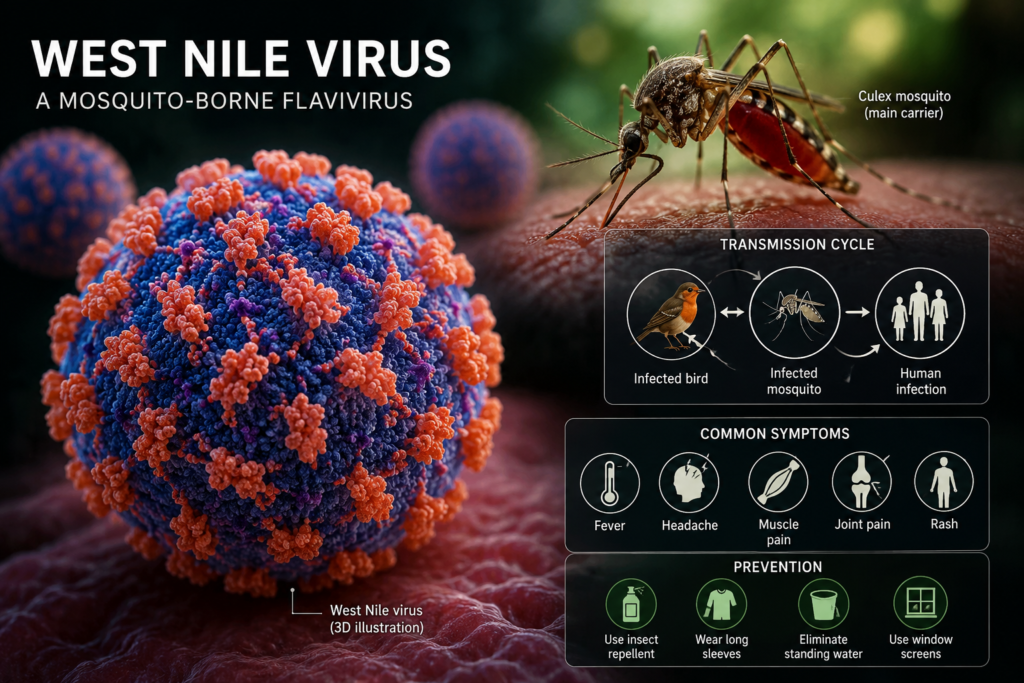
What Is West Nile Virus?
West Nile virus (WNV) is a mosquito-borne virus belonging to the Flavivirus family, the same group of viruses that includes Dengue, Yellow Fever, Japanese Encephalitis, and Zika virus.
The virus was first identified in Uganda in 1937 and later spread across Europe, Africa, the Middle East, and North America. Since its introduction into the United States in 1999, West Nile virus has become endemic across much of the country, with Texas experiencing seasonal outbreaks almost every year.
Unlike many infectious diseases, West Nile virus is not usually spread directly from one person to another. Instead, infected mosquitoes serve as the primary carriers, transmitting the virus after feeding on infected birds.
Why Is West Nile Virus So Common in Texas?
Texas has several environmental and geographic factors that make it one of the states with the highest risk of West Nile virus transmission.
Warm Climate Encourages Mosquito Activity
Mosquitoes thrive in warm, humid conditions. Texas experiences long summers with extended periods of high temperatures, allowing mosquito populations to remain active for much of the year.
Large Bird Population
Birds are the natural hosts of West Nile virus. Many migratory bird species travel through Texas during seasonal migrations, helping maintain the virus in local ecosystems.
Standing Water
After heavy rain or irrigation, water often collects in:
- Bird baths
- Flower pots
- Buckets
- Gutters
- Old tires
- Swimming pool covers
- Storm drains
Even a small amount of standing water can become a mosquito breeding site within days.
Urban and Rural Exposure
Unlike some mosquito-borne diseases that are limited to rural regions, West Nile virus affects both cities and rural communities. Mosquitoes carrying the virus are commonly found in neighborhoods, parks, farms, golf courses, and recreational areas throughout Texas.
How Does West Nile Virus Spread?
Understanding how West Nile virus spreads is essential for preventing infection.
The transmission cycle begins with infected birds and mosquitoes.
- A mosquito bites an infected bird.
- The virus multiplies inside the mosquito over several days.
- The infected mosquito bites another bird, animal, or person.
- The virus enters the bloodstream through the mosquito’s saliva.
Humans and most mammals are considered “dead-end hosts.” This means they usually do not carry enough virus in their blood to infect another mosquito, so they do not contribute significantly to ongoing transmission.
The Mosquito-Bird Cycle
The virus primarily circulates between birds and mosquitoes. Certain mosquito species, especially those in the Culex genus, play a major role in spreading the virus.
This natural cycle allows the virus to persist throughout mosquito season each year.
Can West Nile Virus Spread From Person to Person?
For most people, the answer is no.
West Nile virus is not spread through:
- Hugging
- Kissing
- Sneezing
- Coughing
- Sharing food
- Drinking from the same glass
- Touching infected individuals
However, although extremely uncommon, transmission has occurred through:
- Blood transfusions
- Organ transplantation
- Pregnancy (mother to baby)
- Breastfeeding (rarely reported)
These situations are carefully monitored through modern blood screening and public health safety measures, making the risk extremely low.
When Is West Nile Virus Season in Texas?
In Texas, mosquito activity generally begins increasing during late spring, peaks throughout the summer, and gradually declines during the fall.
The highest number of West Nile virus infections typically occurs between July and September, when mosquito populations are at their largest and outdoor activities are most common.
Weather conditions play a significant role in determining the severity of each season. Warm temperatures, frequent rainfall, and standing water create ideal breeding environments for mosquitoes, while drought conditions can sometimes concentrate birds and mosquitoes around limited water sources, also increasing transmission in certain areas.
Because mosquitoes remain active after sunset, the risk of bites is often highest during the evening, overnight, and early morning hours.
Who Is Most Likely to Be Exposed?
Anyone living in or visiting Texas can become infected after being bitten by an infected mosquito. However, some people experience greater exposure because of their lifestyle or occupation.
Those at increased risk of mosquito bites include:
- Outdoor workers
- Farmers and ranchers
- Construction workers
- Landscapers
- Campers
- Hunters
- Anglers
- Gardeners
- Hikers
- Golfers
- Park visitors
People who spend long hours outdoors without using insect repellent or protective clothing are more likely to encounter mosquitoes carrying West Nile virus.
How Common Is West Nile Virus?
Most West Nile virus infections never cause noticeable symptoms.
Current research shows:
- Around 80% of infected people develop no symptoms at all.
- Approximately 20% experience a mild illness known as West Nile fever.
- Fewer than 1% develop severe neuroinvasive disease affecting the brain, spinal cord, or nervous system.
Although severe illness is uncommon, it can be life-threatening, particularly in adults over 60 years of age and individuals with weakened immune systems.
Early Signs You Should Never Ignore
Many people mistake the early symptoms of West Nile virus for the flu or another viral illness. While mild infections often improve on their own, it’s important to pay attention to symptoms that become severe or suddenly worsen.
Seek prompt medical evaluation if you experience:
- A high fever that doesn’t improve
- Severe headache
- Neck stiffness
- Confusion or difficulty thinking clearly
- Muscle weakness
- Loss of coordination
- Difficulty walking
- Tremors
- Vision changes
- Seizures
These symptoms may indicate that the infection has affected the brain or nervous system and requires immediate medical care.
West Nile Virus Symptoms
One of the most challenging aspects of West Nile virus is that it doesn’t affect everyone the same way. While some people never experience any symptoms, others develop a mild flu-like illness, and a small percentage can become seriously ill with life-threatening complications involving the brain or nervous system.
Understanding how symptoms progress can help you recognize when medical care is necessary.
How Soon Do Symptoms Appear?
After being bitten by an infected mosquito, symptoms usually develop within 2 to 14 days. This period is known as the incubation period.
People with weakened immune systems may not develop symptoms until several weeks after exposure.
Most People Never Feel Sick
One surprising fact about West Nile virus is that about 80% of infected people never develop symptoms.
Their immune system clears the infection naturally, and they may never know they were infected unless they undergo laboratory testing for another reason.
Although these individuals recover without treatment, they can still develop immunity to the virus after infection.
Mild West Nile Fever Symptoms
Roughly 1 in 5 infected people develop a mild illness commonly called West Nile fever.
Symptoms usually begin suddenly and resemble influenza or another viral infection.
Common Symptoms
People with mild illness may experience:
- Fever
- Chills
- Headache
- Fatigue
- Muscle aches
- Joint pain
- Body aches
- Weakness
- Nausea
- Vomiting
- Loss of appetite
- Swollen lymph nodes
- Skin rash on the chest, back, or arms
Most cases improve within a few days to a couple of weeks with rest, hydration, and supportive care.
However, fatigue and weakness may linger for several weeks after the infection resolves.
Early Warning Signs
Recognizing the earliest symptoms is especially important during mosquito season in Texas.
Early warning signs include:
- Sudden fever
- Persistent headache
- Unusual tiredness
- Muscle soreness
- Eye pain
- Mild dizziness
- General feeling of illness
Many people dismiss these symptoms as a common summer virus, delaying medical evaluation.
If you’ve recently spent time outdoors and develop these symptoms, especially during peak mosquito season, West Nile virus should be considered as a possibility.
Severe West Nile Virus Symptoms
Although severe illness is uncommon, it requires immediate medical attention.
Less than 1% of infected individuals develop neuroinvasive West Nile disease, where the virus affects the brain, spinal cord, or surrounding tissues.
This form of the disease can lead to permanent disability or even death if not treated promptly.
Symptoms of Severe Infection
Seek emergency medical care if you experience:
- Very high fever
- Severe headache
- Neck stiffness
- Confusion
- Difficulty speaking
- Difficulty swallowing
- Tremors
- Muscle weakness
- Loss of coordination
- Difficulty walking
- Partial paralysis
- Numbness
- Vision changes
- Extreme drowsiness
- Seizures
- Loss of consciousness
These symptoms suggest the virus may have spread to the central nervous system.
Neurological Complications
When West Nile virus reaches the nervous system, it can cause serious conditions that often require hospitalization.
West Nile Encephalitis
Encephalitis is inflammation of the brain.
Symptoms may include:
- Confusion
- Personality changes
- Memory problems
- Severe headache
- High fever
- Seizures
- Difficulty staying awake
- Coma in severe cases
Recovery can take months, and some patients continue to experience cognitive problems long after the infection has cleared.
West Nile Meningitis
Meningitis occurs when the protective membranes surrounding the brain and spinal cord become inflamed.
Symptoms include:
- Stiff neck
- Severe headache
- Fever
- Sensitivity to light
- Nausea
- Vomiting
Although many patients recover completely, hospitalization is often required.
Acute Flaccid Paralysis
In rare cases, West Nile virus attacks the spinal cord and damages motor neurons.
Symptoms include:
- Sudden weakness in one or more limbs
- Difficulty walking
- Loss of reflexes
- Muscle wasting
- Breathing problems in severe cases
Some patients experience permanent weakness despite rehabilitation.
Symptoms in Older Adults
Adults over 60 years of age have the highest risk of severe illness.
As people age, the immune system becomes less effective at fighting infections, making it easier for the virus to spread to the nervous system.
Older adults are more likely to develop:
- Brain inflammation
- Paralysis
- Long hospital stays
- Long-term disability
- Serious neurological complications
Even symptoms that seem mild at first should never be ignored in this age group.
Symptoms in Children
Fortunately, children usually develop milder infections.
Common symptoms include:
- Low-grade fever
- Headache
- Rash
- Tiredness
- Poor appetite
- Mild muscle aches
Serious neurological disease is uncommon but can still occur, especially in children with weakened immune systems.
Parents should seek medical attention if a child develops:
- Persistent high fever
- Neck stiffness
- Confusion
- Seizures
- Difficulty waking up
Symptoms in People With Weakened Immune Systems
Individuals with weakened immune systems face a much greater risk of severe disease.
This includes people who:
- Have cancer
- Received an organ transplant
- Take immunosuppressive medications
- Have uncontrolled diabetes
- Have chronic kidney disease
- Are undergoing chemotherapy
Because their immune system cannot control the virus as effectively, complications are more likely to develop.
Long-Term Effects of West Nile Virus
Recovery doesn’t always end when the infection clears.
Some patients continue experiencing health problems for months—or even years.
Possible long-term complications include:
- Persistent fatigue
- Muscle weakness
- Chronic pain
- Difficulty concentrating
- Memory problems
- Depression
- Balance issues
- Difficulty walking
- Numbness
- Sleep disturbances
Patients recovering from neuroinvasive disease often benefit from physical therapy, occupational therapy, and neurological rehabilitation.
Who Is Most at Risk?
Although anyone bitten by an infected mosquito can become infected, certain groups are significantly more likely to develop severe illness.
These include:
- Adults over 60 years old
- People with weakened immune systems
- Individuals with diabetes
- People with hypertension
- Patients with chronic kidney disease
- Organ transplant recipients
- Cancer patients
- Outdoor workers with frequent mosquito exposure
Being in a high-risk group doesn’t mean you’ll become seriously ill, but it does mean early medical evaluation is especially important if symptoms develop.
When Should You See a Doctor?
Mild symptoms often improve with supportive care at home.
However, you should contact a healthcare provider if you experience:
- Fever lasting several days
- Severe headache
- Persistent vomiting
- Increasing weakness
- Rash with worsening symptoms
- Signs of dehydration
When Is It a Medical Emergency?
Go to the nearest emergency department immediately if you or someone you know develops:
- Sudden confusion
- Difficulty speaking
- Neck stiffness
- Seizures
- Paralysis
- Difficulty breathing
- Loss of consciousness
- Severe muscle weakness
- Inability to walk
- Vision loss
