

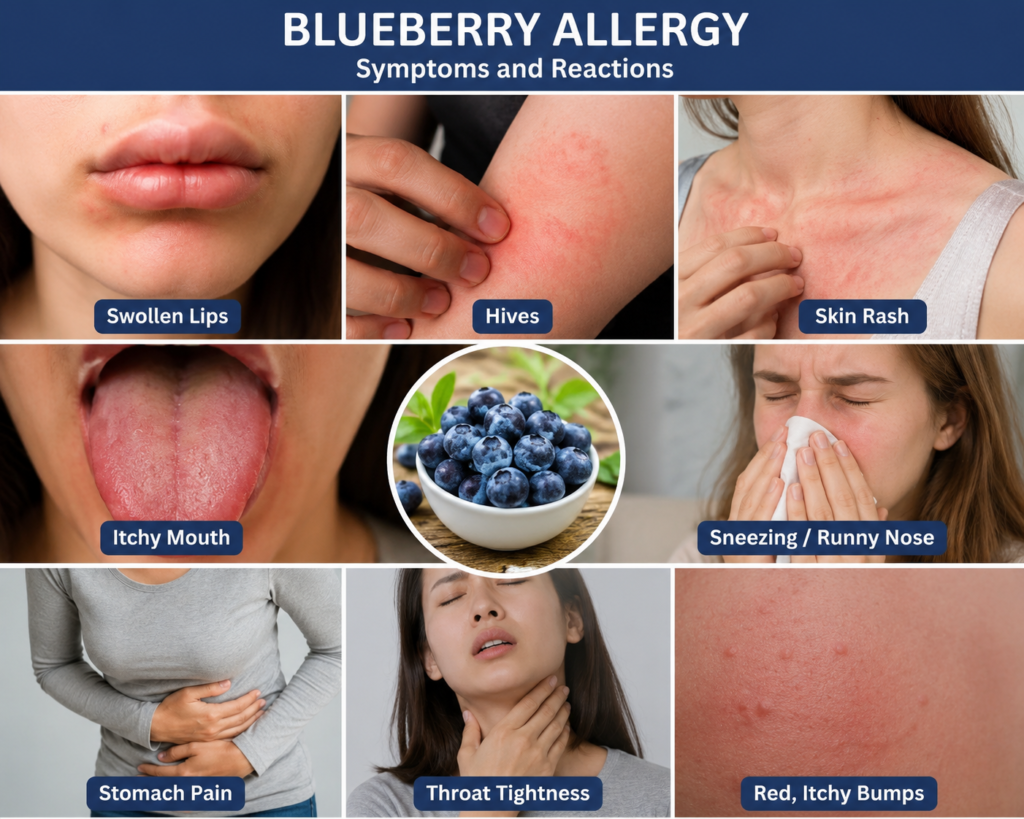
What Are Blueberry Allergy Symptoms?
Blueberries are widely known as one of the healthiest fruits, packed with antioxidants, vitamins, fiber, and plant compounds that support overall well-being. For most people, they’re a nutritious addition to a balanced diet. However, in rare cases, some individuals may experience an allergic reaction after eating blueberries.
Blueberry allergy symptoms can range from mild itching or a skin rash to more serious reactions that affect breathing. Although a blueberry allergy is uncommon compared to allergies to peanuts, shellfish, or milk, it’s still important to recognize the warning signs and know when to seek medical attention.
If you’ve ever noticed itching in your mouth, hives on your skin, stomach discomfort, or swelling shortly after eating blueberries, your immune system may be reacting to proteins in the fruit. Understanding these symptoms can help you get the right diagnosis and avoid future allergic reactions.
In this guide, we’ll explain everything you need to know about blueberry allergies, including the most common symptoms, possible causes, risk factors, treatment options, and practical ways to stay safe.
What Is a Blueberry Allergy?
A blueberry allergy is a type of food allergy that occurs when the body’s immune system mistakenly identifies proteins found in blueberries as harmful. Instead of ignoring these harmless proteins, the immune system produces Immunoglobulin E (IgE) antibodies, triggering the release of histamine and other inflammatory chemicals.
This immune response can cause symptoms affecting the skin, digestive system, respiratory tract, or, in rare situations, the entire body.
Unlike food intolerance, which mainly affects digestion, a true food allergy involves the immune system and can sometimes become life-threatening.
Although blueberries belong to the Vaccinium family and are not considered one of the most common food allergens, allergic reactions have been reported in both children and adults.
What Are Blueberry Allergy Symptoms?
Blueberry allergy symptoms usually appear within a few minutes to two hours after eating fresh blueberries or foods containing blueberries.
The severity of symptoms varies from person to person. Some individuals experience only mild discomfort, while others may develop a severe allergic reaction that requires immediate medical attention.
The most common symptoms fall into four categories:
- Skin symptoms
- Mouth and throat symptoms
- Digestive symptoms
- Respiratory symptoms
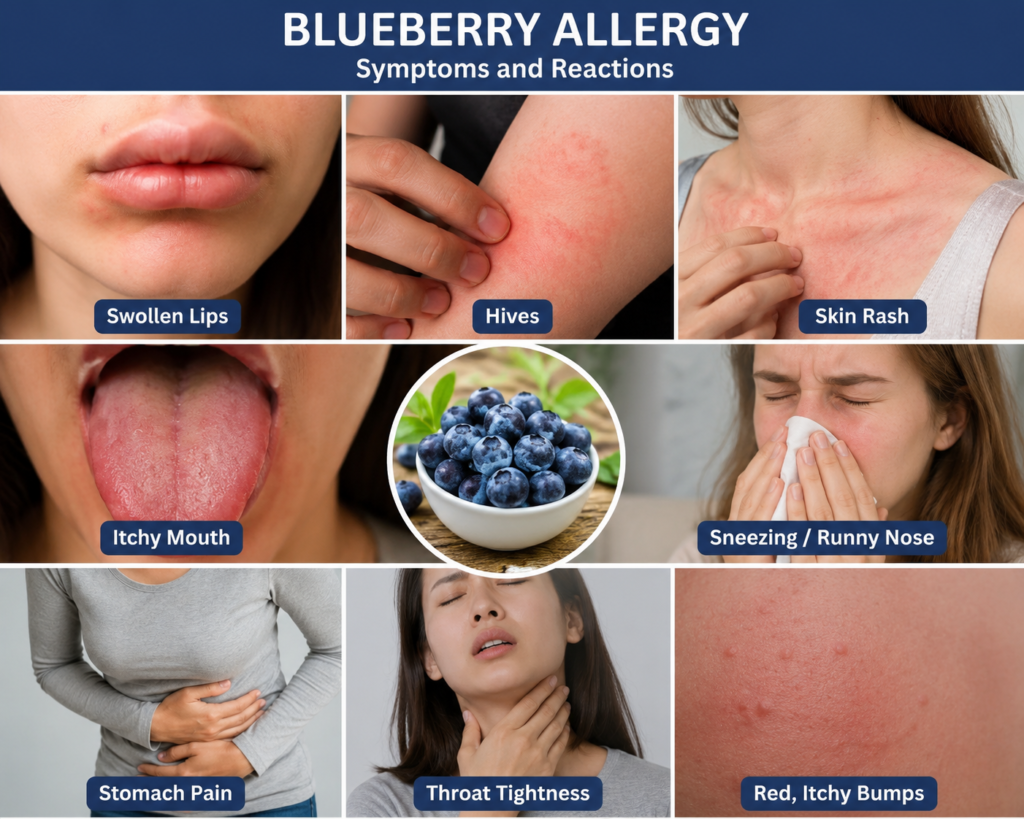
Skin Symptoms
Skin reactions are often the first noticeable sign of a blueberry allergy.
Common skin symptoms include:
- Red, itchy skin
- Hives (raised, itchy welts)
- Small red bumps
- Eczema flare-ups
- Skin rash
- Swelling around the face
- Warm or burning sensation on the skin
Hives may appear within minutes of eating blueberries and can spread to different parts of the body. While mild hives often resolve on their own, widespread or rapidly worsening hives should be evaluated by a healthcare professional.
Mouth and Throat Symptoms
Some people experience symptoms only in the mouth and throat, particularly if they have Oral Allergy Syndrome (OAS), also known as Pollen-Food Allergy Syndrome.
Common symptoms include:
- Itchy lips
- Itchy tongue
- Tingling inside the mouth
- Scratchy throat
- Swollen lips
- Mild swelling of the tongue
- Swollen gums
- Mild throat irritation
These symptoms often begin within minutes of eating raw blueberries and may disappear shortly afterward. However, persistent swelling or difficulty swallowing should never be ignored.
Digestive Symptoms
Because blueberries are eaten, the digestive system is another area where allergic reactions may occur.
Possible digestive symptoms include:
- Nausea
- Vomiting
- Stomach pain
- Abdominal cramps
- Diarrhea
- Bloating
- Indigestion
It’s important to remember that digestive symptoms alone don’t always indicate a food allergy. Similar symptoms can occur with food intolerance, food poisoning, or viral infections. If digestive problems consistently occur after eating blueberries, consult an allergist for proper testing.
Respiratory Symptoms
In some cases, blueberry allergies can affect the respiratory system.
Symptoms may include:
- Sneezing
- Runny nose
- Nasal congestion
- Persistent coughing
- Wheezing
- Chest tightness
- Shortness of breath
Respiratory symptoms should always be taken seriously, especially if they worsen quickly or occur alongside swelling of the lips or throat.
Severe Blueberry Allergy Symptoms (Anaphylaxis)
Although rare, blueberries can trigger anaphylaxis, a severe and potentially life-threatening allergic reaction.
Warning signs of anaphylaxis include:
- Difficulty breathing
- Swelling of the throat
- Trouble swallowing
- Rapid heartbeat
- Dizziness or fainting
- Blue lips or fingertips
- Sudden drop in blood pressure
- Loss of consciousness
Anaphylaxis can progress rapidly and requires immediate emergency medical treatment.
If someone develops these symptoms after eating blueberries, call your local emergency services immediately. People who have been prescribed an epinephrine auto-injector should use it as directed while waiting for emergency medical care.
Medical Disclaimer: This article is for educational purposes only and should not replace professional medical advice. If you suspect a severe allergic reaction or experience difficulty breathing, seek emergency medical care immediately.
Can Blueberries Cause Oral Allergy Syndrome?
Yes. In some individuals, blueberries may trigger Oral Allergy Syndrome (OAS), also known as Pollen-Food Allergy Syndrome.
This condition usually affects people who are allergic to certain pollens. Because some proteins in fruits resemble pollen proteins, the immune system reacts when the fruit is eaten.
People with Oral Allergy Syndrome typically experience:
- Itchy mouth
- Tingling lips
- Scratchy throat
- Mild swelling of the lips or tongue
Symptoms are usually mild and often occur only after eating raw blueberries. Cooked or baked blueberries may not cause the same reaction because heat can alter the proteins responsible for the allergy.
