

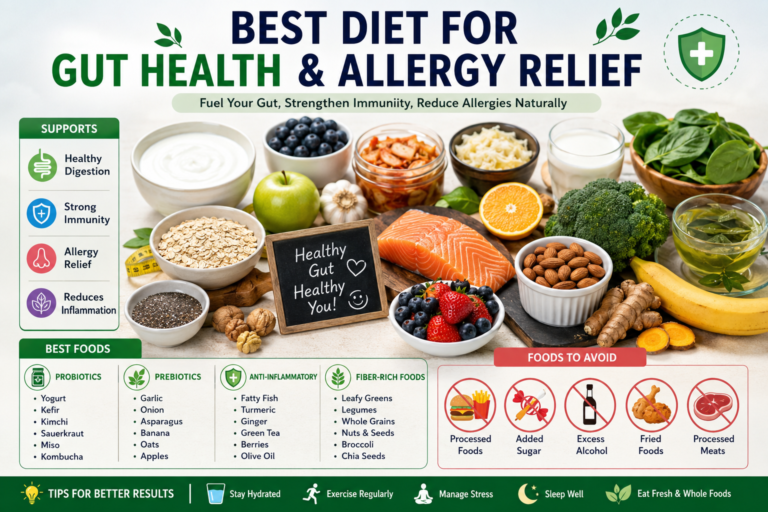
If you’ve been dealing with bloating, digestive discomfort, sneezing, itchy eyes, or seasonal allergies, the solution may not be limited to allergy medications alone. Growing research suggests that your gut microbiome—the community of trillions of bacteria living in your digestive tract—plays a significant role in regulating the immune system and influencing how your body responds to allergens.
In fact, around 70% of the body’s immune cells are associated with the gut. When the gut microbiome is balanced and diverse, it helps strengthen the intestinal barrier, regulate inflammation, and support healthy immune responses. On the other hand, an unhealthy gut, sometimes associated with dysbiosis (an imbalance in gut bacteria), may contribute to inflammation and affect immune function, which can influence allergy symptoms.
The encouraging news is that your daily diet can help support both gut health and immune function. By choosing foods rich in fiber, probiotics, prebiotics, vitamins, minerals, and healthy fats, you can nourish beneficial bacteria while supporting your body’s natural defenses.
This guide explores the best foods for gut health and allergy relief, the science behind the gut–immune connection, and practical dietary habits that can help you feel your best throughout the year.
Understanding the Gut–Allergy Connection
Many people think allergies begin in the nose or lungs, but the immune system tells a bigger story.
Your digestive tract contains a complex ecosystem of beneficial microorganisms known as the gut microbiome. These bacteria help digest food, produce important nutrients, maintain the intestinal barrier, and communicate with immune cells.
When the gut microbiome is healthy and diverse, it helps the immune system distinguish between harmless substances—such as pollen or certain foods—and genuine threats.
However, when the balance of gut bacteria is disrupted, a condition often referred to as dysbiosis, immune regulation may become less effective. Researchers continue to study how this imbalance may influence inflammatory and allergic conditions.
What Is Dysbiosis?
Dysbiosis occurs when beneficial bacteria decrease while less helpful microbes become more dominant. Several factors can contribute to this imbalance, including:
- Diets high in ultra-processed foods
- Low fiber intake
- Frequent antibiotic use
- Chronic stress
- Poor sleep
- Limited dietary variety
Supporting a healthy gut microbiome through nutrition is one of the most practical ways to promote digestive and immune health.
Why Diet Matters for Gut Health and Allergy Relief
Every meal you eat influences your gut microbiome.
Foods rich in dietary fiber, antioxidants, and healthy fats feed beneficial bacteria, while diets high in added sugars and highly processed foods may have the opposite effect.
A gut-friendly eating pattern may help:
- Support microbial diversity
- Strengthen the intestinal barrier
- Promote healthy digestion
- Support balanced immune function
- Reduce chronic, low-grade inflammation
- Improve overall well-being
Although no diet can cure allergies, eating nutrient-dense foods may support the body’s natural immune responses and help you maintain better overall health.
Best Foods for Gut Health
A healthy gut thrives on variety. Including a wide range of whole foods gives beneficial bacteria the nutrients they need to flourish.
1. Yogurt
Plain yogurt with live and active cultures contains beneficial bacteria that can support a healthy gut microbiome.
Choose unsweetened varieties with minimal added sugar.
2. Kefir
Kefir is a fermented dairy drink that provides a diverse range of probiotic cultures.
Many people enjoy kefir as a smoothie base or breakfast drink.
3. Kimchi and Sauerkraut
These fermented vegetables contain naturally occurring probiotics and beneficial compounds produced during fermentation.
Because some products are high in sodium, enjoy them in moderation.
4. Oats
Oats are rich in beta-glucan, a type of soluble fiber that nourishes beneficial gut bacteria.
They’re also filling, heart-healthy, and easy to include in breakfast meals.
5. Bananas
Bananas contain prebiotic fibers that help feed healthy bacteria already living in your digestive tract.
Slightly green bananas contain more resistant starch, another beneficial prebiotic.
6. Garlic and Onions
These kitchen staples naturally contain inulin, a prebiotic fiber that supports the growth of beneficial microbes such as Bifidobacterium.
7. Leafy Greens
Spinach, kale, Swiss chard, and other leafy vegetables provide fiber, vitamins, and plant compounds that support digestive and overall health.
8. Legumes
Beans, lentils, chickpeas, and peas are excellent sources of dietary fiber, plant protein, and resistant starch.
They also help promote microbiome diversity.
9. Apples
Apples provide pectin, a type of soluble fiber associated with healthy digestion.
They also contain polyphenols that support overall health.
10. Whole Grains
Brown rice, quinoa, barley, and whole wheat provide complex carbohydrates that nourish beneficial bacteria while supporting long-lasting energy.
Best Foods That May Support Allergy Relief
While no single food can eliminate allergies, several nutrient-rich foods contain compounds associated with healthy immune function and inflammation regulation.
Citrus Fruits
Oranges, lemons, grapefruit, and other citrus fruits are rich in vitamin C, an antioxidant that supports normal immune function.
Berries
Blueberries, strawberries, raspberries, and blackberries provide antioxidants and polyphenols that help protect cells from oxidative stress.
Apples
Apples are naturally rich in quercetin, a plant flavonoid that researchers continue to study for its role in supporting normal inflammatory responses.
Broccoli
Broccoli contains vitamin C, fiber, and sulforaphane, making it a nutritious addition to a balanced diet.
Fatty Fish
Salmon, sardines, trout, and mackerel provide omega-3 fatty acids, which are known for supporting heart health and helping regulate inflammatory processes.
Aim to include fatty fish at least twice a week if appropriate for your dietary preferences.
Turmeric
Turmeric contains curcumin, a natural compound widely studied for its antioxidant and anti-inflammatory properties.
Adding turmeric to soups, curries, or roasted vegetables is an easy way to increase flavor while incorporating this spice into your diet.
Ginger
Fresh ginger is commonly used to support digestive comfort and adds a refreshing flavor to teas, stir-fries, and smoothies.
Green Tea
Green tea contains catechins and other antioxidants that may support overall health as part of a balanced diet.
Extra Virgin Olive Oil
A key component of the Mediterranean diet, extra virgin olive oil provides heart-healthy monounsaturated fats and beneficial polyphenols.
Using olive oil in place of saturated fats is a simple way to support a healthy eating pattern.
Nuts and Seeds
Walnuts, almonds, chia seeds, and flaxseeds supply healthy fats, fiber, and important minerals that contribute to overall wellness.
For individuals with tree nut allergies, suitable alternatives should be discussed with a healthcare professional.
Foods That Benefit Both Gut Health and Immune Function
| Food | Gut Health Benefit | Immune & Allergy Support |
| Yogurt | Probiotics | Supports immune function |
| Kefir | Diverse probiotics | Gut microbiome support |
| Oats | Prebiotic fiber | Helps nourish beneficial bacteria |
| Apples | Pectin | Rich in quercetin |
| Broccoli | Fiber | Vitamin C source |
| Salmon | Healthy fats | Omega-3 fatty acids |
| Garlic | Inulin | Supports beneficial bacteria |
| Olive Oil | Polyphenols | Anti-inflammatory eating pattern |
The Power of Probiotics and Prebiotics
When discussing gut health, two terms appear frequently: probiotics and prebiotics. Although they sound similar, they serve different purposes.
What Are Probiotics?
Probiotics are beneficial microorganisms that help maintain a healthy balance of bacteria in your digestive system. They naturally occur in fermented foods and are also available as dietary supplements.
Common probiotic strains include:
- Lactobacillus
- Bifidobacterium
These beneficial bacteria help support digestion, maintain the intestinal barrier, and contribute to normal immune function.
Natural Sources of Probiotics
Include these foods regularly:
- Plain yogurt
- Kefir
- Kimchi
- Sauerkraut
- Miso
- Tempeh
- Kombucha (choose varieties with low added sugar)
Adding one or two fermented foods to your daily meals is an easy way to increase probiotic intake.
What Are Prebiotics?
Prebiotics are types of dietary fiber that feed the beneficial bacteria already living in your gut. Think of them as food for your microbiome.
Excellent prebiotic foods include:
- Garlic
- Onions
- Leeks
- Asparagus
- Bananas
- Oats
- Chicory root
- Lentils
- Apples
Eating a combination of probiotics and prebiotics—sometimes called a synbiotic approach—helps create an environment where beneficial bacteria can thrive.
Foods to Limit for Better Gut and Immune Health
No single food causes allergies, but some eating habits may contribute to inflammation or reduce overall diet quality. Limiting the following can support better digestive and immune health:
1. Ultra-Processed Foods
Highly processed snacks and ready-made meals often contain excess sodium, added sugars, and preservatives while providing little fiber.
2. Sugary Drinks
Soft drinks, energy drinks, and sweetened juices can crowd out more nutritious options and add unnecessary calories.
3. Excess Added Sugar
A diet consistently high in added sugars may negatively affect overall dietary balance.
4. Fried Foods
Frequent consumption of deep-fried foods can make it harder to maintain a balanced, nutrient-rich eating pattern.
5. Processed Meats
Limit foods such as sausages, hot dogs, and processed deli meats, replacing them with lean proteins like fish, poultry, beans, or lentils.
6. Excess Alcohol
For adults, excessive alcohol intake may negatively affect gut health and should be consumed, if at all, in moderation according to health guidelines.
7-Day Gut Health and Allergy Relief Meal Plan
This sample plan emphasizes fiber-rich, minimally processed foods and a variety of plant-based ingredients.
| Day | Breakfast | Lunch | Dinner | Snack |
| Monday | Greek yogurt, berries & oats | Grilled chicken salad | Baked salmon with broccoli | Apple & walnuts |
| Tuesday | Oatmeal with banana & chia | Lentil soup | Brown rice with vegetables | Kefir |
| Wednesday | Smoothie with spinach & yogurt | Quinoa salad | Grilled fish with asparagus | Orange |
| Thursday | Whole-grain toast & avocado | Chickpea bowl | Turkey with roasted vegetables | Mixed berries |
| Friday | Kefir smoothie | Vegetable wrap | Stir-fried tofu & brown rice | Almonds* |
| Saturday | Eggs with spinach | Salmon salad | Lentil curry | Yogurt |
| Sunday | Overnight oats | Chicken soup | Grilled vegetables & quinoa | Kiwi |
*Choose alternatives if you have a tree nut allergy.
Lifestyle Habits That Support Gut Health
Diet is only one piece of the puzzle. Daily habits also influence the gut microbiome and immune system.
Stay Physically Active
Regular exercise supports digestive function and contributes to overall health. Aim for at least 150 minutes of moderate activity each week, or follow age-appropriate activity guidelines for children.
Prioritize Sleep
Poor sleep can affect immune function and overall well-being. Most adults need 7–9 hours of quality sleep each night, while children require more depending on their age.
Manage Stress
Chronic stress can influence digestion and gut function. Consider relaxation techniques such as:
- Deep breathing
- Meditation
- Gentle yoga
- Walking outdoors
- Journaling
Stay Hydrated
Water supports digestion and helps dietary fiber move through the digestive tract efficiently.
Eat a Variety of Plant Foods
Research suggests that a more diverse diet supports a more diverse gut microbiome. Aim to include a wide range of colorful fruits, vegetables, legumes, nuts, seeds, and whole grains throughout the week.
Do You Need Supplements?
Whole foods should be the foundation of your diet. However, some people may benefit from supplements when recommended by a healthcare professional.
Possible options include:
Probiotic Supplements
These may be considered for certain digestive concerns, but the best strain depends on individual needs.
Vitamin D
People with low vitamin D levels may require supplementation after appropriate testing and medical advice.
Omega-3 Fatty Acids
If you rarely eat oily fish, your healthcare provider may recommend an omega-3 supplement.
Fiber Supplements
For individuals struggling to meet fiber needs through food alone, supplements such as psyllium husk may be helpful under professional guidance.
Always speak with your doctor before starting supplements, especially if you have medical conditions, food allergies, or take prescription medications.
When Should You See a Doctor?
Seek medical advice if you experience:
- Persistent digestive discomfort
- Severe bloating or unexplained abdominal pain
- Ongoing diarrhea or constipation
- Blood in the stool
- Unintentional weight loss
- Food reactions that suggest a possible allergy
- Allergy symptoms that interfere with daily life despite treatment
A gastroenterologist, registered dietitian, or allergist can help identify underlying causes and recommend an individualized treatment plan.
Frequently Asked Questions
Can improving gut health reduce allergies?
A healthy gut supports normal immune function, and ongoing research suggests the gut microbiome plays a role in allergic diseases. While improving gut health is not a cure for allergies, it may support overall immune balance as part of a healthy lifestyle.
What foods are best for gut health?
Foods rich in fiber and fermented foods—such as yogurt, kefir, oats, legumes, fruits, vegetables, kimchi, and sauerkraut—can help nourish beneficial gut bacteria.
Are probiotics good for seasonal allergies?
Some studies suggest certain probiotic strains may influence immune responses, but results are mixed. More research is needed, and probiotics should not replace prescribed allergy treatments.
What foods should I avoid during allergy season?
Limit ultra-processed foods, excess added sugars, and heavily fried foods while focusing on a balanced diet rich in whole foods.
Is yogurt good for gut health?
Yes. Yogurt containing live and active cultures is a convenient source of probiotics and can be part of a healthy diet.
How long does it take to improve gut health?
Changes in the gut microbiome can begin within days of improving dietary habits, but meaningful long-term benefits usually require consistent healthy eating and lifestyle changes over weeks to months.
