

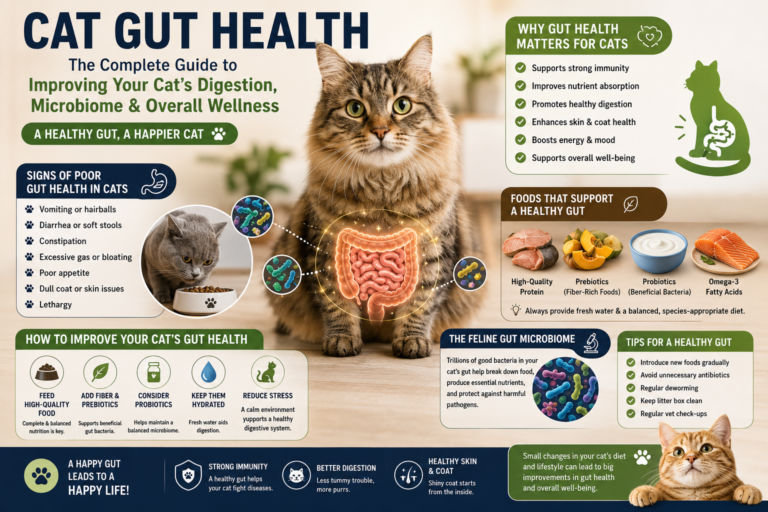
If your cat has been dealing with diarrhea, vomiting, constipation, or frequent stomach upsets, the problem may go deeper than a temporary digestive issue. More veterinarians and pet nutrition experts now recognize that a healthy gut is the foundation of a cat’s overall well-being. A balanced digestive system doesn’t just process food—it also supports the immune system, nutrient absorption, skin and coat health, and even behavior.
The feline gut is home to trillions of beneficial microorganisms that form the gut microbiome. When these beneficial bacteria thrive, they help protect against harmful pathogens, aid digestion, and maintain a strong immune response. However, poor nutrition, stress, antibiotics, parasites, and underlying diseases can disrupt this delicate balance, leading to digestive problems and long-term health concerns.
This guide explains everything cat owners need to know about cat gut health, including common warning signs, causes of digestive imbalance, the role of the gut microbiome, the best foods and probiotics, natural ways to support digestion, and when it’s time to visit a veterinarian.
What Is Cat Gut Health?
Cat gut health refers to the condition and balance of the digestive system, including the stomach, small intestine, large intestine, and the community of beneficial bacteria living inside the gastrointestinal tract. Together, these bacteria, fungi, and other microorganisms form the gut microbiome, which plays a vital role in keeping your cat healthy.
A healthy digestive system allows your cat to:
- Digest proteins and fats efficiently
- Absorb essential vitamins and minerals
- Maintain healthy bowel movements
- Prevent harmful bacteria from multiplying
- Support a strong immune system
- Reduce inflammation throughout the body
Because cats are obligate carnivores, their digestive systems are designed to process animal-based proteins. Feeding an appropriate diet helps maintain a balanced gut microbiota and reduces unnecessary digestive stress.
Why Gut Health Is Essential for Cats
Many people associate digestive health only with stomach problems, but the gut influences nearly every aspect of a cat’s body.
Stronger Immune Function
Nearly 70% of a cat’s immune system is linked to the gastrointestinal tract. Beneficial bacteria help train immune cells to recognize harmful pathogens while reducing unnecessary inflammation.
Better Nutrient Absorption
Even high-quality cat food cannot provide its full benefits if nutrients aren’t properly absorbed. A healthy digestive tract ensures proteins, amino acids, vitamins, minerals, and healthy fats are efficiently utilized.
Improved Skin and Coat
Poor digestion often appears on the outside before owners notice digestive symptoms. A dull coat, dry skin, or excessive shedding can sometimes indicate nutritional deficiencies caused by poor gut function.
Healthy Weight Management
Digestive problems can cause weight loss through poor nutrient absorption or weight gain due to chronic inflammation and inactivity. Maintaining gut health helps support a healthy body condition.
Better Stool Quality
Healthy cats typically produce well-formed stools with minimal odor. Persistent diarrhea, constipation, mucus, or blood in the stool may signal digestive imbalance that requires attention.
Signs Your Cat May Have Poor Gut Health
Digestive problems don’t always appear suddenly. Some symptoms develop gradually and become easy to overlook.
Watch for these common signs:
Frequent Diarrhea
Occasional diarrhea may occur after dietary changes, but repeated episodes often indicate bacterial imbalance, parasites, food intolerance, or gastrointestinal disease.
Vomiting
Hairballs are normal from time to time, but frequent vomiting after meals may suggest digestive inflammation, food sensitivity, or poor stomach function.
Constipation
Difficulty passing stool can result from dehydration, inadequate fiber, lack of exercise, or underlying digestive disorders.
Excessive Gas
While cats naturally produce some intestinal gas, persistent bloating and foul-smelling flatulence may indicate fermentation caused by unhealthy gut bacteria.
Poor Appetite
Digestive discomfort often causes cats to lose interest in food. A cat that regularly refuses meals should never be ignored.
Weight Loss
Unexplained weight loss despite eating normally can indicate poor nutrient absorption or chronic intestinal disease.
Dull Coat
The gut helps absorb essential fatty acids, proteins, zinc, and B vitamins. Poor absorption often leads to dry skin and a rough-looking coat.
Bad Breath
Persistent bad breath may sometimes originate from digestive problems rather than dental disease alone.
What Causes Poor Gut Health in Cats?
Several factors can disrupt the natural balance of beneficial bacteria inside the digestive tract.
Poor Diet
Low-quality foods containing excessive fillers or highly processed ingredients may contribute to digestive upset in sensitive cats.
Sudden Food Changes
Changing your cat’s diet too quickly can disturb the gut microbiome, leading to vomiting or diarrhea. New foods should be introduced gradually over 7–10 days.
Antibiotics
Although antibiotics treat bacterial infections, they also eliminate beneficial bacteria. Many veterinarians recommend probiotics during or after antibiotic treatment to help restore microbial balance.
Stress
Cats are highly sensitive to environmental changes. Moving to a new home, introducing another pet, loud noises, or changes in routine can affect the gut through the gut-brain axis, leading to digestive upset.
Food Allergies and Intolerances
Some cats react poorly to specific proteins or ingredients, resulting in chronic diarrhea, vomiting, itchy skin, or gastrointestinal inflammation.
Parasites
Roundworms, hookworms, tapeworms, and Giardia are common intestinal parasites that interfere with digestion and nutrient absorption, especially in kittens.
Inflammatory Bowel Disease (IBD)
IBD is one of the most common chronic digestive disorders in cats. It causes inflammation within the intestines, leading to vomiting, diarrhea, weight loss, and reduced appetite.
Pancreatitis
Inflammation of the pancreas affects digestive enzyme production, making it harder for cats to digest food properly.
Understanding the Cat Gut Microbiome
The gut microbiome is one of the most fascinating areas of modern veterinary research. It consists of billions of beneficial microorganisms that work together to support digestion, immunity, and overall health.
Beneficial bacteria help break down nutrients, produce certain vitamins, strengthen the intestinal barrier, and prevent harmful bacteria from taking over.
When this microbial community becomes unbalanced—a condition known as gut dysbiosis—cats may experience digestive issues, chronic inflammation, food sensitivities, weakened immunity, and recurring gastrointestinal symptoms.
Researchers also continue to study the gut-brain axis, which highlights the close relationship between digestive health and stress. Emotional stress can alter the gut microbiome, while poor gut health may also influence mood and behavior.
Supporting microbial diversity through proper nutrition and veterinary care plays an important role in maintaining long-term digestive wellness.
Best Foods for Cat Gut Health
Nutrition is one of the most effective ways to support a healthy digestive system.
High-Quality Animal Protein
Cats require protein-rich diets based on real meat. Chicken, turkey, rabbit, salmon, and other animal proteins provide essential amino acids that support tissue repair and digestive function.
Highly Digestible Diets
Cats with sensitive stomachs often benefit from easily digestible veterinary or premium commercial diets that reduce strain on the gastrointestinal tract.
Wet Food
Because many cats naturally drink little water, wet food helps improve hydration, supports smoother digestion, and may reduce constipation.
Fiber
Moderate amounts of dietary fiber help regulate bowel movements and feed beneficial gut bacteria. Ingredients like pumpkin can be helpful for some cats experiencing mild constipation or diarrhea, but they should be used only in appropriate amounts and under veterinary guidance if digestive problems persist.
Omega-3 Fatty Acids
Omega-3s from fish oil help reduce intestinal inflammation and support both digestive and immune health.
Bone Broth
Unsalted, onion-free bone broth can encourage hydration and may be useful for cats recovering from illness by making meals more appealing.
Fresh Water
Hydration is often overlooked but is essential for healthy digestion. Always provide clean, fresh water and consider a pet water fountain if your cat drinks very little.
Best Probiotics for Cats
When people hear the word probiotics, they often think of yogurt. However, dairy products are not suitable for many cats. Instead, veterinarians recommend cat-specific probiotic supplements that contain beneficial bacteria to help restore the natural balance of the gut microbiome.
Probiotics can be especially helpful after a course of antibiotics, during recovery from diarrhea, or for cats with recurring digestive issues.
Benefits of Probiotics
A quality probiotic may help:
- Restore healthy gut bacteria
- Improve stool consistency
- Reduce diarrhea and constipation
- Support the immune system
- Improve nutrient absorption
- Reduce digestive inflammation
- Promote a healthier gut microbiome
Prebiotics vs. Probiotics
Although these terms are often used together, they serve different purposes.
- Probiotics are beneficial bacteria.
- Prebiotics are fibers that feed those beneficial bacteria and help them grow.
Many digestive supplements combine both ingredients to provide more complete digestive support.
Digestive Enzymes
Some cats, particularly seniors or those with pancreatic disorders, may benefit from digestive enzymes that help break down proteins and fats more efficiently. These supplements should only be used under veterinary guidance.
Natural Ways to Improve Your Cat’s Gut Health
Supporting digestive health doesn’t always require medication. Everyday habits can make a significant difference.
Feed a High-Quality Diet
Choose a balanced diet made with real animal protein and avoid foods packed with unnecessary fillers or artificial additives.
Transition Foods Slowly
Changing food too quickly is one of the most common causes of digestive upset. Mix the new food with the old food over 7–10 days to allow the gut microbiota to adjust.
Encourage Hydration
Proper hydration supports healthy digestion and helps prevent constipation. Wet food, fresh water, and pet water fountains can all encourage better water intake.
Reduce Stress
Stress affects more than behavior—it can disrupt the gut-brain axis, leading to digestive problems. Try to maintain a consistent routine and provide quiet resting areas, environmental enrichment, and interactive play.
Maintain Regular Parasite Prevention
Intestinal parasites can severely affect digestive health. Routine deworming and regular veterinary checkups help protect your cat from common parasites.
Schedule Routine Veterinary Exams
Annual wellness visits can identify digestive issues before they become serious and ensure your cat receives appropriate nutritional guidance.
Foods That Can Harm Your Cat’s Gut
Not every food that seems harmless is safe for a cat’s digestive system.
Avoid feeding:
- Onions and garlic
- Chocolate
- Grapes and raisins
- Alcohol
- Xylitol (artificial sweetener)
- Excessively fatty foods
- Spicy foods
- Highly processed human snacks
- Excess dairy products
- Raw dough
Even foods that aren’t toxic can trigger vomiting, diarrhea, or pancreatitis in sensitive cats.
Kitten Gut Health vs. Adult Cat Gut Health
A kitten’s digestive system is still developing, making it more vulnerable to digestive disturbances.
Kittens
Young cats often experience digestive upset because of:
- Diet changes
- Parasites
- Immature immune systems
- Weaning stress
Proper nutrition during the first year helps establish a healthy gut microbiome that supports lifelong health.
Adult Cats
Adult cats may develop digestive problems due to:
- Obesity
- Aging
- Chronic diseases
- Food allergies
- Long-term medication use
Senior cats, in particular, may require more digestible diets and closer monitoring of digestive health.
How Gut Health Supports the Immune System
One of the most remarkable functions of the gut is its role in immunity.
The digestive tract contains a large portion of the body’s immune cells. Beneficial bacteria help:
- Prevent harmful microbes from multiplying
- Strengthen the intestinal barrier
- Reduce inflammation
- Support healthy immune responses
- Produce certain vitamins that contribute to overall health
When the gut microbiome becomes unbalanced, harmful bacteria can multiply more easily, increasing the risk of digestive infections and chronic inflammation.
A healthy gut helps your cat fight illness more effectively while supporting long-term wellness.
Common Digestive Disorders Linked to Poor Gut Health
Several medical conditions can affect the feline digestive system.
Inflammatory Bowel Disease (IBD)
IBD causes chronic inflammation of the intestines and is one of the most common digestive diseases in cats.
Symptoms include:
- Chronic vomiting
- Persistent diarrhea
- Weight loss
- Reduced appetite
Food Allergies and Food Intolerances
Certain protein sources or ingredients may trigger digestive upset and skin problems in sensitive cats.
Gastritis
Inflammation of the stomach lining often causes vomiting, nausea, and appetite loss.
Colitis
Colitis affects the large intestine and commonly results in frequent bowel movements, mucus in the stool, or fresh blood.
Constipation
Chronic constipation can become serious if left untreated and may require veterinary intervention.
Pancreatitis
Inflammation of the pancreas interferes with digestive enzyme production and often causes vomiting, abdominal pain, and lethargy.
When Should You See a Veterinarian?
Mild digestive upset sometimes resolves within a day, but certain symptoms require prompt medical attention.
Contact your veterinarian if your cat experiences:
- Diarrhea lasting more than 24–48 hours
- Repeated vomiting
- Blood in vomit or stool
- Severe constipation
- Significant weight loss
- Loss of appetite for more than a day
- Persistent abdominal pain
- Lethargy
- Signs of dehydration
- Difficulty swallowing
- Frequent digestive episodes that keep returning
Early diagnosis often leads to better outcomes and may prevent more serious complications.
