

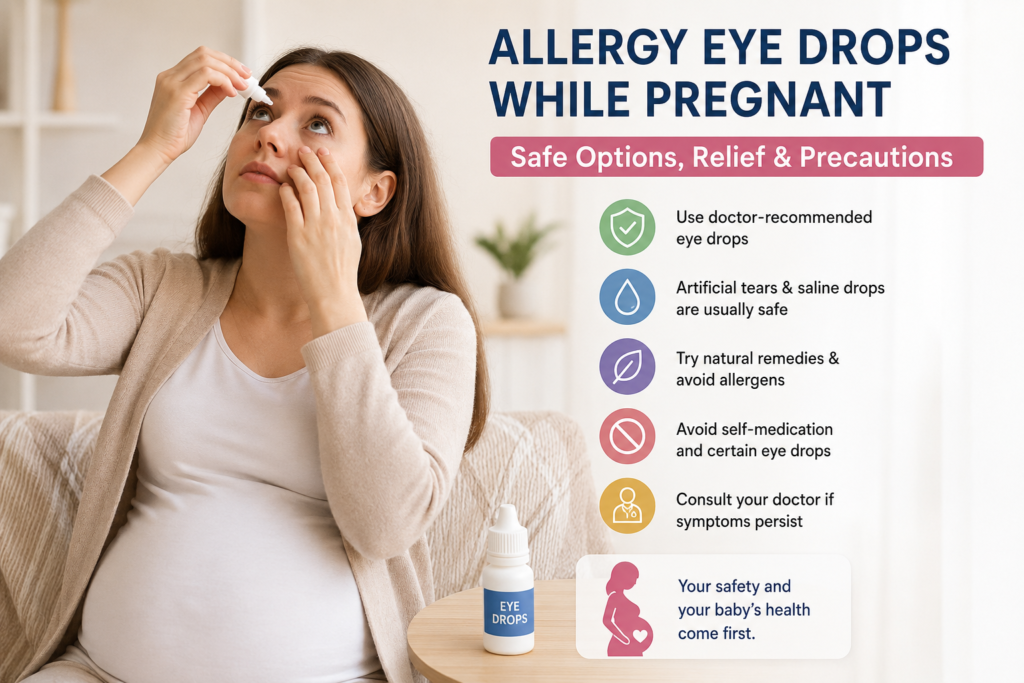
Pregnancy is an exciting journey, but it also brings many unexpected changes—including changes to your eyes. Hormonal fluctuations can make your eyes feel dry, irritated, or more sensitive to allergens like pollen, dust, and pet dander. If you’re dealing with itchy, watery, or red eyes, you may be wondering whether it’s safe to use allergy eye drops while pregnant.
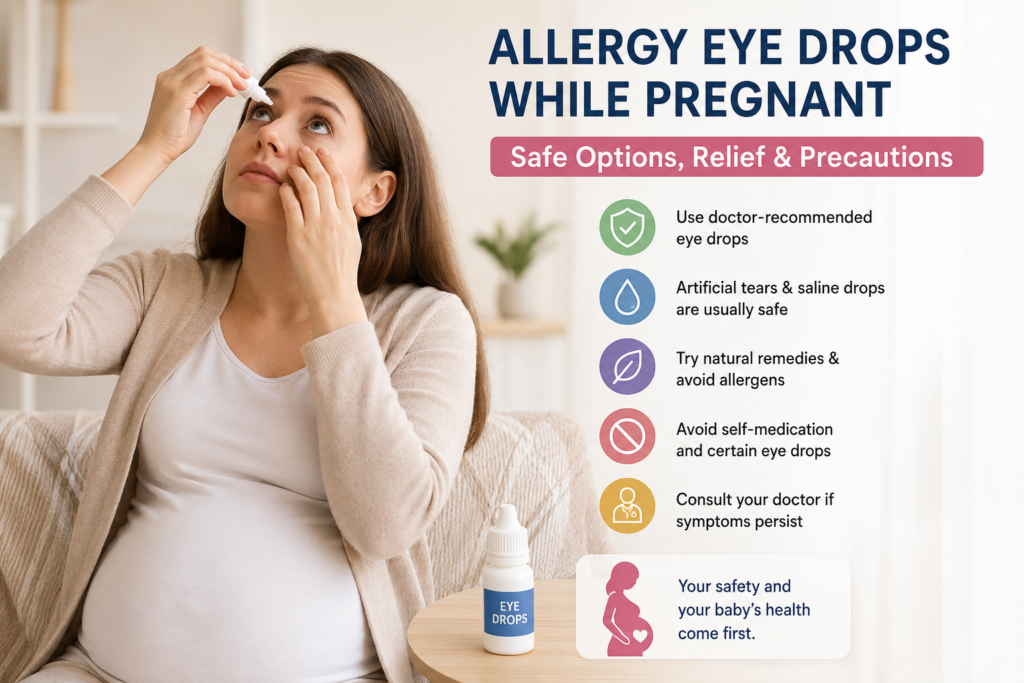
The good news is that some eye drops may be appropriate during pregnancy, while others should only be used under the guidance of a healthcare provider. Because every pregnancy is unique, choosing the right treatment requires balancing symptom relief with your baby’s safety.
This guide explains the safest options for managing eye allergies during pregnancy, medications to avoid, natural remedies that may help, and signs that indicate it’s time to see a doctor.
Can You Use Allergy Eye Drops While Pregnant?
Yes, but not all allergy eye drops are considered equally safe during pregnancy.
Although eye drops are applied directly to the eyes, a small amount of medication can be absorbed into the bloodstream through the tear ducts. For this reason, healthcare providers recommend using only medications that are necessary and have an acceptable safety profile during pregnancy.
For mild symptoms, doctors often recommend starting with preservative-free artificial tears or sterile saline drops before considering medicated allergy eye drops. If symptoms become severe or interfere with daily life, your obstetrician or ophthalmologist may recommend additional treatment based on your medical history and the stage of your pregnancy.
Never start prescription or over-the-counter allergy medications without consulting your healthcare provider.
Why Do Eye Allergies Occur During Pregnancy?
Pregnancy doesn’t cause allergies, but hormonal changes can make your eyes more sensitive to environmental irritants. Increased blood flow and changes in tear production may also contribute to eye discomfort.
Common allergy triggers include:
- Tree and grass pollen
- Dust mites
- Pet dander
- Mold spores
- Cigarette smoke
- Air pollution
- Strong fragrances
Reducing exposure to these allergens can significantly improve symptoms.
Common Symptoms of Eye Allergies During Pregnancy
Eye allergies, also known as allergic conjunctivitis, usually affect both eyes and may include:
- Persistent itching
- Watery eyes
- Redness
- Burning or stinging sensation
- Puffy eyelids
- Mild light sensitivity
- Stringy, clear discharge
- Dry or gritty feeling
Unlike bacterial eye infections, allergies rarely produce thick yellow or green discharge or severe eye pain.
Allergy vs. Eye Infection
| Symptom | Eye Allergy | Eye Infection |
| Itching | ✓ Common | Rare |
| Watery eyes | ✓ Common | Sometimes |
| Thick discharge | ✗ Rare | ✓ Common |
| Redness | ✓ Common | ✓ Common |
| Severe pain | ✗ Uncommon | ✓ Possible |
| Fever | ✗ No | ✓ Sometimes |
If you notice vision changes, severe pain, sensitivity to light, or pus-like discharge, seek medical attention promptly.
Safe Eye Drops That May Be Used During Pregnancy
The most appropriate treatment depends on the severity of your symptoms and your doctor’s recommendations.
1. Preservative-Free Artificial Tears
Artificial tears are usually the first option for mild irritation because they lubricate the eyes and help flush away allergens without using antihistamine medications.
They can relieve:
- Dryness
- Mild itching
- Burning
- Eye fatigue
- Irritation caused by environmental allergens
2. Sterile Saline Eye Drops
Saline drops simply rinse pollen, dust, and other allergens from the eye’s surface. They don’t treat the allergic reaction itself but may reduce discomfort after outdoor activities.
3. Antihistamine Eye Drops
Antihistamine eye drops reduce itching by blocking histamine, the chemical responsible for allergic reactions. However, not every antihistamine eye drop is suitable during pregnancy.
Your healthcare provider will determine whether the benefits outweigh the potential risks before recommending one.
4. Prescription Allergy Eye Drops
For moderate to severe symptoms, an ophthalmologist may prescribe specialized medications, such as mast cell stabilizers or other anti-allergy eye drops. These treatments should only be used exactly as directed.
Eye Drops to Avoid During Pregnancy
Certain medicated eye drops require extra caution because they may contain ingredients that are not recommended unless clearly needed.
These may include:
- Steroid eye drops without medical supervision
- Eye drops containing vasoconstrictors for redness relief
- Combination medications with multiple active ingredients
- Expired or previously prescribed eye medications
Using medications without professional advice can increase unnecessary risks for both mother and baby.
Natural Ways to Relieve Eye Allergies During Pregnancy
If your symptoms are mild, lifestyle changes and home remedies may provide significant relief.
Apply a Cold Compress
A clean, cool compress placed over closed eyelids for 10–15 minutes can reduce itching and swelling.
Use Artificial Tears Frequently
Lubricating eye drops help wash allergens away and keep the eye surface moist.
Avoid Rubbing Your Eyes
Although rubbing feels satisfying, it releases more inflammatory chemicals and often worsens itching.
Limit Allergen Exposure
Simple habits can make a big difference:
- Keep windows closed during high pollen days.
- Shower after spending time outdoors.
- Wash pillowcases regularly.
- Use an air purifier if possible.
- Vacuum frequently to reduce dust.
Stay Hydrated
Drinking enough water supports healthy tear production and may reduce dryness.
Wear Sunglasses Outdoors
Wraparound sunglasses help protect your eyes from airborne pollen and dust.
How Doctors Treat Eye Allergies During Pregnancy
Your doctor will first determine whether your symptoms are caused by allergies, dry eyes, or an infection.
Treatment may include:
- Artificial tears
- Saline rinses
- Prescription allergy eye drops when necessary
- Oral allergy medication in selected cases
- Advice on avoiding allergy triggers
Doctors generally recommend using the lowest effective dose for the shortest period needed.
A useful technique called punctal occlusion—gently pressing the inner corner of your eyes for one to two minutes after applying eye drops—may reduce the amount of medication absorbed into your bloodstream.
When Should You See a Doctor?
Most eye allergies improve with supportive care, but you should contact your healthcare provider if you experience:
- Blurred or reduced vision
- Severe eye pain
- Significant swelling
- Thick yellow or green discharge
- Symptoms lasting more than a few days without improvement
- Eye injury or chemical exposure
- Fever along with eye redness
Prompt evaluation helps rule out more serious conditions that require different treatment.
