

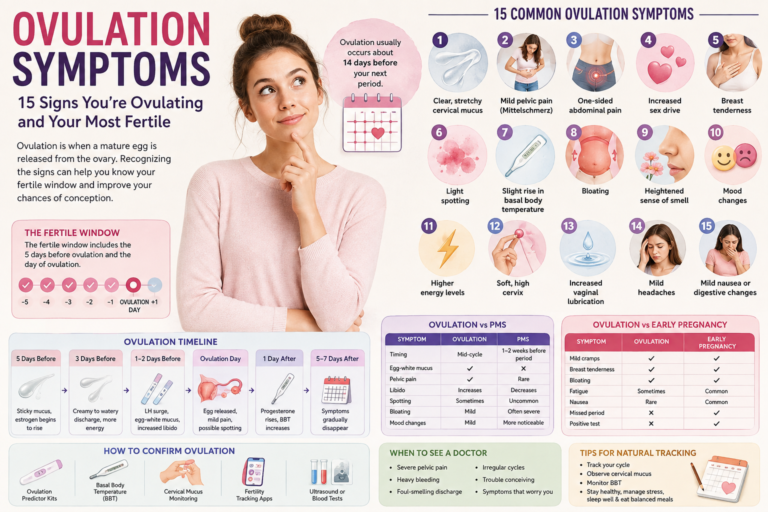
Ovulation is one of the most important phases of the menstrual cycle, especially if you’re trying to conceive or simply want to understand your reproductive health better. During ovulation, one of your ovaries releases a mature egg that can be fertilized by sperm. While this process typically lasts just 12 to 24 hours, your body begins preparing for it several days in advance, producing noticeable physical and hormonal changes.
For many women, these changes appear as ovulation symptoms. You might notice clear, stretchy cervical mucus, mild pelvic pain, increased sex drive, or breast tenderness. Others may experience bloating, mood changes, or even light spotting. However, not everyone experiences the same symptoms, and some women may not notice any signs at all.
Understanding these signals can help you identify your fertile window, improve your chances of pregnancy, or simply gain better insight into your menstrual cycle.
What Are the Most Common Ovulation Symptoms?
The most common ovulation symptoms include:
- Clear, stretchy egg-white cervical mucus
- Mild one-sided pelvic pain (Mittelschmerz)
- Increased sex drive
- Slight rise in basal body temperature (BBT)
- Breast tenderness
- Bloating
- Heightened sense of smell
- Light spotting
- Mood changes
- A softer, higher cervix
These symptoms are triggered by changes in hormones such as estrogen, luteinizing hormone (LH), follicle-stimulating hormone (FSH), and progesterone.
What Is Ovulation?
Ovulation is the process in which a mature egg is released from an ovary into the fallopian tube, where it may be fertilized by sperm. It usually occurs about 14 days before your next menstrual period, although the exact timing depends on the length of your menstrual cycle.
A normal menstrual cycle consists of four phases:
- Menstrual phase
- Follicular phase
- Ovulation
- Luteal phase
During the follicular phase, FSH stimulates ovarian follicles to mature. As one follicle becomes dominant, it produces increasing amounts of estrogen. The rise in estrogen triggers a surge in LH, which causes the ovary to release the mature egg.
If fertilization does not occur, progesterone and estrogen levels fall, leading to the start of the next menstrual period.
Why Do Ovulation Symptoms Occur?
Ovulation symptoms are caused by rapid hormonal changes and the release of the egg from the ovary. These hormonal shifts prepare your body for possible pregnancy and create noticeable changes throughout the reproductive system.
Several factors contribute to these symptoms:
- Rising estrogen increases cervical mucus production.
- The LH surge triggers egg release.
- The ovary stretches slightly when releasing the egg, causing mild pain.
- Progesterone increases after ovulation, leading to a slight rise in body temperature.
- Hormonal fluctuations can also influence mood, libido, digestion, and breast tissue.
Because hormone levels vary from woman to woman, ovulation symptoms may differ in intensity every month.
15 Common Ovulation Symptoms
1. Clear, Stretchy Cervical Mucus
One of the most reliable signs of ovulation is a change in cervical mucus.
As estrogen levels rise, cervical mucus becomes:
- Clear
- Slippery
- Stretchy
- Similar to raw egg whites
This fertile mucus helps sperm survive longer and travel more easily toward the egg.
If you’re tracking fertility naturally, observing cervical mucus is one of the simplest and most effective methods.
What’s Normal?
Healthy ovulation discharge should be:
- Odorless
- Clear or slightly cloudy
- Stretchy between your fingers
- Moist and slippery
If your discharge has a strong odor, causes itching, or appears green, yellow, or gray, consult a healthcare provider, as these may indicate an infection.
2. Mild Pelvic Pain (Mittelschmerz)
Many women experience Mittelschmerz, a German term meaning “middle pain.”
This discomfort usually occurs on one side of the lower abdomen, depending on which ovary releases the egg.
The pain may feel like:
- Sharp
- Dull
- Cramp-like
- Sudden
- Achy
It can last from a few minutes to several hours and occasionally up to one or two days.
Although mild ovulation pain is normal, severe or persistent pelvic pain should always be evaluated by a healthcare professional.
3. One-Sided Abdominal Pain
Unlike menstrual cramps, ovulation pain is usually felt on only one side of the abdomen.
For example:
- Right ovary releases the egg → right-sided discomfort
- Left ovary releases the egg → left-sided discomfort
The side may alternate each month, although one ovary can sometimes ovulate more frequently than the other.
This symptom is completely normal unless the pain becomes severe or is accompanied by fever, vomiting, or heavy bleeding.
4. Increased Sex Drive
Many women notice a significant increase in sexual desire during their fertile window.
Research suggests this is linked to the surge in estrogen and testosterone before ovulation. From a biological perspective, this hormonal shift naturally encourages reproduction during the days when pregnancy is most likely.
You may also notice:
- Increased confidence
- Higher energy levels
- Greater sensitivity to touch
- Enhanced vaginal lubrication
These changes often peak one to two days before ovulation.
5. Breast Tenderness
Hormonal changes don’t only affect the reproductive organs—they also influence breast tissue.
As estrogen rises before ovulation and progesterone increases afterward, some women experience:
- Sore breasts
- Tender nipples
- Fullness
- Mild swelling
- Increased sensitivity
Breast tenderness is usually mild and temporary. Wearing a supportive bra and limiting caffeine may help reduce discomfort for some women.
6. Light Spotting
Some women notice a few drops of pink or light brown blood around ovulation.
This is known as ovulation spotting and is thought to occur when hormone levels briefly change as the egg is released.
Ovulation spotting is typically:
- Very light
- Lasts less than one day
- Pink, red, or brown
- Not accompanied by heavy cramps
Heavy bleeding is not a normal ovulation symptom and should be assessed by a healthcare provider.
7. Slight Rise in Basal Body Temperature (BBT)
After ovulation, progesterone causes a small but measurable increase in your resting body temperature.
This increase is usually around 0.5–1°F (0.3–0.6°C).
By tracking your basal body temperature every morning before getting out of bed, you may notice a consistent pattern over several menstrual cycles.
While BBT confirms that ovulation has already occurred rather than predicting it, combining it with cervical mucus observations and ovulation predictor kits provides a more accurate picture of your fertile window.
8. Bloating
Hormonal fluctuations around ovulation can cause your body to retain more fluid, leading to mild abdominal bloating.
You may notice:
- A feeling of fullness
- Tightness around the waist
- Mild abdominal pressure
- Temporary weight fluctuations
Unlike digestive disorders, ovulation-related bloating is usually short-lived and resolves within a day or two as hormone levels stabilize.
Staying hydrated, reducing excess sodium, and engaging in light physical activity may help ease this symptom.
9. Heightened Sense of Smell
Around ovulation, rising estrogen levels can make some women more sensitive to smells. You may notice fragrances, food aromas, or even your partner’s natural scent more intensely than usual.
Although not everyone experiences this change, research suggests it may be part of the body’s natural response to increased fertility.
Other sensory changes may include:
- Improved sense of taste
- Increased sensitivity to perfumes
- Stronger reaction to food odors
These symptoms usually disappear shortly after ovulation.
10. Mood Changes
Hormonal fluctuations don’t just affect the body—they can also influence emotions.
During ovulation, you may experience:
- Feeling happier or more energetic
- Increased confidenc
- Better concentration
- Mild irritability
- Emotional sensitivity
Unlike premenstrual syndrome (PMS), mood changes during ovulation are often mild and short-lived. If mood swings become severe or interfere with daily life, it’s worth discussing them with a healthcare provider.
11. Higher Energy Levels
Many women report feeling more active and motivated during their fertile window. This boost in energy is believed to result from rising estrogen levels before ovulation.
You may notice:
- Improved stamina
- Better workout performance
- Increased motivation
- Enhanced mental clarity
- Greater productivity
These changes often peak just before ovulation and gradually decline afterward.
12. A Soft, High Cervix
The cervix changes throughout your menstrual cycle. As ovulation approaches, it becomes:
- Softer
- Higher in the vagina
- More open
- Slightly wetter
These changes make it easier for sperm to travel through the cervix and into the uterus.
Women who practice fertility awareness often monitor cervical position alongside cervical mucus and basal body temperature to identify their fertile days.
13. Increased Vaginal Lubrication
Because estrogen stimulates cervical glands, many women notice increased natural lubrication around ovulation.
This lubrication:
- Reduces friction during intercourse
- Supports sperm movement
- Indicates peak fertility
It usually occurs alongside clear, stretchy cervical mucus and disappears after ovulation when progesterone levels rise.
14. Mild Headaches
Some women experience headaches around ovulation due to hormonal changes, particularly fluctuations in estrogen.
Ovulation headaches are usually:
- Mild to moderate
- Temporary
- Not accompanied by fever
- Resolved within a day or two
Staying hydrated, getting enough sleep, and eating balanced meals may help reduce headache frequency.
15. Mild Nausea or Digestive Changes
Although less common, some women experience digestive symptoms during ovulation, including:
- Mild nausea
- Gas
- Constipation
- Diarrhea
- Changes in appetite
These symptoms are usually caused by hormonal fluctuations and should improve quickly. Severe abdominal pain or persistent digestive issues are not typical ovulation symptoms and should be evaluated by a doctor.
Ovulation Symptoms Timeline
Understanding when symptoms appear can help you identify your fertile window more accurately.
| Time | What Happens | Common Symptoms |
|---|---|---|
| 5 Days Before Ovulation | Fertile window begins | Sticky cervical mucus, rising estrogen |
| 3 Days Before | Fertility increases | Creamy to watery discharge, higher energy |
| 1–2 Days Before | LH surge | Egg-white mucus, increased libido |
| Ovulation Day | Egg released | Mild pelvic pain, spotting, slippery discharge |
| 1 Day After | Progesterone rises | Basal body temperature increases |
| 5–7 Days After | Luteal phase | Symptoms gradually disappear |
Ovulation vs. PMS Symptoms
Many women confuse ovulation symptoms with premenstrual syndrome because both involve hormonal changes. However, they occur at different stages of the menstrual cycle.
| Symptom | Ovulation | PMS |
|---|---|---|
| Timing | Mid-cycle | 1–2 weeks before period |
| Egg-white cervical mucus | ✔ | ✘ |
| One-sided pelvic pain | ✔ | Rare |
| Increased libido | ✔ | Usually decreases |
| Basal body temperature rise | ✔ | Remains elevated after ovulation |
| Breast tenderness | Mild | Common |
| Mood changes | Mild | Often more noticeable |
| Spotting | Occasionally | Uncommon |
Ovulation Symptoms vs. Early Pregnancy Symptoms
Because early pregnancy and ovulation both involve hormonal changes, they can feel surprisingly similar.
| Symptom | Ovulation | Early Pregnancy |
|---|---|---|
| Mild cramps | ✔ | ✔ |
| Breast tenderness | ✔ | ✔ |
| Bloating | ✔ | ✔ |
| Fatigue | Sometimes | Common |
| Nausea | Rare | Common after implantation |
| Missed period | ✘ | ✔ |
| Positive pregnancy test | ✘ | ✔ |
If you’re unsure whether you’re experiencing ovulation or early pregnancy, wait until after your expected period and take a home pregnancy test.
How to Confirm Ovulation
While symptoms provide helpful clues, they don’t guarantee that ovulation has occurred. For more accurate tracking, consider combining several methods.
1. Ovulation Predictor Kits (OPKs)
These urine tests detect the luteinizing hormone (LH) surge, which usually occurs 24–36 hours before ovulation.
2. Basal Body Temperature (BBT)
Tracking your temperature every morning can confirm that ovulation has taken place.
3. Cervical Mucus Monitoring
Watching for clear, stretchy “egg-white” mucus is one of the most reliable natural fertility signs.
4. Fertility Tracking Apps
Many apps help predict ovulation by analyzing your cycle length and recorded symptoms.
5. Blood Tests and Ultrasound
If you’re struggling to conceive or have irregular cycles, your healthcare provider may recommend hormone testing or ultrasound monitoring to confirm ovulation.
When Should You See a Doctor?
Ovulation symptoms are usually mild. However, you should seek medical advice if you experience:
- Severe or persistent pelvic pain
- Heavy bleeding between periods
- Foul-smelling vaginal discharge
- Fever with abdominal pain
- Irregular menstrual cycles lasting several months
- Difficulty conceiving after 12 months of regular, unprotected intercourse (or after 6 months if you’re over 35)
These symptoms could indicate conditions such as polycystic ovary syndrome (PCOS), endometriosis, ovarian cysts, or other reproductive health concerns.
Tips for Tracking Ovulation Naturally
If you’re trying to conceive—or simply want to understand your cycle better—these habits can help:
- Record the first day of each menstrual period.
- Observe changes in cervical mucus daily.
- Measure your basal body temperature every morning.
- Use ovulation predictor kits during your fertile window.
- Maintain a healthy body weight.
- Eat a balanced diet rich in fruits, vegetables, lean protein, and healthy fats.
- Exercise regularly without overtraining.
- Get enough sleep and manage stress through relaxation techniques.
Tracking multiple fertility signs over several months provides a more complete picture than relying on just one symptom.
Frequently Asked Questions
Can you ovulate without symptoms?
Yes. Some women experience “silent ovulation,” meaning they release an egg without noticeable physical symptoms.
How long do ovulation symptoms last?
Most symptoms last between a few hours and two days, although cervical mucus changes may continue throughout the fertile window.
What does ovulation pain feel like?
It is usually a mild, one-sided ache or cramp in the lower abdomen that occurs when the ovary releases an egg.
Is spotting during ovulation normal?
Light pink or brown spotting can occur around ovulation and is generally considered normal if it lasts only a short time.
When is the best time to get pregnant?
The highest chance of conception is during the five days leading up to ovulation and the day of ovulation itself.
Conclusion
Recognizing ovulation symptoms can help you better understand your menstrual cycle, identify your most fertile days, and make informed decisions about your reproductive health. From clear egg-white cervical mucus and mild pelvic pain to increased libido and subtle hormonal changes, your body often provides valuable clues that ovulation is approaching.
Keep in mind that every woman experiences ovulation differently. Some notice several symptoms each month, while others experience very few or none at all. Tracking your cycle using cervical mucus, basal body temperature, and ovulation predictor kits can improve accuracy and help you recognize your body’s unique fertility patterns.
If your symptoms are severe, your periods are consistently irregular, or you’re having trouble conceiving, don’t hesitate to consult a qualified healthcare provider. Early evaluation and personalized care can help identify any underlying issues and support your reproductive health goals.
