

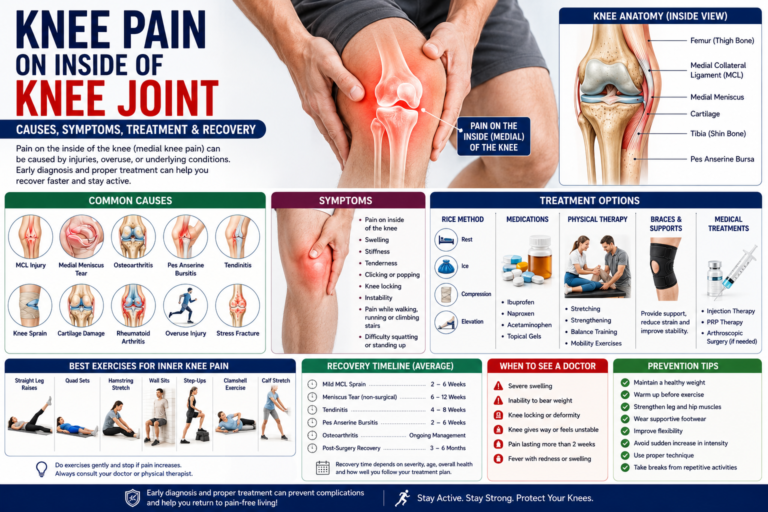
Knee pain on the inside of the knee joint—also known as medial knee pain—is one of the most common reasons people visit an orthopedic specialist or physical therapist. It can affect anyone, from runners and athletes to office workers and older adults. Sometimes the pain begins suddenly after a sports injury, while in other cases it develops gradually due to arthritis or repetitive stress.
The inside of your knee contains several important structures, including the medial collateral ligament (MCL), medial meniscus, cartilage, tendons, and the pes anserine bursa. Damage or inflammation affecting any of these structures can lead to pain, swelling, stiffness, and difficulty walking.
Although many cases improve with rest and conservative treatment, persistent or severe pain may indicate a more serious condition that requires medical evaluation.
In this guide, you’ll learn the most common causes of inner knee pain, recognize the symptoms, understand how it’s diagnosed, and discover the most effective treatment options to help you recover safely.
What Causes Knee Pain on the Inside of the Knee Joint?
Pain on the inside of the knee joint, known as medial knee pain, is most commonly caused by a medial collateral ligament (MCL) injury, medial meniscus tear, osteoarthritis, pes anserine bursitis, or repetitive overuse. Other possible causes include tendinitis, knee sprains, cartilage damage, rheumatoid arthritis, and stress fractures. Treatment depends on the underlying condition and may include rest, ice, physical therapy, medications, knee braces, or surgery in severe cases.
Understanding the Inner Knee Joint
Your knee is the largest joint in the body and plays a vital role in standing, walking, running, climbing stairs, and maintaining balance. It works like a hinge, allowing the leg to bend and straighten while supporting your body weight.
The knee consists of several structures that must work together smoothly.
Bones
Three bones form the knee joint:
- Femur (thigh bone)
- Tibia (shin bone)
- Patella (kneecap)
These bones are covered with smooth articular cartilage, which allows them to glide without friction.
Medial Meniscus
The medial meniscus is a C-shaped piece of cartilage on the inside of the knee. It acts as a shock absorber, cushions the joint, and helps distribute body weight evenly.
Medial Collateral Ligament (MCL)
The MCL runs along the inside of the knee and helps stabilize the joint by preventing excessive side-to-side movement.
Tendons and Muscles
Strong tendons connect muscles to bones, allowing the knee to move efficiently during daily activities and sports.
Bursa
Small fluid-filled sacs called bursae reduce friction between tendons, muscles, and bones. One important bursa on the inside of the knee is the pes anserine bursa, which can become inflamed and painful.
Because so many structures are located close together, identifying the exact source of pain often requires a careful medical evaluation.
10 Common Causes of Knee Pain on the Inside of the Knee Joint
1. Medial Collateral Ligament (MCL) Injury
An MCL injury is one of the most frequent causes of pain along the inside of the knee.
It usually occurs after:
- A blow to the outside of the knee
- Sudden twisting movements
- Contact sports such as football or soccer
- Skiing accidents
Symptoms
- Pain on the inside of the knee
- Swelling
- Tenderness
- Feeling that the knee is unstable
- Difficulty walking
Mild MCL sprains often heal with conservative treatment, while severe tears may require a longer rehabilitation period.
2. Medial Meniscus Tear
The medial meniscus can tear during sudden twisting motions, especially when the foot remains planted while the body rotates.
Older adults may also develop degenerative meniscus tears due to age-related cartilage wear.
Common symptoms include:
- Sharp inner knee pain
- Clicking or popping
- Knee locking
- Swelling
- Difficulty bending or straightening the knee
3. Knee Osteoarthritis
Osteoarthritis develops when the cartilage protecting the knee gradually wears away.
As the joint loses its protective cushioning, bones begin rubbing against one another, causing:
- Pain during walking
- Morning stiffness
- Swelling
- Reduced flexibility
- Grinding sensations
This condition becomes more common with age and may affect one or both knees.
4. Pes Anserine Bursitis
The pes anserine bursa is located on the inner side of the knee just below the joint.
Inflammation of this bursa can occur due to:
- Running
- Climbing stairs
- Obesity
- Osteoarthritis
- Tight hamstrings
Pain is usually felt several centimeters below the knee joint rather than directly inside it.
5. Knee Tendinitis
Repeated stress on the tendons surrounding the knee can lead to inflammation known as tendinitis.
People at greater risk include:
- Runners
- Cyclists
- Tennis players
- Construction workers
- Individuals who frequently kneel
Symptoms often worsen during physical activity and improve with rest.
6. Knee Sprain
A sprain occurs when the ligaments are stretched or partially torn.
Minor sprains often happen after:
- Slipping
- Falling
- Twisting the knee awkwardly
- Sudden changes in direction
Pain is typically accompanied by swelling and temporary joint instability.
7. Cartilage Damage
Healthy cartilage allows smooth joint movement.
When cartilage becomes damaged due to injury or long-term wear, symptoms may include:
- Persistent knee pain
- Clicking
- Locking
- Swelling
- Reduced range of motion
Cartilage injuries often require imaging studies such as an MRI for accurate diagnosis.
8. Rheumatoid Arthritis
Unlike osteoarthritis, rheumatoid arthritis is an autoimmune condition in which the body’s immune system attacks the lining of the joints.
Symptoms often include:
- Pain in both knees
- Morning stiffness lasting longer than 30 minutes
- Swelling
- Warmth around the joint
- Fatigue
Early treatment can help reduce inflammation and protect joint function.
9. Repetitive Overuse Injury
Performing the same movements repeatedly places stress on the muscles, tendons, and ligaments surrounding the knee.
Examples include:
- Long-distance running
- Squatting
- Jumping
- Frequent stair climbing
- Physically demanding occupations
Without proper recovery, overuse injuries may progress from mild soreness to chronic pain.
10. Stress Fracture
Although less common, stress fractures can cause pain on the inside of the knee.
These tiny cracks in the bone often develop from repetitive impact rather than a single traumatic event.
Risk factors include:
- Distance running
- Osteoporosis
- Poor nutrition
- Sudden increases in training intensity
Symptoms of Inner Knee Pain
Symptoms vary depending on the underlying condition, but recognizing the warning signs early can help prevent further injury.
Early Symptoms
Many people first notice:
- Mild aching
- Tenderness along the inner knee
- Pain while walking
- Stiffness after sitting
- Mild swelling
- Discomfort during exercise
These symptoms often develop gradually and become more noticeable with activity.
Severe Symptoms
More serious injuries may cause:
- Significant swelling
- Knee locking
- Clicking or popping
- Knee giving way
- Difficulty bearing weight
- Sharp pain during movement
- Limited range of motion
If these symptoms occur after an injury, medical evaluation is recommended.
Quick Symptom Checklist
You may have a medial knee injury if you experience:
- ✔ Pain on the inside of the knee
- ✔ Swelling around the joint
- ✔ Stiffness after rest
- ✔ Clicking or popping sounds
- ✔ Pain while climbing stairs
- ✔ Pain when squatting
- ✔ Knee instability
- ✔ Difficulty walking comfortably
Inner Knee Pain by Activity
The activity that triggers your pain often provides important clues about the underlying cause.
Pain When Walking
Pain during walking may result from:
- Osteoarthritis
- MCL injury
- Meniscus tear
- Cartilage damage
If walking becomes increasingly painful over several days, medical evaluation is advisable.
Pain While Running
Running places repeated stress on the knee joint and may aggravate:
- Tendinitis
- Meniscus injuries
- Overuse syndrome
- Pes anserine bursitis
Reducing mileage, improving running technique, and wearing supportive footwear can often help prevent recurring symptoms.
Pain While Climbing Stairs
Pain during stair climbing commonly occurs with:
- Osteoarthritis
- Meniscus tears
- Cartilage damage
- Tendinitis
Because climbing stairs increases pressure on the knee joint, this symptom often indicates irritation within the joint itself.
Pain During Squats
Squatting places substantial load on the knee. Pain during this movement may suggest:
- Meniscus injury
- MCL strain
- Cartilage wear
- Tendinitis
Persistent pain while squatting should not be ignored, especially if accompanied by swelling or locking.
Pain When Standing Up
Difficulty rising from a chair or standing after prolonged sitting may be associated with arthritis, tendon irritation, or joint stiffness.
Pain at Night
Nighttime knee pain may occur with inflammatory conditions such as rheumatoid arthritis, advanced osteoarthritis, or persistent overuse injuries.
Inner Knee Pain by Age Group
The cause of medial knee pain often depends on your age, activity level, and overall joint health.
Young Athletes
Young athletes frequently develop inner knee pain due to sports-related injuries.
Common causes include:
- Medial Collateral Ligament (MCL) sprains
- Medial meniscus tears
- Overuse from running or jumping
- Contact sports injuries
Quick changes in direction during soccer, basketball, football, or skiing place extra stress on the inner knee.
Adults
Adults are more likely to experience knee pain from repetitive strain or occupational activities.
Common causes include:
- Tendinitis
- Pes anserine bursitis
- Overuse injuries
- Minor ligament sprains
People who spend long hours standing, lifting, kneeling, or climbing stairs are at greater risk.
Older Adults
In older adults, inner knee pain is commonly associated with age-related joint changes.
Frequent causes include:
- Osteoarthritis
- Degenerative meniscus tears
- Cartilage wear
- Reduced joint flexibility
Early treatment and regular strengthening exercises can help maintain mobility and reduce discomfort.
MCL Injury vs. Meniscus Tear
Both conditions can cause pain on the inside of the knee, but there are important differences.
| Feature | MCL Injury | Medial Meniscus Tear |
|---|---|---|
| Pain Location | Inside of knee | Inside of knee |
| Common Cause | Blow to the knee or twisting injury | Twisting while foot stays planted |
| Swelling | Usually develops quickly | May develop over several hours |
| Knee Locking | Uncommon | Common |
| Knee Instability | More common | Sometimes present |
| Clicking or Popping | Less common | Frequently reported |
| MRI Needed | Sometimes | Often recommended |
If you’re unsure which condition you may have, an orthopedic specialist can perform specific physical tests and order imaging if needed.
How Doctors Diagnose Inner Knee Pain
Diagnosing medial knee pain begins with a detailed medical history and physical examination.
Your healthcare provider may ask:
- When did the pain begin?
- Did you experience an injury?
- Which activities make it worse?
- Do you hear clicking or feel locking?
- Does the knee give way?
Physical Examination
The doctor will evaluate:
- Swelling
- Tenderness
- Joint stability
- Range of motion
- Walking pattern
- Muscle strength
Imaging Tests
Depending on your symptoms, additional tests may include:
X-ray
Used to identify fractures and signs of osteoarthritis.
MRI (Magnetic Resonance Imaging)
Provides detailed images of the meniscus, cartilage, ligaments, tendons, and other soft tissues.
Ultrasound
Helpful for evaluating bursitis, tendon injuries, and fluid accumulation.
CT Scan
Occasionally used for complex fractures or detailed bone assessment.
Treatment for Knee Pain on the Inside of the Knee Joint
Treatment depends on the specific diagnosis, severity of symptoms, and your activity level.
1. Home Care (RICE Method)
For many mild injuries, the RICE method is the recommended first step.
Rest
Avoid activities that worsen your symptoms, especially running, jumping, and heavy lifting.
Ice
Apply an ice pack for 15–20 minutes every 2–3 hours during the first 48 hours after an injury to reduce swelling.
Compression
A compression sleeve or elastic bandage may help reduce swelling and provide support.
Elevation
Keeping the knee elevated above heart level can help minimize swelling after acute injuries.
2. Medications
Over-the-counter medications may help relieve pain and inflammation.
Common options include:
- Ibuprofen
- Naproxen
- Acetaminophen
- Topical NSAID gels
Always follow dosing instructions and consult your healthcare provider if you have chronic medical conditions.
3. Physical Therapy
Physical therapy is often one of the most effective non-surgical treatments for medial knee pain.
A rehabilitation program may include:
- Stretching exercises
- Quadriceps strengthening
- Hamstring strengthening
- Hip stability exercises
- Balance training
- Gait correction
- Functional movement training
Improving muscle strength around the knee reduces pressure on the joint and lowers the risk of future injuries.
4. Knee Braces and Supports
Depending on the condition, your healthcare provider may recommend:
- Hinged knee brace
- Compression sleeve
- Patellar support brace
Braces can improve stability during recovery but should be used alongside an exercise program rather than as a long-term substitute for rehabilitation.
5. Advanced Medical Treatments
When conservative treatments don’t provide enough relief, additional options may include:
- Corticosteroid injections for inflammation
- Hyaluronic acid injections for osteoarthritis
- Platelet-Rich Plasma (PRP) therapy for selected tendon or ligament injuries
- Arthroscopic surgery for meniscus tears
- Knee replacement surgery for advanced osteoarthritis
Surgery is generally reserved for severe injuries or cases that don’t improve with non-surgical treatment.
Best Exercises for Inner Knee Pain
Once the acute pain has settled, gentle strengthening exercises can support recovery and improve joint stability.
Recommended exercises include:
Straight Leg Raises
Strengthen the quadriceps without placing excessive stress on the knee joint.
Quad Sets
Improve muscle activation and help restore knee function.
Hamstring Stretch
Reduces tightness behind the knee and improves flexibility.
Calf Stretch
Supports proper lower-leg mobility and reduces strain on the knee.
Wall Sits
Strengthen the quadriceps and gluteal muscles while improving endurance.
Step-Ups
Improve balance, coordination, and functional strength.
Clamshell Exercise
Targets the hip muscles, which play an important role in knee alignment.
Hip Strengthening Exercises
Strong hips help reduce inward knee movement during walking and running.
Important: Stop exercising and seek medical advice if pain becomes severe or your knee locks or gives way.
Recovery Timeline
Healing time depends on the underlying condition and your commitment to rehabilitation.
| Condition | Average Recovery Time |
|---|---|
| Mild MCL sprain | 2–6 weeks |
| Meniscus tear (non-surgical) | 6–12 weeks |
| Tendinitis | 4–8 weeks |
| Pes anserine bursitis | 2–6 weeks |
| Osteoarthritis | Long-term management |
| Knee surgery | 3–6 months |
Factors That Affect Recovery
Recovery may take longer if you:
- Continue high-impact activities too early
- Skip rehabilitation exercises
- Smoke
- Have obesity or diabetes
- Delay treatment
- Have advanced arthritis
Possible Complications
Untreated inner knee pain can lead to:
- Chronic knee pain
- Recurrent injuries
- Joint instability
- Cartilage damage
- Reduced mobility
- Progressive osteoarthritis
- Muscle weakness due to inactivity
Early diagnosis and appropriate treatment greatly improve long-term outcomes.
When Should You See a Doctor?
Seek immediate medical attention if you experience:
- Severe swelling after an injury
- Inability to bear weight
- Knee locking
- Visible deformity
- Fever with redness and swelling
- Repeated episodes of the knee giving way
- Pain lasting longer than two weeks despite home care
Prompt evaluation can help prevent long-term joint damage.
How to Prevent Inner Knee Pain
Although not every injury can be prevented, healthy habits can reduce your risk.
Prevention Tips
- Maintain a healthy body weight.
- Warm up before exercise.
- Wear supportive footwear.
- Strengthen your quadriceps, hamstrings, and hips.
- Stretch regularly to maintain flexibility.
- Increase training intensity gradually.
- Use proper technique during sports.
- Take breaks from repetitive activities.
- Replace worn-out athletic shoes.
- Stay physically active to support joint health.
Frequently Asked Questions
1. What causes pain on the inside of the knee joint?
The most common causes include MCL injuries, medial meniscus tears, osteoarthritis, pes anserine bursitis, and repetitive overuse.
2. Is inner knee pain always a meniscus tear?
No. While a meniscus tear is a common cause, ligament injuries, arthritis, bursitis, tendinitis, and cartilage damage can produce similar symptoms.
3. Can arthritis cause pain inside the knee?
Yes. Osteoarthritis and rheumatoid arthritis frequently cause pain, stiffness, and swelling on the inner side of the knee.
4. How do I know if I injured my MCL?
Pain along the inside of the knee, tenderness, swelling, and a feeling of instability after a twisting injury are common signs of an MCL sprain.
5. Can I walk with inner knee pain?
Mild pain may allow walking, but avoid activities that worsen symptoms. If walking is difficult or painful, seek medical evaluation.
6. What exercises help medial knee pain?
Straight leg raises, quad sets, hamstring stretches, wall sits, step-ups, and hip-strengthening exercises are commonly recommended after the initial pain subsides.
7. How long does inner knee pain take to heal?
Recovery ranges from two weeks for mild sprains to several months for more serious injuries or after surgery.
8. When should I get an MRI?
An MRI may be recommended if your doctor suspects a meniscus tear, ligament injury, cartilage damage, or if symptoms persist despite conservative treatment.
9. Should I wear a knee brace?
A knee brace may improve stability and comfort for certain conditions, but it works best when combined with rehabilitation exercises.
10. Can inner knee pain go away on its own?
Some mild overuse injuries improve with rest and home care. However, persistent, worsening, or severe pain should be evaluated by a healthcare professional.
Conclusion
Pain on the inside of the knee joint can result from a wide range of conditions, including MCL injuries, medial meniscus tears, osteoarthritis, pes anserine bursitis, tendinitis, and repetitive overuse. Paying attention to where the pain occurs, how it started, and which activities make it worse can help identify the underlying cause.
Most mild to moderate cases respond well to conservative treatments such as the RICE method, physical therapy, targeted strengthening exercises, and temporary activity modification. However, symptoms like severe swelling, knee locking, inability to bear weight, or persistent pain should never be ignored.
By seeking timely medical advice, following a structured rehabilitation plan, maintaining a healthy weight, and strengthening the muscles that support the knee, you can improve recovery, restore mobility, and reduce the risk of future injuries. Whether you’re an athlete, an active adult, or simply looking to stay mobile as you age, protecting your knee health today can help keep you moving comfortably for years to come.
