

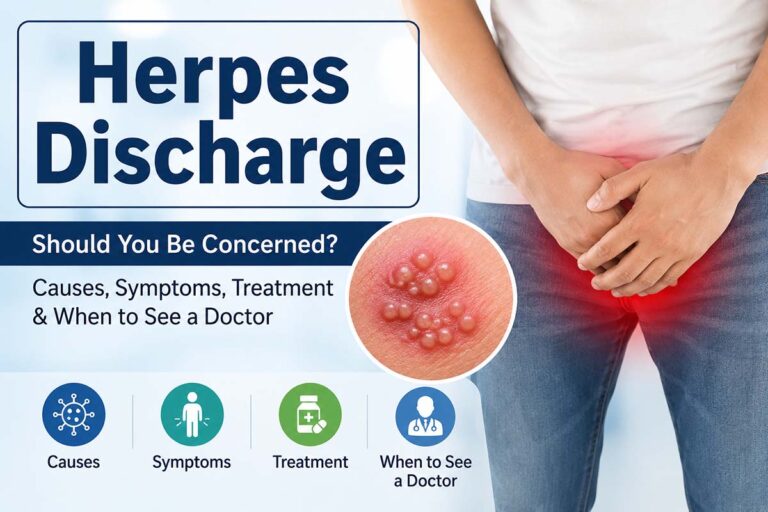
Noticing unusual genital discharge can be worrying, especially if you’re wondering whether it could be linked to genital herpes. While herpes is best known for causing painful blisters and sores, many people are surprised to learn that discharge can also occur in some cases. However, discharge is not the most common symptom of herpes, and it can also be caused by a wide range of other conditions, including bacterial infections, yeast infections, or other sexually transmitted infections (STIs).
So, should you be concerned about herpes discharge?
The short answer is that it depends on your symptoms. Discharge by itself doesn’t confirm herpes, but if it’s accompanied by genital sores, itching, burning during urination, swollen lymph nodes, or flu-like symptoms, it’s important to seek medical evaluation. Early diagnosis helps you receive the right treatment, manage symptoms effectively, and reduce the risk of passing the virus to a partner.
In this guide, you’ll learn what herpes discharge is, why it happens, what it looks like, the symptoms that often occur alongside it, and when it’s time to see a healthcare provider.
What Is Herpes Discharge?
Herpes discharge refers to fluid or mucus that may be present during a genital herpes infection. It is usually associated with Herpes Simplex Virus Type 2 (HSV-2), although HSV-1 can also cause genital herpes through oral-genital contact.
Unlike infections that primarily affect the urinary or reproductive tract, herpes targets the skin and mucous membranes. The virus creates small blisters that eventually rupture and form shallow ulcers. During an active outbreak, inflammation in the surrounding tissues may increase mucus production, leading to noticeable discharge in some people.
It’s important to understand that most people with genital herpes do not experience significant discharge. Instead, the hallmark signs are painful blisters, sores, tingling, itching, and tenderness in the affected area. When discharge does occur, it often results from inflammation of nearby tissues or from a secondary infection rather than the herpes virus alone.
Can Herpes Cause Discharge?
Yes, herpes can sometimes cause discharge, but it is relatively uncommon compared to other genital symptoms.
Women may notice increased vaginal discharge if the cervix or vaginal tissues become inflamed during an outbreak. Men may experience a small amount of urethral discharge if the urethra is irritated or inflamed. However, because abnormal discharge is more commonly associated with infections such as chlamydia, gonorrhea, bacterial vaginosis, or trichomoniasis, medical testing is usually necessary to identify the exact cause.
Why Does It Happen?
Several factors can contribute to discharge during a herpes outbreak:
- Inflammation of the genital tissues increases natural mucus production.
- Open sores may release clear or slightly cloudy fluid as they heal.
- Irritation of the urethra or cervix can lead to additional secretions.
- Secondary bacterial infections may change the color, consistency, or odor of the discharge.
- The body’s immune response can increase moisture around inflamed tissues.
Understanding these causes helps explain why discharge varies from one person to another and why it should always be evaluated in the context of other symptoms.
What Does Herpes Discharge Look Like?
One of the most common questions people ask is, “What does herpes discharge actually look like?” The answer isn’t always straightforward because herpes doesn’t produce a unique type of discharge that can be identified by appearance alone.
When discharge is related to herpes, it is often:
- Clear or slightly cloudy
- Thin or mildly mucus-like
- Light in quantity
- Mild or odorless
- Temporary, appearing during an active outbreak
If the discharge becomes thick, green, gray, or has a strong unpleasant odor, another infection may be present. This is why healthcare providers often recommend testing for multiple STIs rather than assuming herpes is the only cause.
Common Characteristics
| Feature | Possible Herpes-Related Discharge |
| Color | Clear, white, or slightly cloudy |
| Texture | Thin or mucus-like |
| Smell | Usually little to no odor |
| Amount | Light to moderate |
| Duration | Often limited to an active outbreak |
Keep in mind that these characteristics can overlap with many other conditions. Appearance alone is never enough to diagnose genital herpes.
Does the Color Matter?
The color of discharge can offer clues, but it doesn’t provide a definitive diagnosis.
Clear discharge may occur because of inflammation or increased mucus production during an outbreak.
White discharge can sometimes accompany herpes, but it is also common in yeast infections and other vaginal conditions.
Yellow or green discharge is less typical for herpes and may suggest another bacterial or sexually transmitted infection that requires prompt medical attention.
Can Herpes Discharge Have a Strong Odor?
In most cases, herpes-related discharge has little or no noticeable smell. A strong fishy or foul odor is more commonly associated with bacterial vaginosis or certain bacterial STIs. If discharge develops a strong odor, especially along with fever, severe pelvic pain, or worsening symptoms, medical evaluation is important.
Symptoms That Often Occur Alongside Herpes Discharge
Discharge rarely appears as the only symptom of genital herpes. Most people experience several signs during an outbreak, particularly the first episode, which is often more severe than later recurrences.
Recognizing these accompanying symptoms can help you understand when medical evaluation is necessary.
Painful Blisters and Sores
Small fluid-filled blisters are the classic sign of genital herpes. These blisters eventually break open, forming shallow ulcers that may take several weeks to heal during the first outbreak.
Tingling or Burning Before an Outbreak
Many people experience warning symptoms known as a prodrome. Tingling, itching, burning, or mild pain may begin hours or even days before visible sores appear.
Pain During Urination
If sores develop near the urethra, urine passing over the irritated skin can cause a sharp burning sensation. This symptom is common during active outbreaks and may be mistaken for a urinary tract infection.
Genital Itching and Irritation
Persistent itching around the vulva, penis, anus, or surrounding skin often occurs before or during an outbreak. The irritation may continue until the sores have healed.
Swollen Lymph Nodes
Your immune system responds to the infection by activating nearby lymph nodes, especially those in the groin. These glands may become swollen, tender, or painful for several days.
Flu-Like Symptoms
A person’s first herpes outbreak may include:
- Fever
- Fatigue
- Headache
- Muscle aches
- Chills
- General body weakness
These symptoms are usually less common during future outbreaks because the immune system has already been exposed to the virus.
Pain During Sexual Activity
Inflamed skin and open sores can make sexual activity uncomfortable or painful. Avoiding sexual contact during an active outbreak helps reduce discomfort and lowers the risk of transmitting the virus to a partner.
When Multiple Symptoms Occur Together
If you notice discharge along with genital sores, painful urination, swollen glands, fever, or recurring outbreaks, it’s important to arrange a medical evaluation rather than relying on self-diagnosis. Many infections share similar symptoms, and laboratory testing is often needed to determine the exact cause and guide appropriate treatment.
