

Introduction
Imagine having persistent swelling, heaviness, or pain in one leg without knowing the real cause. Many people assume it’s muscle fatigue, varicose veins, or simply poor circulation. However, for some, the underlying problem is May Thurner Syndrome (MTS)—a vascular condition that often goes undiagnosed until it leads to a Deep Vein Thrombosis (DVT).
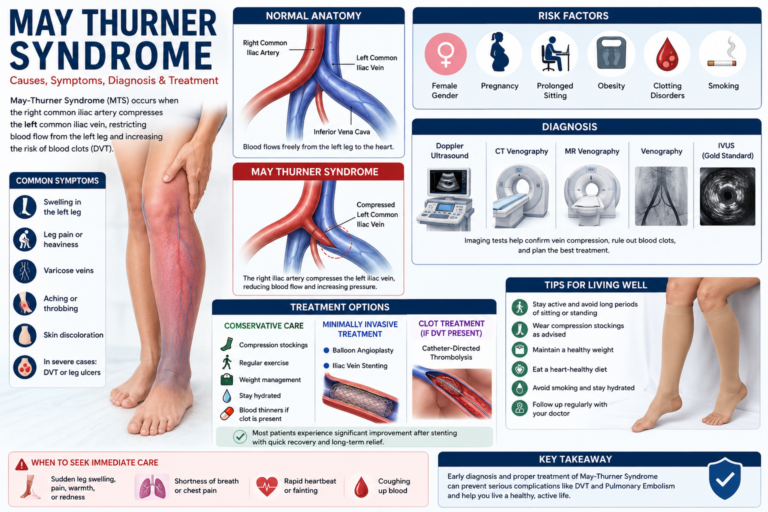
May Thurner Syndrome occurs when the right common iliac artery compresses the left common iliac vein, restricting blood flow from the left leg back to the heart. Over time, this compression can increase pressure inside the vein, causing swelling, pain, and in some cases dangerous blood clots.
Although the condition is relatively uncommon, experts believe many mild cases remain undiagnosed because symptoms can be subtle or mistaken for other vein disorders.
In this guide, you’ll learn everything you need to know about May Thurner Syndrome, including its symptoms, causes, diagnosis, treatment options, recovery timeline, and practical tips for living with the condition.
What Is May Thurner Syndrome?
May Thurner Syndrome (also called Iliac Vein Compression Syndrome) is a vascular disorder in which the right common iliac artery presses against the left common iliac vein. This compression narrows the vein, making it harder for blood to flow from the left leg to the inferior vena cava (IVC) and back to the heart.
As blood flow slows, pressure builds inside the vein. This may cause chronic swelling, discomfort, and an increased risk of Deep Vein Thrombosis (DVT).
Not everyone with iliac vein compression develops symptoms. Many people have mild compression without knowing it, while others experience significant complications requiring medical treatment.
Why Is the Left Leg Usually Affected?
The body’s anatomy explains why this condition almost always affects the left side.
The right common iliac artery naturally crosses over the left common iliac vein in the pelvis. Continuous pulsations from the artery can gradually irritate and compress the vein, leading to scar tissue formation and narrowing over time.
This is why most patients notice symptoms only in the left leg.
Understanding the Anatomy
To understand May Thurner Syndrome, it’s helpful to know how blood normally travels.
Healthy veins carry oxygen-poor blood from the legs back to the heart. The left common iliac vein collects blood from the left leg and pelvis before joining the inferior vena cava.
In May Thurner Syndrome:
- The right common iliac artery presses against the left common iliac vein.
- The vein becomes narrowed.
- Blood flow slows.
- Pressure builds in the leg.
- Blood may pool inside the vein.
- A clot can develop if blood remains stagnant.
This process is known as venous outflow obstruction, one of the major causes of lower-extremity venous disease.
How Common Is May Thurner Syndrome?
Researchers believe May Thurner Syndrome is more common than previously thought because many people never develop obvious symptoms.
It is most frequently diagnosed in:
- Women between 20 and 50 years old
- Pregnant women
- People who spend long hours sitting
- Individuals with clotting disorders
- Those with a history of unexplained DVT in the left leg
Although men can also develop the condition, women are diagnosed more often.
Symptoms of May Thurner Syndrome
Symptoms vary depending on how much the vein is compressed. Some people have no symptoms at all, while others experience significant discomfort.
Early Symptoms
In the early stages, symptoms are often mild and intermittent.
Common signs include:
- Mild swelling in the left leg
- A feeling of heaviness
- Aching after standing for long periods
- Tightness in the calf
- Fatigue in one leg
- Mild pelvic discomfort
These symptoms often improve after resting or elevating the leg.
Moderate Symptoms
As the vein becomes more compressed, symptoms become more noticeable.
You may experience:
- Persistent swelling
- Varicose veins
- Skin discoloration
- Burning pain
- Cramping
- Visible enlarged veins
- Pelvic pain
- Pain during prolonged walking
Some people also notice that one shoe feels tighter because only one leg is swollen.
Severe Symptoms
Without treatment, serious complications may develop.
These include:
- Deep Vein Thrombosis (DVT)
- Sudden severe leg swelling
- Warmth and redness
- Severe calf pain
- Blue or purple discoloration
- Venous ulcers
- Chronic venous insufficiency
If part of a blood clot breaks loose and travels to the lungs, it may cause a Pulmonary Embolism (PE), which is a medical emergency.
Seek Emergency Care Immediately If You Notice:
- Sudden chest pain
- Difficulty breathing
- Coughing blood
- Severe one-leg swelling
- Rapid heartbeat
- Fainting
What Causes May Thurner Syndrome?
The primary cause is an anatomical variation in the pelvis.
Normally, the artery and vein cross without causing problems. In some individuals, however, years of arterial pulsation damage the vein wall.
Over time:
- Scar tissue forms.
- The vein narrows.
- Blood flow slows.
- Pressure rises.
- Clot risk increases.
Other Contributing Factors
Several factors can worsen vein compression or increase the likelihood of symptoms:
Pregnancy
Hormonal changes and the growing uterus place additional pressure on pelvic veins.
Obesity
Extra abdominal pressure can reduce healthy blood circulation.
Long Periods of Sitting
Office workers, truck drivers, and frequent travelers often remain seated for many hours, allowing blood to pool in the legs.
Hormonal Birth Control
Estrogen-containing contraceptives may increase blood-clot risk in susceptible individuals.
Blood-Clotting Disorders
Inherited clotting conditions can significantly increase the chance of developing DVT when May Thurner Syndrome is present.
Previous DVT
A history of blood clots may further damage the vein and worsen symptoms.
Risk Factors
Certain people are more likely to develop May Thurner Syndrome than others.
Risk factors include:
- Female sex
- Age 20–50 years
- Pregnancy
- Obesity
- Smoking
- Family history of blood clots
- Clotting disorders
- Long-distance travel
- Sedentary lifestyle
- Recent surgery
- Hormonal therapy
Having one or more risk factors doesn’t necessarily mean you’ll develop the condition, but it may increase your likelihood.
May Thurner Syndrome vs. Deep Vein Thrombosis (DVT)
Many people confuse these two conditions, but they are not the same.
| Feature | May Thurner Syndrome | Deep Vein Thrombosis |
| Cause | Compression of the left iliac vein | Blood clot inside a deep vein |
| Primary Problem | Restricted blood flow | Formation of a clot |
| Can Cause DVT? | Yes | Already a clot |
| Symptoms | Swelling, heaviness, leg pain | Sudden swelling, redness, warmth, severe pain |
| Treatment | Stenting, angioplasty, anticoagulants if needed | Blood thinners, clot removal in some cases |
Think of May Thurner Syndrome as the underlying structural problem that can lead to DVT if left untreated.
How Is May Thurner Syndrome Diagnosed?
Because symptoms overlap with many other vein disorders, diagnosis often requires specialized imaging.
A healthcare provider will begin with your medical history and a physical examination before recommending tests.
Doppler Ultrasound
A Doppler ultrasound is often the first test performed.
It helps detect blood clots and evaluates blood flow in the leg veins. However, it may not clearly show compression deep within the pelvis.
CT Venography
A CT venogram uses contrast dye and detailed imaging to visualize narrowed veins and surrounding blood vessels.
It can reveal the exact location and severity of compression.
MR Venography
MRI-based venography provides detailed images without ionizing radiation and may be preferred for certain patients.
Conventional Venography
During this procedure, contrast dye is injected into the veins to assess blood flow in real time.
It is commonly performed before treatment planning.
Intravascular Ultrasound (IVUS)
IVUS is considered the gold standard for confirming May Thurner Syndrome.
A tiny ultrasound probe is inserted into the vein, allowing specialists to:
- Measure the degree of narrowing
- Visualize scar tissue
- Plan accurate stent placement
- Confirm successful treatment
Compared with external imaging, IVUS provides a much more detailed view from inside the blood vessel.
Treatment Options for May Thurner Syndrome
The best treatment depends on how severe the vein compression is, whether a blood clot is present, and how much the symptoms interfere with daily life. Mild cases may only require lifestyle changes and monitoring, while moderate to severe cases often benefit from minimally invasive procedures.
Conservative (Non-Surgical) Treatment
If your symptoms are mild and no DVT is present, your healthcare provider may recommend conservative management.
Compression Stockings
Medical-grade compression stockings improve blood flow, reduce swelling, and help relieve discomfort. They’re especially useful if you spend long hours sitting or standing.
Regular Exercise
Low-impact activities such as walking, swimming, and cycling help activate the calf muscles, which act as a natural pump to move blood back toward the heart.
Healthy Weight
Maintaining a healthy body weight reduces pressure on the veins and may improve circulation.
Stay Hydrated
Proper hydration supports healthy blood flow and may lower the risk of clot formation, particularly during travel or hot weather.
Blood Thinners (Anticoagulants)
If a blood clot has already developed, anticoagulant medications such as apixaban, rivaroxaban, or warfarin may be prescribed. These medications do not dissolve existing clots but help prevent them from growing and reduce the risk of new clots.
Minimally Invasive Treatments
For significant vein compression or persistent symptoms, minimally invasive procedures are often the preferred option.
Balloon Angioplasty
A small balloon is inserted into the narrowed section of the vein and inflated to widen it. While angioplasty can temporarily improve blood flow, it is usually combined with stent placement because the vein may narrow again over time.
Iliac Vein Stenting
Venous stenting is considered the standard treatment for symptomatic May Thurner Syndrome.
During the procedure:
- A catheter is guided into the affected vein.
- The narrowed area is identified using Intravascular Ultrasound (IVUS).
- A self-expanding venous stent is placed to keep the vein open permanently.
- Blood flow is immediately restored.
Most patients experience a noticeable improvement in swelling and pain within days or weeks.
Catheter-Directed Thrombolysis
If a patient has a large Deep Vein Thrombosis (DVT), doctors may first dissolve the clot using clot-dissolving medication delivered directly into the vein through a catheter. After removing the clot, the compressed vein is usually treated with a stent to reduce the chance of recurrence.
Is Surgery Ever Needed?
Traditional open surgery is now uncommon because endovascular treatments are highly effective. However, surgery may be considered if:
- Stenting isn’t technically possible.
- The anatomy is unusually complex.
- Previous treatments have failed.
- Severe complications are present.
Most patients never require open surgery.
Recovery Timeline
Recovery varies depending on the procedure performed and the individual’s overall health.
First 24–48 Hours
- Mild soreness at the catheter insertion site.
- Light walking is encouraged.
- Avoid heavy lifting.
Week 1
- Swelling usually begins to decrease.
- Most people resume light daily activities.
- Continue wearing compression stockings if recommended.
Weeks 2–4
- Walking becomes more comfortable.
- Energy levels improve.
- Many patients return to office work.
1–3 Months
- Blood flow stabilizes.
- Follow-up imaging checks stent function.
- Exercise gradually increases.
3–6 Months
- Most patients return to normal routines.
- Any prescribed anticoagulants are reviewed.
- Long-term follow-up continues based on your doctor’s advice.
Living With May Thurner Syndrome
Many people lead active, healthy lives after treatment.
Simple habits can make a significant difference.
Keep Moving
Avoid sitting for extended periods. If you work at a desk, stand up and walk for a few minutes every hour.
Exercise Regularly
Walking, cycling, yoga, and swimming support healthy circulation without placing excessive stress on the veins.
Eat a Heart-Healthy Diet
Focus on:
- Fruits
- Vegetables
- Whole grains
- Lean proteins
- Healthy fats
- Foods rich in omega-3 fatty acids
Limiting excess sodium may also help reduce fluid retention.
Stay Hydrated
Proper hydration supports normal blood viscosity and healthy circulation.
Travel Smart
During long flights or road trips:
- Stand up regularly.
- Stretch your legs.
- Flex your ankles while seated.
- Drink water.
- Wear compression stockings if advised by your healthcare provider.
May Thurner Syndrome During Pregnancy
Pregnancy naturally increases blood volume and places additional pressure on pelvic veins. As a result, symptoms may become more noticeable.
Women with May Thurner Syndrome should discuss pregnancy planning with their obstetrician and vascular specialist.
Your care team may recommend:
- Close monitoring throughout pregnancy.
- Compression stockings.
- Safe physical activity.
- Blood-thinning medication in selected high-risk cases.
Many women with properly managed May Thurner Syndrome have healthy pregnancies and deliveries.
Possible Complications
Without appropriate treatment, complications can become serious.
Deep Vein Thrombosis (DVT)
This is the most common complication and occurs when a clot forms inside the affected vein.
Pulmonary Embolism (PE)
If part of a clot travels to the lungs, it can block blood flow and become life-threatening.
Chronic Venous Insufficiency
Persistent high pressure inside the veins may damage the valves, leading to ongoing swelling, discomfort, and skin changes.
Post-Thrombotic Syndrome
Even after a clot resolves, some people continue to experience chronic pain, swelling, heaviness, and fatigue in the affected leg.
Venous Leg Ulcers
Long-standing venous hypertension may eventually cause difficult-to-heal skin ulcers near the ankles.
Can May Thurner Syndrome Be Prevented?
The anatomical compression itself cannot usually be prevented, but you can lower your risk of complications by supporting healthy circulation.
Helpful strategies include:
- Stay physically active.
- Avoid prolonged sitting.
- Maintain a healthy weight.
- Stop smoking.
- Drink enough water.
- Wear compression stockings when recommended.
- Follow your treatment plan carefully.
- Attend regular follow-up appointments if you have a venous stent.
Prognosis
The outlook for most patients is excellent when the condition is diagnosed early and treated appropriately.
Modern venous stents have high long-term success rates, and many people experience lasting relief from pain and swelling.
Recovery depends on:
- Severity of vein compression.
- Whether DVT developed.
- Overall health.
- Adherence to follow-up care.
Untreated cases carry a higher risk of recurrent blood clots and chronic venous disease, making early diagnosis especially important.
Frequently Asked Questions
Can May Thurner Syndrome go away on its own?
No. The anatomical compression generally does not resolve without treatment, although mild cases may remain stable for years.
Is May Thurner Syndrome life-threatening?
The syndrome itself is not usually life-threatening. However, complications such as Deep Vein Thrombosis and Pulmonary Embolism can become medical emergencies.
Can men develop May Thurner Syndrome?
Yes. Although women are diagnosed more often, men can also develop the condition.
Is a venous stent permanent?
Yes. Venous stents are designed to remain in place permanently and help keep the vein open.
Can I exercise after treatment?
Yes. Walking is encouraged soon after treatment, and most people gradually return to normal physical activity under medical guidance.
Can May Thurner Syndrome return after stenting?
The original compression is typically relieved by the stent, but regular follow-up is important to ensure the stent remains open and functioning properly.
Can ultrasound miss May Thurner Syndrome?
Yes. Doppler ultrasound may not detect compression deep within the pelvis. CT venography, MR venography, venography, and IVUS provide more detailed evaluation.
Which doctor treats May Thurner Syndrome?
Diagnosis and treatment are usually managed by a vascular surgeon, interventional radiologist, or vascular medicine specialist.
Can flying increase my risk?
Long flights may increase the risk of blood pooling in the legs. Moving regularly, staying hydrated, and wearing compression stockings when advised can help reduce this risk.
Is May Thurner Syndrome hereditary?
The condition itself is not considered hereditary, but inherited blood-clotting disorders may increase the likelihood of complications.
Key Takeaways
- May Thurner Syndrome occurs when the right common iliac artery compresses the left common iliac vein, reducing blood flow from the left leg.
- Common symptoms include swelling, heaviness, pain, and varicose veins.
- Untreated cases can lead to Deep Vein Thrombosis (DVT) and Pulmonary Embolism (PE).
- Diagnosis often involves CT venography, MR venography, venography, and Intravascular Ultrasound (IVUS).
- Modern treatments such as iliac vein stenting are minimally invasive and highly effective.
- Early diagnosis and ongoing follow-up offer the best chance for excellent long-term outcomes.
Conclusion
May Thurner Syndrome is often overlooked because its symptoms resemble many other vein conditions. Yet, identifying it early can prevent serious complications and dramatically improve quality of life.
If you experience persistent swelling, pain, or heaviness in one leg—especially the left leg—don’t ignore these symptoms. A timely evaluation by a vascular specialist and appropriate imaging can lead to an accurate diagnosis and effective treatment.
With advances in minimally invasive procedures, most patients recover well, return to their normal routines, and enjoy long-term symptom relief.
