

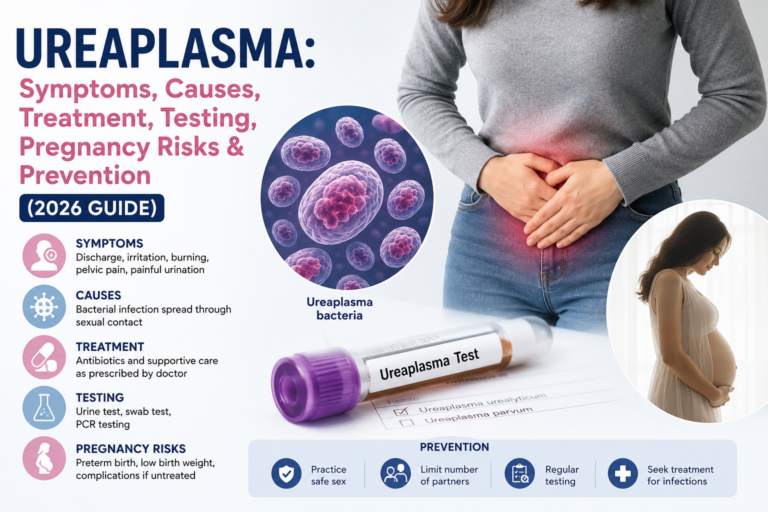
Hearing the word Ureaplasma on a lab report can be confusing—and even alarming. Many people immediately wonder, “Is this an STD?”, “Do I need antibiotics?”, or “Could this affect my fertility or pregnancy?”
The truth is that Ureaplasma is more complicated than many common infections. Unlike bacteria that almost always cause disease, Ureaplasma can live naturally in the urinary or reproductive tract without causing any symptoms. For some people, it remains harmless throughout life. For others, especially those with weakened immune systems or underlying health conditions, it may contribute to infections, chronic urinary symptoms, reproductive health problems, or pregnancy complications.
Understanding the difference between colonization (when bacteria are present without causing disease) and infection (when they cause symptoms or complications) is key.
In this complete guide, you’ll learn:
- What Ureaplasma is
- Whether it’s sexually transmitted
- Symptoms in men and women
- Risk factors and causes
- When testing is recommended
- Why it matters during pregnancy
- How it’s diagnosed and treated
Let’s begin with the basics.
What Is Ureaplasma?
Ureaplasma is a group of extremely small bacteria that belong to the Mycoplasmataceae family. Unlike most bacteria, they do not have a cell wall, making them unique in both structure and treatment.
Because they lack a cell wall, many commonly used antibiotics—such as penicillin and related medications—do not work against them. Instead, healthcare providers may prescribe antibiotics like doxycycline or azithromycin when treatment is necessary.
Ureaplasma naturally lives in the genitourinary tract, which includes parts of the urinary and reproductive systems. In many healthy adults, these bacteria exist without causing illness.
That means a positive test does not automatically mean you have an infection.
Doctors consider several factors before deciding whether treatment is appropriate, including:
- Your symptoms
- Pregnancy status
- Medical history
- Immune system health
- Other laboratory findings
Ureaplasma vs. Infection: What’s the Difference?
This is one of the most misunderstood aspects of Ureaplasma.
There are two possible situations:
Colonization
The bacteria are present but cause no symptoms or damage.
Many sexually active adults carry Ureaplasma without ever knowing it.
No treatment may be needed.
Infection
The bacteria multiply and contribute to inflammation or disease.
Possible effects include:
- Urethritis
- Cervicitis
- Pelvic pain
- Burning during urination
- Abnormal vaginal discharge
- Pregnancy complications in some cases
Understanding this difference helps prevent unnecessary anxiety and avoids antibiotic use when it isn’t needed.
Types of Ureaplasma
Healthcare providers most commonly encounter two species.
1. Ureaplasma parvum
This is the most frequently detected species.
Many people carry it without symptoms, although under certain conditions it may contribute to urinary or reproductive tract problems.
2. Ureaplasma urealyticum
This species has been studied more extensively because of its association with:
- Urethritis
- Cervicitis
- Infertility investigations
- Pregnancy complications
- Certain neonatal infections
Both species are very similar, and modern PCR (Polymerase Chain Reaction) tests can accurately identify them.
How Common Is Ureaplasma?
One surprising fact is just how common Ureaplasma is.
Research shows that a large percentage of healthy, sexually active adults carry Ureaplasma without experiencing symptoms. Rates are generally higher in women because the bacteria can naturally colonize the vaginal tract.
Its presence alone does not confirm disease. This is why doctors interpret test results alongside symptoms, medical history, and other clinical findings rather than relying on the laboratory report alone.
Where Does Ureaplasma Live?
Ureaplasma commonly colonizes the:
In Women
- Cervix
- Vagina
- Urethra
- Lower genital tract
In Men
- Urethra
- Penis
- Prostate
- Semen
Because these bacteria are already present in some healthy individuals, a positive result does not necessarily indicate a recent infection.
Is Ureaplasma an STD?
This is the question people search for most often.
The short answer is:
Not exactly.
Ureaplasma can be transmitted through sexual contact, but it is not classified in the same way as classic sexually transmitted infections (STIs) such as chlamydia, gonorrhea, or syphilis.
Instead, experts generally describe it as an opportunistic bacterium that may spread between partners while also existing as part of the normal genital microbiome in many healthy adults.
That distinction is important because finding Ureaplasma does not automatically mean someone acquired it from a recent sexual encounter.
Can You Get Ureaplasma Without Having Sex?
Yes.
Although sexual activity is considered one route of transmission, it is not the only explanation for why someone has Ureaplasma.
For example:
- Some individuals naturally carry it as part of their normal genital flora.
- Babies may acquire it from their mother during birth.
- The bacteria may remain present for years without causing symptoms.
This is why healthcare providers evaluate the whole clinical picture before recommending treatment.
How Does Ureaplasma Spread?
Possible routes include:
- Vaginal intercourse
- Oral sexual contact (less common)
- Sharing genital bacteria between partners
- Mother-to-baby transmission during childbirth
Unlike many viral infections, Ureaplasma’s behavior depends on the balance of the body’s natural microbiome and immune defenses.
What Causes a Ureaplasma Infection?
Simply carrying the bacteria is not enough to cause illness.
Symptoms usually develop when the balance between the bacteria and the body’s defenses changes.
Possible contributing factors include:
Sexual Activity
Exposure to new bacterial strains from a partner may increase the chance of infection in some people.
Changes in the Vaginal Microbiome
A healthy vaginal microbiome helps keep bacteria balanced.
When this balance is disrupted—due to hormonal changes, antibiotics, or other factors—Ureaplasma may multiply more easily.
Weakened Immune System
People with weakened immunity may have a harder time controlling bacterial growth.
Examples include:
- Diabetes
- Chronic illnesses
- Immune-suppressing medications
- HIV infection
Pregnancy
Pregnancy naturally changes hormone levels and immune function.
These changes may allow bacteria that were previously harmless to become more clinically significant.
Multiple Sexual Partners
Having multiple sexual partners may increase exposure to different bacterial strains, potentially raising the likelihood of colonization or infection.
Risk Factors for Developing Symptoms
Although anyone can carry Ureaplasma, certain factors make symptoms more likely.
These include:
- Unprotected sex
- Previous STIs
- Recurrent urinary tract symptoms
- Chronic pelvic pain
- Altered vaginal microbiome
- Pregnancy
- Infertility investigations
- Immune system disorders
- Recent antibiotic use affecting normal bacteria
Having one or more of these risk factors does not guarantee you’ll develop an infection, but they may increase susceptibility.
Why Doctors Don’t Always Treat Ureaplasma
Many patients are surprised when they receive a positive test but aren’t prescribed antibiotics immediately.
This approach is intentional.
Treating every positive result could:
- Expose people to unnecessary antibiotics
- Increase antimicrobial resistance
- Disrupt the body’s normal microbiome
- Cause medication side effects without clear benefit
Instead, treatment decisions are based on:
- Presence of symptoms
- Pregnancy status
- Fertility concerns
- Evidence of inflammation
- Other diagnosed infections
This individualized approach helps ensure antibiotics are used only when the potential benefits outweigh the risks.
