

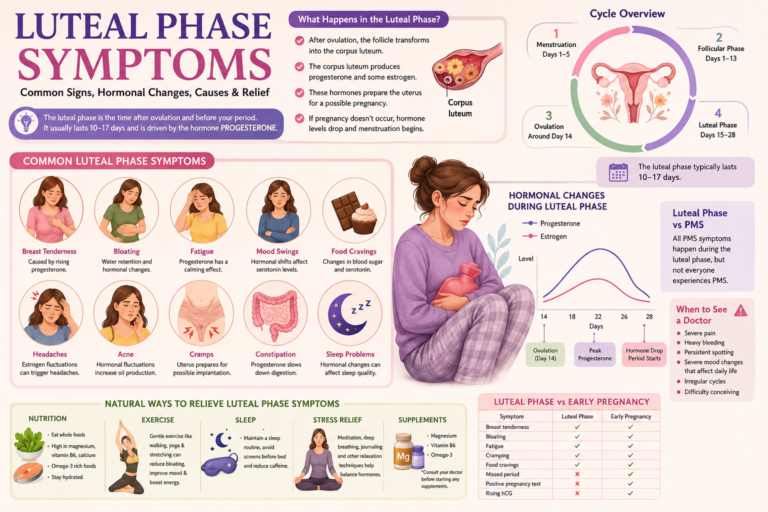
If you’ve ever noticed sore breasts, bloating, fatigue, mood swings, or food cravings in the days after ovulation, you’re not imagining things. These changes are often part of the luteal phase, a normal stage of the menstrual cycle driven primarily by the hormone progesterone. While some people experience only mild symptoms, others may feel significant physical and emotional changes before their next period begins.
Understanding luteal phase symptoms can help you recognize what’s happening in your body, distinguish normal hormonal changes from potential health concerns, and make informed decisions about your reproductive health. Although these symptoms may resemble premenstrual syndrome (PMS) or even early pregnancy, there are important differences worth knowing.
In this comprehensive guide, you’ll learn what happens during the luteal phase, why symptoms develop, which signs are considered normal, and when it’s time to speak with a healthcare professional. You’ll also discover practical ways to manage discomfort through nutrition, lifestyle habits, and evidence-based treatments.
What Are Luteal Phase Symptoms?
Luteal phase symptoms are physical and emotional changes that occur after ovulation and before menstruation. They are mainly caused by rising progesterone levels, which prepare the uterus for a possible pregnancy.
The most common symptoms include:
- Breast tenderness
- Bloating
- Mild pelvic cramps
- Fatigue
- Mood swings
- Food cravings
- Acne breakouts
- Headaches
- Increased basal body temperature
- Changes in cervical mucus
- Constipation
- Back pain
- Mild nausea
- Trouble sleeping
These symptoms typically begin a few days after ovulation and gradually disappear when hormone levels drop at the start of menstruation. If pregnancy occurs, some symptoms may continue because progesterone remains elevated.
What Is the Luteal Phase?
The luteal phase is the second half of the menstrual cycle. It starts immediately after ovulation and ends when your next menstrual period begins or when pregnancy is established.
For most women, this phase lasts between 12 and 14 days, although anywhere from 10 to 17 days may still be considered normal.
The luteal phase follows this sequence:
- Menstruation
- Follicular phase
- Ovulation
- Luteal phase
After an egg is released from the ovary, the empty follicle transforms into a temporary gland called the corpus luteum. This structure produces large amounts of progesterone and smaller amounts of estrogen, hormones that prepare the uterine lining (the endometrium) for implantation if fertilization occurs.
If pregnancy does not happen, the corpus luteum gradually breaks down. Progesterone and estrogen levels fall, the uterine lining sheds, and a new menstrual cycle begins.
Why the Luteal Phase Matters
Although it lasts only about two weeks, the luteal phase plays a vital role in fertility and overall reproductive health.
During this stage, your body:
- Thickens the uterine lining for possible implantation
- Supports a fertilized egg during the earliest days of pregnancy
- Regulates hormone production
- Influences mood, appetite, metabolism, and sleep
- Causes many of the physical symptoms people associate with PMS
A healthy luteal phase is essential for successful conception because adequate progesterone helps maintain the uterine environment needed for early pregnancy.
Understanding Hormonal Changes During the Luteal Phase
Hormones fluctuate throughout the menstrual cycle, but the luteal phase is especially influenced by progesterone.
Progesterone Becomes the Dominant Hormone
After ovulation, the corpus luteum begins producing progesterone. This hormone:
- Thickens the endometrium
- Raises basal body temperature slightly
- Slows digestion
- Promotes fluid retention
- Influences mood and sleep
- Helps maintain an early pregnancy if conception occurs
Because progesterone affects multiple body systems, it’s responsible for many of the symptoms experienced during this phase.
Estrogen Still Plays a Role
Although progesterone dominates, estrogen doesn’t disappear. Instead, it rises modestly before declining near the end of the cycle.
Changing estrogen levels may contribute to:
- Breast tenderness
- Headaches
- Mood changes
- Skin changes
- Altered energy levels
The balance between estrogen and progesterone often determines how noticeable your symptoms become.
What Happens If Pregnancy Occurs?
If a sperm fertilizes the egg, implantation usually occurs about 6 to 12 days after ovulation.
At this point, the developing embryo produces human chorionic gonadotropin (hCG), which signals the corpus luteum to continue producing progesterone. Instead of dropping, hormone levels remain elevated, supporting the pregnancy until the placenta takes over hormone production.
This is one reason why early pregnancy symptoms can closely resemble luteal phase symptoms.
Common Luteal Phase Symptoms
Every person experiences the luteal phase differently. Some notice only minor changes, while others develop symptoms that affect daily activities.
Below are the most common signs.
Breast Tenderness
Many women experience swollen or painful breasts because progesterone stimulates breast tissue in preparation for possible pregnancy.
This symptom often begins several days after ovulation and usually improves once menstruation starts.
Bloating
Hormonal changes encourage the body to retain water and slow digestion, leading to bloating and a feeling of fullness.
You may notice:
- Tight-fitting clothes
- Mild abdominal swelling
- Temporary weight fluctuations
- Increased gas
Staying hydrated and reducing excess sodium may help minimize discomfort.
Fatigue
Feeling unusually tired during the luteal phase is extremely common.
Higher progesterone levels have a calming effect on the nervous system, making some people feel sleepy or less energetic than usual.
Poor sleep quality, cravings, and emotional stress can make fatigue even worse.
Mood Swings
Hormones influence important brain chemicals, including serotonin.
As progesterone and estrogen fluctuate, you may experience:
- Irritability
- Anxiety
- Increased emotional sensitivity
- Sadness
- Difficulty concentrating
For most people, these emotional changes are mild and temporary. However, severe symptoms could indicate Premenstrual Dysphoric Disorder (PMDD) and should be discussed with a healthcare provider.
Food Cravings
Many women crave sweet or salty foods during the luteal phase.
Researchers believe these cravings are related to hormonal changes that affect appetite regulation, blood sugar balance, and serotonin levels.
Common cravings include:
- Chocolate
- Bread
- Pasta
- Chips
- Sugary snacks
Choosing high-fiber carbohydrates, lean protein, and healthy fats may help keep cravings under control.
Mild Pelvic Cramps
Some women experience light cramping after ovulation.
These cramps usually result from:
- Hormonal changes
- Increased blood flow to the uterus
- Preparation of the endometrial lining
Unlike menstrual cramps, luteal phase cramps are generally mild and short-lived.
Headaches
Fluctuating estrogen levels can trigger headaches in susceptible individuals.
Hormone-related headaches often become more noticeable in the days leading up to menstruation.
Keeping hydrated, managing stress, and maintaining regular sleep schedules may reduce their frequency.
Acne Breakouts
Hormonal fluctuations may increase oil production in the skin.
As a result, some people develop:
- Pimples around the jawline
- Chin acne
- Oily skin
- Occasional breakouts
These skin changes usually improve after menstruation begins.
Constipation
Progesterone relaxes smooth muscles throughout the body, including those in the digestive tract.
Slower intestinal movement can cause:
- Constipation
- Bloating
- Gas
- Abdominal discomfort
Increasing dietary fiber and drinking plenty of water often helps relieve these symptoms.
Increased Basal Body Temperature
One of the hallmark signs of ovulation is a slight rise in basal body temperature (BBT).
Progesterone raises resting body temperature by approximately 0.5–1°F (0.3–0.6°C).
Women tracking fertility often use this temperature change to confirm that ovulation has already occurred.
Changes in Cervical Mucus
During the luteal phase, cervical mucus usually becomes:
- Thicker
- Creamier
- Less slippery
- Whiter in appearance
These changes occur because progesterone reduces fertility after ovulation.
Summary Table of Common Luteal Phase Symptoms
| Symptom | Why It Happens | Is It Normal? |
|---|---|---|
| Breast tenderness | Rising progesterone | ✔ Yes |
| Bloating | Water retention | ✔ Yes |
| Fatigue | Hormonal effects | ✔ Yes |
| Mood swings | Hormone fluctuations | ✔ Yes |
| Mild cramps | Uterine preparation | ✔ Yes |
| Headaches | Estrogen changes | ✔ Yes |
| Acne | Increased oil production | ✔ Yes |
| Food cravings | Serotonin and blood sugar changes | ✔ Yes |
| Constipation | Slower digestion | ✔ Yes |
| Increased BBT | Progesterone | ✔ Yes |
| Cervical mucus changes | Progesterone | ✔ Yes |
Day-by-Day Symptoms, Causes, PMS vs Pregnancy & Warning Signs
Luteal Phase Symptoms Day by Day
Not everyone experiences symptoms at the same time or with the same intensity. Genetics, hormone levels, stress, sleep, nutrition, and overall health all influence how you feel during the luteal phase.
Here’s a general timeline of what many women experience after ovulation.
Days 1–3 After Ovulation
Immediately after ovulation, the ruptured follicle transforms into the corpus luteum, which starts producing progesterone.
At this stage, many women notice only subtle changes, while others feel nothing at all.
Common Symptoms
- Slight increase in basal body temperature (BBT)
- Mild pelvic discomfort
- Increased cervical mucus thickness
- Slight breast sensitivity
- Higher energy in some women
- Mild fatigue
During these first few days, the uterine lining (endometrium) begins thickening to prepare for a possible pregnancy.
Days 4–7 After Ovulation
Progesterone continues rising and reaches high levels.
This is when symptoms usually become more noticeable.
Common Symptoms
- Breast tenderness
- Bloating
- Increased appetite
- Food cravings
- Mood changes
- Fatigue
- Mild constipation
- Water retention
Some women also report feeling calmer because progesterone has a naturally relaxing effect on the brain.
Days 8–10 After Ovulation
If fertilization has occurred, implantation may begin during this period.
If pregnancy has not occurred, progesterone remains high but will soon begin to decline.
Possible Symptoms
- Mild cramping
- Light spotting (implantation may occur in some pregnancies)
- Headaches
- Acne
- Breast fullness
- Emotional sensitivity
- Increased body temperature
Remember that implantation bleeding occurs in only a small percentage of pregnancies, so its absence doesn’t mean pregnancy isn’t possible.
Days 11–14 After Ovulation
If pregnancy has not occurred, the corpus luteum begins breaking down.
Progesterone and estrogen levels fall rapidly.
These hormonal changes trigger many PMS-like symptoms.
Common Symptoms
- Mood swings
- Irritability
- Bloating
- Fatigue
- Cramping
- Headaches
- Lower back pain
- Food cravings
- Difficulty sleeping
As hormone levels continue dropping, menstruation begins and most symptoms gradually disappear.
Why Do Luteal Phase Symptoms Happen?
The symptoms experienced during the luteal phase aren’t random—they’re the result of complex hormonal interactions affecting nearly every organ system.
Rising Progesterone
Progesterone is responsible for:
- Preparing the uterus for implantation
- Raising basal body temperature
- Relaxing smooth muscles
- Slowing digestion
- Increasing water retention
Because this hormone influences the brain, digestive tract, breasts, and reproductive organs, it explains many common symptoms.
Estrogen Fluctuations
Although progesterone dominates, estrogen also changes throughout the luteal phase.
These fluctuations may contribute to:
- Breast soreness
- Headaches
- Mood changes
- Skin changes
- Fluid retention
The balance between estrogen and progesterone is often more important than the level of either hormone alone.
Serotonin Changes
Hormones influence the production and activity of serotonin, a neurotransmitter involved in mood, sleep, and appetite.
Lower serotonin activity can contribute to:
- Anxiety
- Depression
- Irritability
- Sugar cravings
- Trouble sleeping
This explains why emotional symptoms often accompany physical discomfort during the luteal phase.
Water Retention
Progesterone affects the kidneys and fluid balance.
As a result, many women notice:
- Puffy hands
- Swollen feet
- Abdominal bloating
- Temporary weight gain
These changes usually disappear shortly after menstruation begins.
Slower Digestion
Progesterone relaxes smooth muscle throughout the digestive system.
This can cause:
- Constipation
- Gas
- Bloating
- Feeling full after small meals
Eating fiber-rich foods and staying hydrated can help reduce digestive discomfort.
Luteal Phase Symptoms vs PMS
Many people use the terms interchangeably, but they’re not exactly the same.
The luteal phase is a normal biological stage of the menstrual cycle.
Premenstrual Syndrome (PMS) is a collection of physical and emotional symptoms that occur during the late luteal phase.
| Luteal Phase | PMS |
|---|---|
| Normal part of every menstrual cycle | A symptom syndrome affecting some women |
| Begins immediately after ovulation | Usually develops 5–10 days before the period |
| Hormones naturally change | Symptoms result from hormone sensitivity |
| May have few or no symptoms | Symptoms can be mild to severe |
| Ends when menstruation begins or pregnancy occurs | Usually improves once bleeding starts |
Not everyone experiences PMS, but everyone who ovulates goes through the luteal phase.
Luteal Phase Symptoms vs Early Pregnancy
One of the biggest sources of confusion is telling the difference between luteal phase symptoms and early pregnancy.
That’s because both involve elevated progesterone.
| Symptom | Luteal Phase | Early Pregnancy |
|---|---|---|
| Breast tenderness | ✔ | ✔ |
| Fatigue | ✔ | ✔ |
| Mild cramping | ✔ | ✔ |
| Bloating | ✔ | ✔ |
| Food cravings | ✔ | ✔ |
| Headaches | ✔ | ✔ |
| Increased BBT | ✔ | ✔ |
| Missed period | ✖ | ✔ |
| Positive pregnancy test | ✖ | ✔ |
| Persistent high progesterone | ✖ | ✔ |
| Rising hCG hormone | ✖ | ✔ |
Signs That May Suggest Pregnancy
While there’s significant overlap, these signs are more suggestive of pregnancy:
- A missed menstrual period
- Positive home pregnancy test
- Persistent high basal body temperature for more than 18 days
- Increasing fatigue after the expected period
- Frequent urination
- Stronger nausea after implantation
The only reliable way to confirm pregnancy is through a pregnancy test that detects human chorionic gonadotropin (hCG) after implantation.
Is It Normal to Have No Luteal Phase Symptoms?
Absolutely.
Many women experience almost no noticeable symptoms throughout the luteal phase.
This doesn’t necessarily mean there’s a hormone problem or fertility issue.
Symptom intensity varies because of:
- Genetics
- Hormone sensitivity
- Stress levels
- Diet
- Sleep quality
- Exercise habits
- Age
- Overall health
Some women only notice changes after they begin tracking their menstrual cycle closely.
What Causes Severe Luteal Phase Symptoms?
Although mild symptoms are expected, severe discomfort may indicate an underlying medical condition.
Possible causes include:
Hormonal Imbalance
Low progesterone or estrogen imbalance may worsen symptoms.
Premenstrual Dysphoric Disorder (PMDD)
PMDD is a severe form of PMS characterized by:
- Intense depression
- Anxiety
- Anger
- Mood instability
- Difficulty functioning
Unlike typical PMS, PMDD can significantly interfere with work, relationships, and daily life.
Polycystic Ovary Syndrome (PCOS)
Women with PCOS often experience irregular ovulation, hormonal imbalances, acne, and unpredictable menstrual cycles.
Thyroid Disorders
Both hypothyroidism and hyperthyroidism can affect menstrual hormones and worsen luteal phase symptoms.
Endometriosis
Endometriosis can cause:
- Severe pelvic pain
- Painful periods
- Pain during intercourse
- Heavy bleeding
Symptoms may become more noticeable during the luteal phase.
Chronic Stress
Long-term stress increases cortisol production.
High cortisol can interfere with reproductive hormones, making luteal phase symptoms more intense.
Abnormal Luteal Phase Symptoms
While mild discomfort is common, certain symptoms should never be ignored.
Seek medical evaluation if you experience:
- Heavy menstrual bleeding
- Severe pelvic pain
- Fainting
- Persistent spotting between periods
- Extremely irregular cycles
- Fever with pelvic pain
- Severe depression or suicidal thoughts
- Pain that interferes with daily activities
- Difficulty becoming pregnant after trying for several months
These symptoms may indicate hormonal disorders, reproductive conditions, or other health concerns that require diagnosis and treatment.
Key Takeaways
The luteal phase follows ovulation and is driven mainly by progesterone. As hormone levels rise and eventually fall, they influence everything from mood and digestion to breast tissue and body temperature.
Understanding the typical timeline of symptoms can help you distinguish normal hormonal changes from conditions such as PMS, PMDD, thyroid disorders, or endometriosis. While early pregnancy and luteal phase symptoms often look alike, a missed period and a positive pregnancy test remain the most reliable indicators of pregnancy.
In the next section, you’ll learn the best evidence-based strategies to relieve luteal phase symptoms naturally, discover the most beneficial foods to eat during this phase, explore medical treatment options, and find answers to the most frequently asked questions.
