

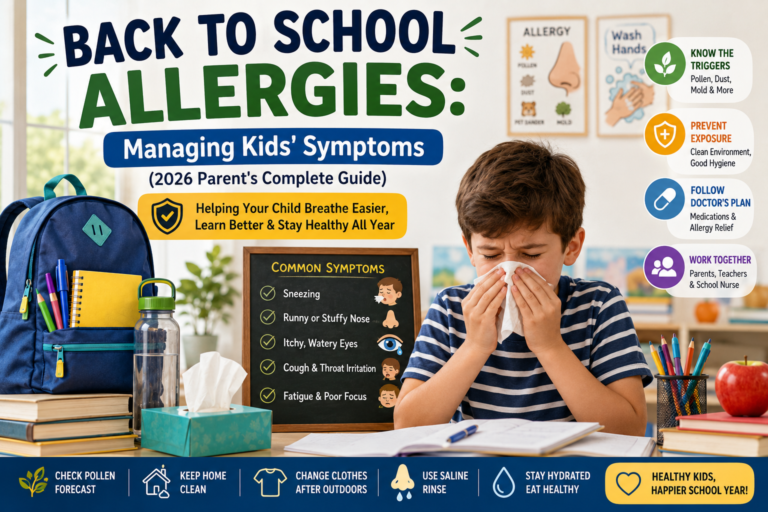
As summer winds down and children head back to the classroom, many parents notice something unexpected—constant sneezing, itchy eyes, runny noses, and lingering coughs. While these symptoms may look like a common cold, they’re often caused by back-to-school allergies.
The return to school exposes children to a variety of allergens, including ragweed pollen, mold spores, dust mites, pet dander, and poor indoor air quality. For children with seasonal allergies, allergic rhinitis, or asthma, these environmental changes can make symptoms worse and even affect their concentration, sleep, and academic performance.
The good news is that back-to-school allergies can be managed successfully with the right combination of prevention, early symptom recognition, and medical care.
In this guide, you’ll learn what causes school allergies, how to recognize the symptoms, the best treatment options, and practical ways to keep your child comfortable and healthy throughout the school year.
What Are Back-to-School Allergies?
Back-to-school allergies refer to allergy symptoms that appear or worsen when children return to school after summer break. Although many people associate allergies with spring, late summer and early fall are actually peak allergy seasons in many regions.
When school starts, children spend more time in classrooms where allergens can accumulate. Combined with outdoor pollen exposure during recess and sports activities, this creates the perfect environment for allergy flare-ups.
Unlike a viral cold, allergies occur because the immune system mistakenly identifies harmless substances as threats. This triggers the release of histamine, leading to inflammation and typical allergy symptoms.
Why Do Allergies Get Worse After School Starts?
Several factors contribute to increased allergy symptoms during the school season.
Increased Ragweed Pollen
Ragweed is one of the biggest causes of fall allergies. Even small amounts of pollen can trigger symptoms in sensitive children.
Classroom Dust
Many classrooms collect dust over the summer. Dust contains dust mites, fibers, and other allergens that become airborne when students return.
Mold Growth
Moist classrooms, ventilation systems, and damp areas may contain mold spores that trigger allergic reactions.
Pet Dander
Although pets aren’t present in classrooms, students often carry cat and dog dander on their clothing and backpacks.
Poor Indoor Air Quality
Limited ventilation allows allergens to circulate indoors throughout the school day.
Common Allergy Triggers at School
Understanding allergy triggers helps parents reduce exposure before symptoms become severe.
1. Ragweed Pollen
One ragweed plant can release millions of pollen grains into the air.
Symptoms include:
- Sneezing
- Itchy eyes
- Runny nose
- Congestion
2. Dust Mites
Dust mites thrive inside carpets, upholstered furniture, stuffed toys, and classroom curtains.
Children allergic to dust mites often wake up congested or experience symptoms throughout the school day.
3. Mold Spores
Bathrooms, locker rooms, air conditioning systems, and damp classrooms can harbor mold.
Mold exposure may worsen:
- Allergic rhinitis
- Sinus congestion
- Asthma symptoms
4. Pet Dander
Pet allergens can remain on clothing for hours, exposing sensitive children even in pet-free schools.
5. Chalk Dust and Cleaning Chemicals
Some children are sensitive to airborne particles from chalk or strong cleaning products used in schools.
Signs and Symptoms Every Parent Should Recognize
Allergy symptoms often resemble a cold, making them difficult to identify.
Common symptoms include:
- Frequent sneezing
- Runny nose
- Nasal congestion
- Itchy nose
- Itchy throat
- Watery eyes
- Red eyes
- Puffy eyelids
- Postnasal drip
- Dry cough
- Mild headache
- Fatigue
- Difficulty concentrating
Children with asthma may also experience:
- Wheezing
- Chest tightness
- Shortness of breath
- Persistent coughing during exercise
Unlike colds, allergies usually do not cause fever.
Allergy vs. Cold vs. Flu
Many parents struggle to tell the difference.
| Symptom | Allergies | Cold | Flu |
| Sneezing | ✅ Common | ✅ Common | Rare |
| Fever | ❌ No | Sometimes | ✅ Common |
| Itchy Eyes | ✅ Yes | Rare | Rare |
| Body Aches | ❌ No | Mild | ✅ Severe |
| Runny Nose | ✅ Common | ✅ Common | Sometimes |
| Fatigue | Mild | Moderate | Severe |
| Duration | Weeks | 7–10 Days | 5–7 Days |
If symptoms appear every day after school or worsen outdoors, allergies are more likely than an infection.
How Doctors Diagnose Allergies
If symptoms persist for several weeks, it’s worth scheduling a visit with your child’s pediatrician or an allergist.
Diagnosis may include:
Medical History
The doctor will ask:
- When symptoms started
- Whether they occur seasonally
- Family history of allergies
- Exposure to pets or mold
Physical Examination
Doctors examine the ears, nose, throat, eyes, and lungs for signs of allergic inflammation.
Skin Prick Test
Small amounts of allergens are placed on the skin to identify reactions.
Common allergens tested include:
- Ragweed
- Grass pollen
- Tree pollen
- Dust mites
- Mold
- Pet dander
Blood Tests
In some cases, blood tests measuring allergy-related antibodies may be recommended.
Best Treatments for School Allergies
Treatment depends on the child’s age, symptom severity, and specific allergy triggers.
Antihistamines
Antihistamines reduce the effects of histamine and help relieve:
- Sneezing
- Runny nose
- Itchy eyes
Many newer antihistamines cause less drowsiness than older medications, making them suitable for school-age children when recommended by a healthcare professional.
Nasal Corticosteroid Sprays
These sprays reduce inflammation inside the nose and are often one of the most effective treatments for persistent allergic rhinitis.
They can help improve:
- Nasal congestion
- Postnasal drip
- Sneezing
- Chronic inflammation
Saline Nasal Spray
A simple saline rinse can help flush pollen, dust, and other allergens from the nasal passages, providing symptom relief without medication.
Allergy Eye Drops
Lubricating or medicated eye drops may reduce redness, itching, and watering caused by airborne allergens.
Allergy Immunotherapy
For children with severe or long-lasting allergies, an allergist may recommend allergy shots or sublingual immunotherapy. These treatments gradually help the immune system become less sensitive to specific allergens over time.
Daily Allergy Prevention Routine for Kids
While medication can help control symptoms, prevention is often the best defense against back-to-school allergies. Small daily habits can significantly reduce allergen exposure and keep your child feeling their best.
Morning Routine
Before your child leaves for school:
- Check the local pollen forecast, especially during ragweed season.
- Give allergy medication as prescribed by your child’s healthcare provider.
- Encourage your child to wear sunglasses outdoors to help reduce pollen exposure to the eyes.
- Pack tissues and a refillable water bottle.
- If your child has asthma or severe allergies, make sure their inhaler or emergency medication is available if permitted by school policy.
During School
Although parents can’t control every classroom environment, a few simple steps can help:
- Teach your child to wash their hands after recess.
- Encourage them to avoid rubbing their eyes.
- Keep classroom windows closed when pollen counts are high, if possible.
- Remind them to drink plenty of water throughout the day.
- Inform teachers if your child has allergies that require special attention.
After School
Many allergens cling to clothing, backpacks, and hair.
Once your child returns home:
- Change into clean clothes.
- Wash hands and face immediately.
- Take a shower before bedtime if pollen levels are high.
- Wipe down backpacks and lunch boxes regularly.
- Avoid placing school clothes directly on the bed or furniture.
Bedtime Routine
Nighttime is an excellent opportunity to reduce allergen exposure.
- Wash bedding weekly in hot water.
- Vacuum carpets using a HEPA-filter vacuum.
- Use allergen-proof mattress and pillow covers.
- Keep pets out of the child’s bedroom if pet dander is a trigger.
- Run an air purifier with a HEPA filter if recommended.
Creating an Allergy Action Plan for School
Every child with moderate to severe allergies should have a written Allergy Action Plan shared with the school.
A complete plan should include:
- Your child’s known allergy triggers.
- Typical allergy symptoms.
- Daily medications and dosage.
- Emergency medications and instructions.
- Contact information for parents and healthcare providers.
- Steps to take if symptoms become severe.
Meet with your child’s teacher, school nurse, and other staff members before the school year begins. Clear communication helps everyone respond quickly if symptoms occur.
Food Allergies at School
For some children, food allergies pose an even greater risk than seasonal allergies.
Common food allergens include:
- Peanuts
- Tree nuts
- Milk
- Eggs
- Soy
- Wheat
- Fish
- Shellfish
- Sesame
Tips for Keeping Children Safe
- Pack allergy-friendly lunches when necessary.
- Teach children never to share food with classmates.
- Read ingredient labels carefully.
- Discuss cafeteria safety procedures with school staff.
- Make sure emergency medication is always accessible.
Children with a history of severe allergic reactions should have access to an epinephrine auto-injector if prescribed by their healthcare provider.
Allergies and Asthma: Understanding the Connection
Many children with seasonal allergies also have asthma. Allergens such as pollen, mold, and dust mites can inflame the airways and trigger asthma symptoms.
Watch for signs such as:
- Wheezing
- Persistent coughing
- Chest tightness
- Difficulty breathing
- Shortness of breath during physical activity
If your child’s asthma becomes worse during allergy season, talk to their healthcare provider about adjusting their asthma management plan.
Can Allergies Affect Learning?
Yes. Allergies don’t just cause physical discomfort—they can also affect a child’s ability to learn.
Children experiencing constant sneezing, itchy eyes, congestion, or poor sleep may have trouble:
- Paying attention in class
- Completing assignments
- Remembering information
- Participating in sports and playground activities
- Sleeping well at night
Managing allergy symptoms effectively can improve both health and academic performance.
Nutrition Tips That Support Overall Immune Health
While no food can cure allergies, a balanced diet supports overall health and may help the body recover from inflammation more effectively.
Include foods rich in:
Vitamin C
Examples:
- Oranges
- Strawberries
- Kiwi
- Bell peppers
- Broccoli
Vitamin D
Sources include:
- Fortified dairy products
- Eggs
- Fatty fish
- Safe sun exposure
Omega-3 Fatty Acids
Found in:
- Salmon
- Sardines
- Walnuts
- Chia seeds
- Flaxseeds
Probiotic Foods
Some research suggests that maintaining a healthy gut microbiome may support immune function.
Examples include:
- Yogurt with live cultures
- Kefir
- Fermented vegetables
Encourage your child to stay hydrated throughout the day, as adequate fluid intake can help keep nasal passages moist and improve overall comfort.
When Should You See a Doctor?
Schedule a medical appointment if your child:
- Has symptoms lasting more than two weeks.
- Experiences frequent sinus infections.
- Has difficulty sleeping because of allergies.
- Needs allergy medicine every day without adequate relief.
- Develops wheezing or asthma symptoms.
An allergist can identify specific triggers and recommend personalized treatment.
When Is It an Emergency?
Seek immediate medical attention if your child experiences:
- Difficulty breathing
- Swelling of the lips, tongue, or throat
- Severe wheezing
- Trouble swallowing
- Fainting
- Signs of anaphylaxis, a life-threatening allergic reaction
Emergency treatment should never be delayed.
Back-to-School Allergy Checklist for Parents
Before school starts, make sure you’ve completed the following:
- ✔ Schedule an allergy checkup if needed.
- ✔ Refill prescription medications.
- ✔ Review your child’s Allergy Action Plan.
- ✔ Inform teachers and the school nurse about allergies.
- ✔ Pack tissues and any approved medications.
- ✔ Wash backpacks, lunch bags, and reusable water bottles regularly.
- ✔ Monitor local pollen forecasts.
- ✔ Wash school clothes after outdoor activities.
- ✔ Keep your home clean to reduce dust and mold.
- ✔ Encourage good hand hygiene.
Frequently Asked Questions
Can allergies make my child tired?
Yes. Constant inflammation, poor sleep, and nasal congestion can leave children feeling tired and less focused during school.
How do I know if it’s allergies or a cold?
Allergies usually cause itchy eyes, sneezing, and clear nasal discharge without a fever. Colds often improve within a week to ten days, while allergies may continue as long as exposure to allergens persists.
What are the most common school allergens?
Common triggers include ragweed pollen, dust mites, mold spores, pet dander carried on clothing, and poor indoor air quality.
Can allergies affect school performance?
Yes. Ongoing allergy symptoms can reduce concentration, disrupt sleep, and make classroom learning more difficult.
Should my child stay home because of allergies?
Most children with mild seasonal allergies can attend school if symptoms are well managed. However, severe symptoms or breathing difficulties should be evaluated by a healthcare provider.
Can allergies trigger asthma attacks?
Yes. Seasonal allergens are a common trigger for asthma flare-ups in children with allergic asthma.
