

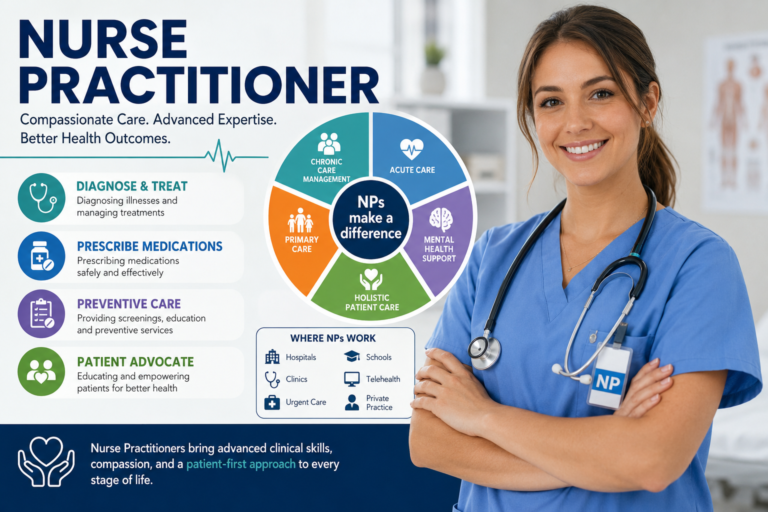
Healthcare is changing rapidly, and nurse practitioners (NPs) have become an essential part of modern patient care. As the demand for accessible, high-quality healthcare continues to grow, nurse practitioners are helping fill the gap by diagnosing illnesses, prescribing medications, managing chronic conditions, and providing preventive care. Their advanced clinical training allows them to deliver comprehensive healthcare in hospitals, clinics, urgent care centers, and even through telehealth services.
If you’re considering a career as a nurse practitioner—or simply want to understand how they differ from other healthcare professionals—this guide covers everything you need to know. From education requirements and job responsibilities to specialties and career opportunities, you’ll gain a complete understanding of this rewarding profession.
What Is a Nurse Practitioner?
A nurse practitioner (NP) is an Advanced Practice Registered Nurse (APRN) who has completed graduate-level education and advanced clinical training. Unlike a Registered Nurse (RN), a nurse practitioner can assess patients, diagnose medical conditions, order diagnostic tests, prescribe medications, and create treatment plans.
Nurse practitioners combine medical expertise with a patient-centered nursing approach. They emphasize preventive care, health education, and long-term wellness while treating both acute and chronic illnesses.
In many regions, nurse practitioners also serve as primary care providers, offering comprehensive healthcare services to individuals and families.
Key Responsibilities
A nurse practitioner can:
- Diagnose illnesses and injuries
- Order laboratory and imaging tests
- Interpret diagnostic results
- Prescribe medications (subject to local regulations)
- Develop personalized treatment plans
- Manage chronic diseases
- Educate patients about healthy lifestyles
- Coordinate care with physicians and specialists
- Provide preventive health screenings
Their ability to deliver comprehensive care makes them invaluable members of today’s healthcare workforce.
Why Are Nurse Practitioners in High Demand?
Several factors have contributed to the increasing demand for nurse practitioners.
Growing Healthcare Needs
An aging population means more people require ongoing treatment for conditions such as:
- Diabetes
- Hypertension
- Heart disease
- Arthritis
- Chronic respiratory illnesses
Nurse practitioners help manage these long-term conditions while improving access to healthcare.
Physician Shortages
Many countries face shortages of primary care physicians, particularly in rural and underserved communities. Nurse practitioners help bridge this gap by providing high-quality medical care where it’s needed most.
Focus on Preventive Care
Healthcare systems increasingly emphasize prevention rather than simply treating disease. Nurse practitioners educate patients on nutrition, exercise, vaccinations, and routine health screenings to reduce future health risks.
Expanding Scope of Practice
Many jurisdictions have expanded the authority of nurse practitioners, allowing them to practice more independently and improve access to timely healthcare services.
What Does a Nurse Practitioner Do?
A nurse practitioner’s daily responsibilities vary depending on their specialty and workplace. However, their role generally includes diagnosing illnesses, developing treatment plans, and supporting patients throughout their healthcare journey.
Conduct Comprehensive Patient Assessments
Every patient encounter begins with collecting medical history, reviewing symptoms, performing physical examinations, and identifying potential health concerns.
Assessment includes:
- Vital signs
- Family history
- Lifestyle factors
- Current medications
- Risk assessments
These evaluations guide accurate diagnosis and treatment decisions.
Diagnose Medical Conditions
One of the defining responsibilities of a nurse practitioner is diagnosing illnesses.
Common conditions treated include:
- Respiratory infections
- Influenza
- Allergies
- Ear infections
- Urinary tract infections
- Diabetes
- Asthma
- High blood pressure
- Depression
- Anxiety
Nurse practitioners use evidence-based clinical guidelines alongside diagnostic testing to determine the most appropriate diagnosis.
Order Diagnostic Tests
To confirm a diagnosis or monitor treatment progress, nurse practitioners may order:
- Blood tests
- Urine tests
- X-rays
- CT scans
- MRI scans
- Ultrasounds
- Electrocardiograms (ECGs)
They also interpret test results and explain them clearly to patients.
Prescribe Medications
Depending on state or national regulations, nurse practitioners can prescribe medications for a wide range of conditions.
This may include:
- Antibiotics
- Blood pressure medications
- Diabetes medications
- Asthma inhalers
- Mental health medications
- Pain management therapies
Prescribing authority varies by jurisdiction, so nurse practitioners must follow local licensing laws and scope-of-practice regulations.
Develop Personalized Treatment Plans
Healthcare isn’t one-size-fits-all. Nurse practitioners tailor treatment plans based on:
- Medical history
- Current health status
- Diagnostic findings
- Patient preferences
- Lifestyle considerations
Treatment may involve medication, physical therapy, dietary changes, exercise recommendations, or referrals to specialists.
Manage Chronic Diseases
Many patients require ongoing support rather than one-time treatment.
Nurse practitioners commonly manage:
- Diabetes
- Hypertension
- Heart disease
- Chronic kidney disease
- COPD
- Obesity
- Thyroid disorders
Regular follow-up visits help ensure treatment remains effective while reducing the risk of complications.
Provide Preventive Healthcare
Preventive medicine is one of the strongest aspects of nurse practitioner care.
Preventive services include:
- Annual physical exams
- Cancer screenings
- Vaccinations
- Cholesterol testing
- Blood pressure monitoring
- Women’s health screenings
- Men’s health assessments
- Lifestyle counseling
Early detection often leads to better health outcomes and lower healthcare costs.
Educate Patients
Education empowers patients to make informed decisions about their health.
Nurse practitioners spend time discussing:
- Medication use
- Nutrition
- Exercise
- Smoking cessation
- Weight management
- Mental wellness
- Sleep hygiene
- Disease prevention
This educational approach helps improve treatment adherence and long-term health.
Types of Nurse Practitioners
Not all nurse practitioners perform the same role. Many specialize in caring for specific patient populations.
Family Nurse Practitioner (FNP)
Family Nurse Practitioners provide primary healthcare across the lifespan—from infants to older adults.
They commonly treat:
- Minor illnesses
- Chronic diseases
- Preventive care needs
- Routine checkups
- Vaccinations
FNPs are among the most in-demand NP specialties.
Adult-Gerontology Nurse Practitioner (AGNP)
AGNPs specialize in caring for adolescents, adults, and older adults.
Their expertise includes:
- Cardiovascular disease
- Diabetes
- Arthritis
- Osteoporosis
- Geriatric care
- Healthy aging
Pediatric Nurse Practitioner (PNP)
Pediatric Nurse Practitioners focus on children’s health.
They diagnose and treat:
- Childhood infections
- Developmental concerns
- Growth disorders
- Allergies
- Asthma
- Routine pediatric illnesses
Psychiatric Mental Health Nurse Practitioner (PMHNP)
Mental healthcare demand continues to rise, making PMHNPs one of the fastest-growing specialties.
They manage:
- Depression
- Anxiety
- PTSD
- ADHD
- Bipolar disorder
- Substance use disorders
They may also provide psychotherapy and prescribe psychiatric medications where authorized.
Women’s Health Nurse Practitioner (WHNP)
WHNPs provide specialized care for women throughout every stage of life.
Services include:
- Reproductive health
- Prenatal care
- Family planning
- Menopause management
- Cervical cancer screening
- Breast health
Neonatal Nurse Practitioner (NNP)
Neonatal Nurse Practitioners care for premature and critically ill newborns in neonatal intensive care units (NICUs).
Their work often involves advanced life support and collaboration with neonatologists.
Acute Care Nurse Practitioner (ACNP)
Acute Care Nurse Practitioners manage patients with severe, sudden, or life-threatening illnesses in hospitals and intensive care units.
Their responsibilities include:
- Emergency assessments
- Critical care
- Trauma management
- Post-operative care
How to Become a Nurse Practitioner
Becoming a nurse practitioner takes dedication, advanced education, and hands-on clinical experience. While the exact requirements vary by country and state, the overall pathway is similar.
1. Earn a Bachelor of Science in Nursing (BSN)
The journey begins with earning a Bachelor of Science in Nursing (BSN) from an accredited nursing program. A BSN provides a strong foundation in anatomy, physiology, pharmacology, evidence-based practice, and patient care.
Although some bridge programs are available for registered nurses with associate degrees, a BSN is generally the preferred route for aspiring nurse practitioners.
2. Become a Licensed Registered Nurse (RN)
After completing a BSN, graduates must pass the required nursing licensure examination in their country or region to become a Registered Nurse (RN).
Working as an RN helps develop essential clinical skills, communication abilities, and confidence in patient care before advancing to graduate-level practice.
3. Gain Clinical Experience
Most graduate nursing programs recommend or require one to three years of professional nursing experience.
Clinical experience exposes nurses to a wide range of patient conditions, strengthens critical thinking, and prepares them for the increased responsibilities of advanced practice.
4. Complete a Graduate Nursing Program
The next step is earning either a:
- Master of Science in Nursing (MSN), or
- Doctor of Nursing Practice (DNP)
An MSN is the most common entry-level graduate degree for nurse practitioners, while a DNP focuses on advanced clinical leadership, quality improvement, healthcare policy, and evidence-based practice.
Graduate education includes classroom learning and hundreds of supervised clinical hours in a chosen specialty.
5. Earn National Certification
After graduation, candidates must pass a certification examination in their specialty.
Common certifying organizations include:
- American Association of Nurse Practitioners (AANP)
- American Nurses Credentialing Center (ANCC)
Certification demonstrates that a nurse practitioner meets nationally recognized competency standards.
6. Obtain State Licensure
Each state or country has its own licensing requirements.
Depending on local regulations, nurse practitioners may need to:
- Apply for advanced practice licensure
- Meet continuing education requirements
- Maintain specialty certification
- Renew licenses periodically
Nurse Practitioner Scope of Practice
The scope of practice defines what services a nurse practitioner is legally authorized to provide. It varies by jurisdiction but generally includes advanced assessment, diagnosis, treatment, and preventive care.
In many regions, nurse practitioners can:
- Diagnose illnesses
- Treat acute and chronic conditions
- Prescribe medications
- Order and interpret laboratory tests
- Request diagnostic imaging
- Perform minor medical procedures
- Provide preventive healthcare
- Refer patients to specialists
- Manage long-term treatment plans
Practice Authority
Many U.S. states recognize one of three practice models:
Full Practice Authority
Nurse practitioners can evaluate patients, diagnose conditions, order tests, prescribe medications, and manage treatment independently.
Reduced Practice
Some collaboration with a physician is required for specific services or prescribing authority.
Restricted Practice
State law requires physician supervision or oversight for several aspects of patient care.
Understanding these differences is important because they influence where and how nurse practitioners can practice.
Nurse Practitioner vs Registered Nurse vs Physician Assistant vs Doctor
Although these professionals often work together, their education and responsibilities differ significantly.
| Feature | Nurse Practitioner | Registered Nurse | Physician Assistant | Medical Doctor |
|---|---|---|---|---|
| Education | MSN or DNP | BSN or ADN | Master’s Degree | Medical School + Residency |
| Diagnose Illness | ✔ | Limited | ✔ | ✔ |
| Prescribe Medication | Usually Yes | No | Yes | Yes |
| Develop Treatment Plans | ✔ | Assists | ✔ | ✔ |
| Perform Surgery | Minor Procedures | No | Assists | Yes |
| Focus | Advanced Patient Care | Bedside Nursing | Medical Care | Comprehensive Medical Care |
| Independence | Varies by law | No | Often collaborative | Full |
Rather than replacing physicians, nurse practitioners complement the healthcare team by improving access to high-quality patient care.
Where Do Nurse Practitioners Work?
One of the profession’s greatest strengths is its flexibility. Nurse practitioners can build careers in many healthcare settings.
Common workplaces include:
- Hospitals
- Family medicine clinics
- Urgent care centers
- Community health centers
- Emergency departments
- Mental health facilities
- Schools and universities
- Long-term care facilities
- Rehabilitation centers
- Private practices
- Occupational health clinics
- Telehealth platforms
- Rural healthcare facilities
This variety allows nurse practitioners to choose a specialty and work environment that matches their interests and career goals.
Nurse Practitioner Salary in 2026
Nurse practitioners continue to rank among the highest-paid nursing professionals.
Actual salaries vary depending on:
- Geographic location
- Years of experience
- Specialty
- Employer
- Education level
- Practice authority
Generally, nurse practitioners working in emergency medicine, psychiatry, neonatal care, and acute care earn higher salaries than those in some primary care settings.
Additional benefits often include:
- Health insurance
- Retirement plans
- Paid vacation
- Continuing education support
- Professional liability coverage
- Flexible work schedules
- Performance bonuses
With growing demand for advanced practice providers, salary growth remains strong across many healthcare systems.
Job Outlook and Career Opportunities
The future for nurse practitioners is exceptionally promising.
Several trends continue to drive demand:
- Aging populations requiring ongoing medical care
- Increased rates of chronic diseases
- Physician shortages
- Expansion of preventive healthcare
- Growth of telemedicine
- Improved access to healthcare in underserved communities
Healthcare organizations increasingly recognize the value nurse practitioners bring through high-quality, patient-centered, and cost-effective care.
Essential Skills Every Nurse Practitioner Needs
Clinical knowledge alone isn’t enough. Successful nurse practitioners combine technical expertise with strong interpersonal skills.
Clinical Decision-Making
Making accurate diagnoses and selecting effective treatment plans require excellent clinical judgment.
Communication
Explaining medical conditions in simple language helps patients understand their care and improves treatment adherence.
Critical Thinking
Healthcare situations often require rapid assessment and evidence-based decision-making.
Compassion
Empathy builds trust and strengthens the patient-provider relationship.
Leadership
Many nurse practitioners supervise healthcare teams, mentor nurses, and contribute to quality improvement initiatives.
Lifelong Learning
Medicine evolves continuously. Staying current with clinical guidelines, research, and technology is essential for delivering safe and effective care.
Benefits of Seeing a Nurse Practitioner
Millions of patients choose nurse practitioners because they offer accessible, personalized, and comprehensive healthcare.
Some advantages include:
- Shorter appointment wait times
- Preventive care focus
- Patient-centered communication
- Holistic treatment approach
- Better chronic disease management
- Increased healthcare access in underserved areas
- Strong emphasis on education and wellness
- Collaborative care with specialists when needed
Research consistently shows that nurse practitioners deliver high-quality care and achieve excellent patient satisfaction for many primary and specialty care services.
Challenges Nurse Practitioners Face
Like every healthcare profession, nurse practitioners encounter challenges.
Common issues include:
- Heavy patient workloads
- Administrative documentation
- Burnout
- Rapidly changing healthcare regulations
- Maintaining continuing education
- Scope-of-practice restrictions in some jurisdictions
Despite these challenges, many nurse practitioners report high career satisfaction because of the meaningful impact they have on patients’ lives.
Frequently Asked Questions
Can a nurse practitioner prescribe medication?
Yes. In many regions, nurse practitioners can prescribe medications. The extent of prescribing authority depends on local laws and licensing regulations.
Is a nurse practitioner the same as a doctor?
No. Physicians complete medical school and residency training, while nurse practitioners follow an advanced nursing education pathway. Both provide valuable healthcare services but have different educational backgrounds.
Can nurse practitioners diagnose diseases?
Yes. Nurse practitioners are trained to assess symptoms, diagnose illnesses, order tests, and develop treatment plans.
How long does it take to become a nurse practitioner?
Most people complete the process in approximately six to eight years, depending on education choices, clinical experience, and graduate program length.
Are nurse practitioners in demand?
Yes. Growing healthcare needs, physician shortages, and expanded access to primary care continue to increase demand for qualified nurse practitioners worldwide.
Final Thoughts
The role of the nurse practitioner has evolved into one of the most respected and essential professions in modern healthcare. Through advanced education, clinical expertise, and a strong commitment to patient-centered care, nurse practitioners improve access to quality healthcare across hospitals, clinics, community health centers, and telehealth services.
Whether managing chronic diseases, providing preventive care, diagnosing illnesses, or educating patients, nurse practitioners play a vital role in improving health outcomes and strengthening healthcare systems. For aspiring healthcare professionals, this career offers excellent job stability, competitive salaries, diverse specialty options, and the opportunity to make a meaningful difference in people’s lives.
As healthcare continues to evolve, nurse practitioners will remain at the forefront of delivering compassionate, evidence-based, and accessible care—making this profession an outstanding choice for those passionate about nursing and lifelong learning.
