

Introduction
Have you ever woken up with a stiff neck that made it painful to turn your head? Or perhaps you’ve noticed persistent neck discomfort after long hours at a computer or scrolling on your phone. While many people simply call it “neck pain,” healthcare professionals often use the term cervicalgia to describe pain that originates in the cervical spine, the uppermost part of your spine that supports your head and enables movement.
Cervicalgia is one of the most common musculoskeletal complaints worldwide. Modern lifestyles, poor posture, prolonged screen time, stress, and age-related wear and tear have made neck pain increasingly common among office workers, students, gamers, and even teenagers.
The good news is that most cases of cervicalgia improve with conservative treatment, lifestyle changes, and targeted exercises. However, some cases may indicate an underlying condition requiring medical attention.
In this comprehensive guide, you’ll learn what cervicalgia is, its symptoms, causes, diagnosis, treatment options, effective exercises, prevention strategies, and when it’s time to consult a healthcare provider.
Quick Answer: What Is Cervicalgia?
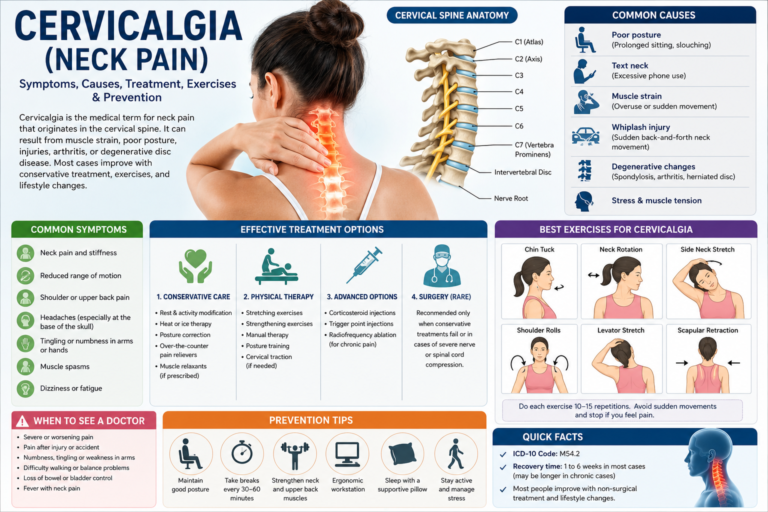
Cervicalgia is the medical term for neck pain that originates in the cervical spine. It may result from muscle strain, poor posture, injuries, arthritis, degenerative disc disease, or nerve irritation. Symptoms range from mild stiffness to severe pain, headaches, and reduced neck mobility. Most cases respond well to physical therapy, posture correction, pain management, and regular stretching, although persistent or severe symptoms should be evaluated by a healthcare professional.
What Is Cervicalgia?
Cervicalgia refers to pain localized in the neck region. Rather than being a disease itself, it is a symptom that can have many different causes. The discomfort may be acute, lasting only a few days after sleeping awkwardly, or chronic, persisting for several months due to ongoing spinal or muscular problems.
The cervical spine is responsible for supporting the weight of your head, protecting the spinal cord, and allowing movements such as turning, bending, and tilting your head. Because this area is highly mobile, it is also vulnerable to strain and injury.
Neck pain can affect muscles, ligaments, joints, discs, nerves, or bones. Identifying the underlying cause is essential for selecting the most effective treatment.
Understanding the Cervical Spine
The cervical spine consists of seven vertebrae (C1–C7) that connect the skull to the upper back. Between these vertebrae are intervertebral discs, which act as shock absorbers and help maintain flexibility.
Important structures include:
- Cervical vertebrae
- Intervertebral discs
- Spinal cord
- Cervical nerve roots
- Facet joints
- Trapezius muscle
- Levator scapulae muscle
- Sternocleidomastoid muscle
- Ligaments and tendons
These structures work together to support movement while protecting the spinal cord. Damage or inflammation affecting any of them can lead to cervicalgia.
Cervicalgia Symptoms
Symptoms vary depending on the underlying cause and severity of the condition. Some people experience only mild discomfort, while others struggle with daily activities because of intense pain.
Early Symptoms
In the early stages, cervicalgia may present with subtle signs such as:
- Mild neck discomfort
- Stiffness after sleeping
- Pain when turning the head
- Tight muscles around the neck
- Temporary reduction in flexibility
These symptoms often improve with rest, gentle stretching, and proper posture.
Moderate Symptoms
As the condition progresses, symptoms may become more noticeable and interfere with work or daily life.
Common symptoms include:
- Persistent neck pain
- Muscle spasms
- Shoulder pain
- Upper back discomfort
- Difficulty looking over your shoulder
- Pain while driving
- Headaches that begin at the base of the skull
- Fatigue caused by muscle tension
Many people also notice that prolonged computer use or smartphone use makes their symptoms worse.
Severe Symptoms
Severe cervicalgia may indicate involvement of spinal nerves or more significant structural problems.
Symptoms can include:
- Sharp or burning pain
- Pain radiating into the shoulder or arm
- Tingling sensations
- Numbness in the fingers
- Weakness in the arms or hands
- Reduced grip strength
- Loss of neck mobility
- Difficulty sleeping because of pain
These symptoms may occur when nerve roots become compressed due to conditions such as a herniated cervical disc or cervical spondylosis.
Can Cervicalgia Cause Headaches?
Yes. Cervicalgia frequently causes cervicogenic headaches, which originate from structures in the neck rather than the brain itself.
These headaches often:
- Begin at the back of the head
- Spread toward the forehead
- Worsen with neck movement
- Improve after treating the underlying neck problem
Tight muscles such as the trapezius and suboccipital muscles commonly contribute to these headaches.
Can Cervicalgia Cause Dizziness?
Some individuals experience dizziness alongside neck pain, particularly if muscle tension affects balance or normal neck movement. Although cervicalgia itself is not always the direct cause of dizziness, conditions affecting the cervical spine can sometimes contribute to feelings of unsteadiness.
Because dizziness may also result from inner ear disorders, neurological conditions, or cardiovascular issues, persistent or severe dizziness should be evaluated by a healthcare professional.
Emergency Warning Signs
While most neck pain is not dangerous, certain symptoms require immediate medical attention.
Seek urgent care if you experience:
- Neck pain after a major accident
- Sudden weakness in your arms or legs
- Loss of bladder or bowel control
- Difficulty walking
- High fever with neck stiffness
- Unexplained weight loss
- Severe, worsening pain that doesn’t improve with rest
- Loss of sensation in the arms or hands
These signs may indicate spinal cord compression, infection, fracture, or another serious medical condition.
What Causes Cervicalgia?
Cervicalgia develops for many reasons, ranging from simple muscle strain to degenerative spinal disorders. Understanding the cause is the first step toward effective treatment.
1. Poor Posture
Poor posture is among the leading causes of cervicalgia. Sitting with rounded shoulders, slouching at a desk, or constantly looking down at a smartphone places excessive stress on the cervical spine.
Over time, these habits can lead to muscle fatigue, ligament strain, and chronic neck pain.
2. Text Neck Syndrome
Modern technology has introduced a growing problem known as text neck. Repeatedly bending the head forward while using a smartphone significantly increases pressure on the cervical spine, contributing to stiffness and pain.
3. Muscle Strain
Overusing the neck muscles through repetitive activities, lifting heavy objects incorrectly, or sleeping in an awkward position can strain muscles and ligaments, causing temporary cervicalgia.
4. Whiplash Injury
A sudden forward-and-backward movement of the neck, commonly caused by motor vehicle accidents, can damage muscles, ligaments, and joints, leading to acute cervicalgia.
5. Cervical Spondylosis
As people age, the discs and joints in the cervical spine naturally wear down. This condition, known as cervical spondylosis, is a common cause of chronic neck pain and stiffness.
6. Herniated Cervical Disc
A damaged or bulging cervical disc may press on nearby nerves, resulting in neck pain that radiates into the shoulder, arm, or hand.
7. Osteoarthritis
Degenerative changes affecting the facet joints can lead to inflammation, stiffness, and persistent discomfort.
8. Stress and Muscle Tension
Emotional stress often causes unconscious tightening of the neck and shoulder muscles. Over time, this constant muscle tension can trigger cervicalgia and tension headaches.
9. Poor Sleeping Position
Using an unsupportive pillow or sleeping with the neck in an awkward position can cause morning neck stiffness and pain.
10. Workplace Ergonomics
Improper monitor height, poorly adjusted chairs, lack of lumbar support, and prolonged sitting can all contribute to chronic cervicalgia.
Risk Factors for Cervicalgia
Although anyone can develop cervicalgia, certain lifestyle habits, occupations, and medical conditions significantly increase the risk. Understanding these factors can help you make preventive changes before neck pain becomes chronic.
1. Age-Related Changes
As we age, the cervical spine naturally undergoes wear and tear. The intervertebral discs lose water content and elasticity, making them less effective at absorbing shock. Degenerative conditions such as cervical spondylosis, osteoarthritis, and degenerative disc disease become more common after the age of 40, increasing the likelihood of chronic neck pain.
2. Office Work and Sedentary Lifestyle
People who spend long hours sitting at a desk are among the most affected by cervicalgia. Looking at a computer screen without proper ergonomic support places continuous strain on the neck muscles.
Common workplace habits that contribute include:
- Sitting with rounded shoulders
- Looking down at a laptop for extended periods
- Using a chair without adequate back support
- Rarely taking movement breaks
3. Excessive Smartphone Use
The average adult spends several hours each day using a smartphone. Constantly bending the head forward—a posture often called forward head posture or text neck—can place up to 60 pounds of force on the cervical spine, leading to muscle fatigue and ligament stress.
4. Repetitive Movements
Jobs or hobbies that require repeated neck movements, such as painting, sewing, driving, or assembly-line work, can strain the muscles and joints over time.
5. Previous Neck Injuries
A history of whiplash, sports injuries, or falls may leave the cervical spine more vulnerable to future pain episodes.
6. Poor Physical Fitness
Weak neck, shoulder, and upper back muscles provide less support for the cervical spine. Combined with poor flexibility, this increases the risk of injury and persistent discomfort.
7. Stress and Anxiety
Psychological stress often manifests physically through tightened neck and shoulder muscles. Chronic muscle tension can contribute to recurring cervicalgia and tension-type headaches.
8. Obesity
Excess body weight affects posture and places additional stress on the musculoskeletal system, increasing the risk of chronic pain.
How Is Cervicalgia Diagnosed?
Diagnosing cervicalgia involves identifying the source of neck pain rather than simply confirming its presence. A healthcare provider will review your symptoms, medical history, and perform a physical examination to determine the most likely cause.
Medical History
Your provider may ask questions such as:
- When did the pain begin?
- Did the pain follow an injury or accident?
- Is the pain constant or intermittent?
- Does it radiate into your shoulders or arms?
- Do you experience numbness or weakness?
- What activities make the pain better or worse?
These details help distinguish muscle-related pain from nerve or spinal conditions.
Physical Examination
During the examination, your healthcare provider may evaluate:
- Neck alignment
- Range of motion
- Muscle tenderness
- Joint stiffness
- Posture
- Muscle strength
- Reflexes
- Sensation in the arms and hands
They may gently move your head in different directions to determine which movements reproduce the pain.
Neurological Examination
If nerve involvement is suspected, additional neurological tests may assess:
- Grip strength
- Arm muscle strength
- Reflexes
- Sensory function
- Coordination
- Balance
These tests help detect conditions such as cervical radiculopathy or cervical myelopathy.
Imaging Tests
Imaging isn’t necessary for every case of cervicalgia. However, it may be recommended if symptoms are severe, persistent, or associated with neurological deficits.
X-ray
X-rays provide images of the bones in the cervical spine and can reveal:
- Arthritis
- Bone spurs
- Fractures
- Loss of disc height
MRI (Magnetic Resonance Imaging)
An MRI offers detailed images of soft tissues, including:
- Intervertebral discs
- Spinal cord
- Nerves
- Ligaments
- Muscles
MRI is often the preferred test when a herniated disc or nerve compression is suspected.
CT Scan
A CT scan provides detailed images of the bones and may be recommended after trauma or when MRI is not appropriate.
Additional Diagnostic Tests
In some cases, healthcare providers may recommend:
- Electromyography (EMG)
- Nerve conduction studies
- Blood tests (if infection or inflammatory disease is suspected)
These tests help rule out other conditions that can mimic cervicalgia.
Cervicalgia Treatment Options
Treatment depends on the underlying cause, symptom severity, and duration of the condition. Fortunately, most people recover without surgery.
Conservative (Non-Surgical) Treatment
Conservative care is the first-line treatment for most cases of cervicalgia.
1. Relative Rest
Avoid activities that aggravate the pain while continuing gentle movement. Prolonged bed rest is generally discouraged because it may weaken muscles and delay recovery.
2. Activity Modification
Simple adjustments can reduce strain on the cervical spine:
- Raise your computer monitor to eye level.
- Hold your phone at eye height.
- Take stretching breaks every 30–60 minutes.
- Avoid carrying heavy bags on one shoulder.
3. Heat Therapy
Heat improves blood circulation and relaxes tight muscles.
Common options include:
- Heating pads
- Warm showers
- Warm compresses
Heat therapy is often most effective for chronic muscle stiffness.
4. Cold Therapy
Cold packs reduce inflammation and numb painful tissues.
Ice therapy is especially helpful during the first 24–48 hours after an acute injury.
5. Pain Medications
Over-the-counter medications may provide temporary relief.
Examples include:
- Acetaminophen
- Ibuprofen
- Naproxen
These medications should be used according to your healthcare provider’s recommendations, particularly if you have underlying medical conditions.
6. Muscle Relaxants
When severe muscle spasms are present, a healthcare provider may prescribe muscle relaxants for short-term use.
These medications can help reduce pain while allowing normal movement to resume.
Physical Therapy for Cervicalgia
Physical therapy is considered one of the most effective long-term treatments for cervicalgia.
A licensed physical therapist designs an individualized program that may include:
Stretching Exercises
Stretching improves flexibility and reduces muscle tension.
Common stretches target:
- Upper trapezius
- Levator scapulae
- Sternocleidomastoid
- Scalene muscles
Strengthening Exercises
Strengthening the deep neck flexors, shoulders, and upper back helps stabilize the cervical spine and improve posture.
Manual Therapy
Hands-on techniques performed by physical therapists may include:
- Joint mobilization
- Soft tissue massage
- Myofascial release
- Trigger point therapy
These methods can reduce pain and restore mobility.
Posture Training
Poor posture is a leading contributor to cervicalgia. Physical therapists teach strategies to:
- Maintain a neutral spine
- Reduce forward head posture
- Improve sitting and standing alignment
- Optimize workstation ergonomics
Cervical Traction
In selected cases, gentle cervical traction may relieve pressure on compressed nerves by creating more space between the vertebrae. This technique should only be performed under professional guidance.
Advanced Treatment Options
If conservative treatments do not provide sufficient relief, your healthcare provider may consider more advanced interventions.
These include:
- Corticosteroid injections to reduce inflammation around irritated nerves
- Trigger point injections for persistent muscle pain
- Radiofrequency ablation to interrupt pain signals from affected facet joints
These procedures are typically reserved for chronic or severe cases after careful evaluation.
When Is Surgery Needed?
Surgery is rarely required for cervicalgia alone. However, it may be recommended when there is:
- Significant spinal cord compression
- Progressive neurological weakness
- Severe cervical disc herniation
- Persistent pain that does not improve with conservative treatment
- Loss of bowel or bladder control due to spinal compression
Common surgical procedures include cervical discectomy, spinal fusion, or artificial disc replacement, depending on the underlying condition.
Best Cervicalgia Exercises
Regular exercise is one of the most effective ways to relieve cervicalgia and reduce the risk of future neck pain. Gentle stretching and strengthening exercises improve flexibility, reduce muscle tension, enhance posture, and support the cervical spine.
Important: If an exercise causes sharp pain, numbness, tingling, or weakness, stop immediately and consult a healthcare professional.
1. Chin Tucks
This simple exercise strengthens the deep neck flexor muscles and helps correct forward head posture.
How to do it:
- Sit or stand with your shoulders relaxed.
- Keep your eyes looking straight ahead.
- Gently pull your chin backward as if creating a “double chin.”
- Hold for 5–10 seconds.
- Repeat 10–15 times.
Benefits:
- Improves posture
- Reduces neck strain
- Strengthens neck muscles
2. Neck Rotation Stretch
This exercise improves mobility and reduces stiffness.
Instructions:
- Slowly turn your head to the right.
- Hold for 10 seconds.
- Return to the center.
- Repeat on the left side.
- Perform 10 repetitions.
3. Side Neck Stretch
Stretching the side muscles of the neck relieves tension after long hours of desk work.
- Tilt your head toward one shoulder.
- Do not raise your shoulder.
- Hold for 20–30 seconds.
- Repeat on both sides.
4. Shoulder Rolls
Shoulder tension often contributes to cervicalgia.
- Roll your shoulders forward 10 times.
- Roll them backward 10 times.
- Repeat several times throughout the day.
5. Levator Scapulae Stretch
This stretch targets one of the muscles most commonly associated with neck pain.
- Turn your head 45 degrees.
- Look downward toward your armpit.
- Use your hand to apply gentle pressure.
- Hold for 20–30 seconds.
6. Upper Trapezius Stretch
- Sit upright.
- Tilt your head to one side.
- Place your hand over your head for gentle assistance.
- Hold for 30 seconds.
7. Scapular Retraction
Strengthening the upper back improves posture.
- Pull your shoulder blades together.
- Hold for 5 seconds.
- Repeat 15 times.
Exercise Tips
For the best results:
- Exercise at least 4–5 days per week.
- Avoid sudden neck movements.
- Stretch before and after work.
- Take movement breaks every 30–60 minutes if you sit for long periods.
- Combine exercises with good posture and ergonomic adjustments.
Home Remedies for Cervicalgia
Many cases of cervicalgia improve with simple self-care measures.
Apply Heat
A heating pad or warm shower helps relax tight muscles and improve blood flow.
Use Ice for Acute Pain
If your neck pain started after an injury, apply an ice pack for 15–20 minutes every few hours during the first 48 hours.
Improve Your Sleeping Position
Sleep on your back or side with a supportive pillow that keeps your neck in a neutral position. Avoid sleeping on your stomach, as it twists the cervical spine.
Optimize Your Workspace
A well-designed workstation can reduce strain on your neck.
- Position your monitor at eye level.
- Keep your elbows at a 90-degree angle.
- Support your lower back.
- Use a chair with adjustable height.
Stay Active
While rest is important during the first day or two of acute pain, prolonged inactivity can weaken muscles and delay recovery. Gentle walking, stretching, and light activity are generally encouraged.
Manage Stress
Stress contributes to muscle tension. Deep breathing, meditation, yoga, and mindfulness techniques can help relax the neck and shoulder muscles.
Cervicalgia vs. Other Neck Conditions
Understanding how cervicalgia differs from other neck disorders can help clarify your diagnosis.
| Condition | Main Features |
|---|---|
| Cervicalgia | General neck pain without specifying the underlying cause |
| Cervical Radiculopathy | Neck pain with nerve compression causing arm pain, tingling, or weakness |
| Cervical Myelopathy | Spinal cord compression leading to balance problems, hand clumsiness, or difficulty walking |
| Neck Strain | Injury to muscles or tendons due to overuse or sudden movement |
| Whiplash | Neck injury caused by rapid back-and-forth movement, often after a car accident |
| Cervical Spondylosis | Age-related degeneration of the cervical spine that may cause chronic pain and stiffness |
Cervicalgia ICD-10 Code
The ICD-10-CM code for cervicalgia is M54.2.
Healthcare providers use this code for medical documentation, insurance claims, and billing when diagnosing neck pain.
Recovery Time
Recovery depends on the cause and severity of cervicalgia.
Mild Cervicalgia
- Recovery: 1–2 weeks
- Often caused by muscle strain or poor sleeping posture.
Moderate Cervicalgia
- Recovery: 3–6 weeks
- May require physical therapy and lifestyle changes.
Chronic Cervicalgia
- Recovery: Several months
- Often associated with degenerative conditions or long-term poor posture.
Factors that influence recovery include:
- Age
- Overall health
- Physical activity level
- Adherence to treatment
- Workplace ergonomics
- Smoking status
How to Prevent Cervicalgia
Preventing neck pain is often easier than treating it. Small daily habits can make a significant difference.
Maintain Good Posture
Keep your ears aligned over your shoulders and avoid slouching.
Take Frequent Breaks
If you work at a computer, stand up, stretch, and move every 30–60 minutes.
Strengthen Your Neck and Upper Back
Regular exercises improve stability and reduce the risk of future injuries.
Adjust Your Workstation
Ensure your monitor is at eye level and your keyboard is positioned comfortably.
Limit Smartphone Use
Raise your phone to eye level instead of bending your neck downward for long periods.
Sleep Smart
Choose a supportive pillow and sleep in a position that maintains a neutral neck alignment.
Stay Physically Active
Regular exercise improves muscle strength, flexibility, and overall spinal health.
When Should You See a Doctor?
While many cases of cervicalgia improve with self-care, seek medical attention if you experience:
- Pain lasting longer than a few weeks
- Severe or worsening pain
- Pain after a fall or accident
- Numbness or tingling in the arms or hands
- Muscle weakness
- Difficulty walking or maintaining balance
- Fever with neck pain
- Unexplained weight loss
- Loss of bowel or bladder control
These symptoms may indicate a more serious condition that requires prompt evaluation.
Frequently Asked Questions
Is cervicalgia the same as neck pain?
Yes. Cervicalgia is the medical term used to describe pain in the neck region.
Can cervicalgia go away on its own?
Many mild cases improve within a few days to weeks with rest, gentle movement, and posture correction.
Is cervicalgia serious?
Most cases are not serious, but persistent pain, neurological symptoms, or pain following trauma should be evaluated by a healthcare professional.
Can stress cause cervicalgia?
Yes. Stress often leads to muscle tension in the neck and shoulders, contributing to pain and stiffness.
What is the fastest way to relieve cervicalgia?
Combining heat or ice therapy, gentle stretching, posture correction, and over-the-counter pain relief (when appropriate) can help reduce symptoms.
Can cervicalgia cause headaches?
Yes. Tight neck muscles and joint dysfunction can lead to cervicogenic headaches that begin at the base of the skull.
Is walking good for cervicalgia?
Yes. Gentle walking promotes circulation, reduces stiffness, and supports recovery, provided it does not worsen your symptoms.
What pillow is best for cervicalgia?
A supportive pillow that keeps your neck in a neutral position—such as a cervical or memory foam pillow—may improve comfort.
Does cervicalgia always require surgery?
No. Most people recover with non-surgical treatments such as physical therapy, exercise, and lifestyle modifications.
Can cervicalgia be prevented?
Yes. Good posture, regular exercise, ergonomic workstations, and healthy sleep habits can significantly reduce your risk.
Conclusion
Cervicalgia is a common condition that affects millions of people, particularly those who spend long hours sitting, using digital devices, or performing repetitive tasks. While the pain can range from mild stiffness to chronic discomfort, understanding its causes and adopting evidence-based treatments can make a significant difference.
Most cases improve with conservative care, including posture correction, regular stretching, strengthening exercises, ergonomic adjustments, and physical therapy. Paying attention to warning signs such as persistent pain, numbness, weakness, or difficulty walking is equally important, as these symptoms may require prompt medical evaluation.
By maintaining an active lifestyle, practicing good posture, and caring for your cervical spine every day, you can reduce the likelihood of recurring neck pain and protect your long-term spinal health.
Key Takeaways
- Cervicalgia is the medical term for neck pain and can result from muscle strain, poor posture, injuries, or degenerative spine conditions.
- Common symptoms include neck stiffness, reduced mobility, headaches, shoulder pain, and muscle spasms.
- Most cases improve with physical therapy, ergonomic changes, stretching exercises, and conservative treatment.
- Red-flag symptoms—such as arm weakness, numbness, balance problems, or bowel/bladder changes—require immediate medical attention.
- Healthy posture, regular exercise, and a well-designed workspace are essential for preventing recurrent cervicalgia and maintaining a healthy cervical spine.
